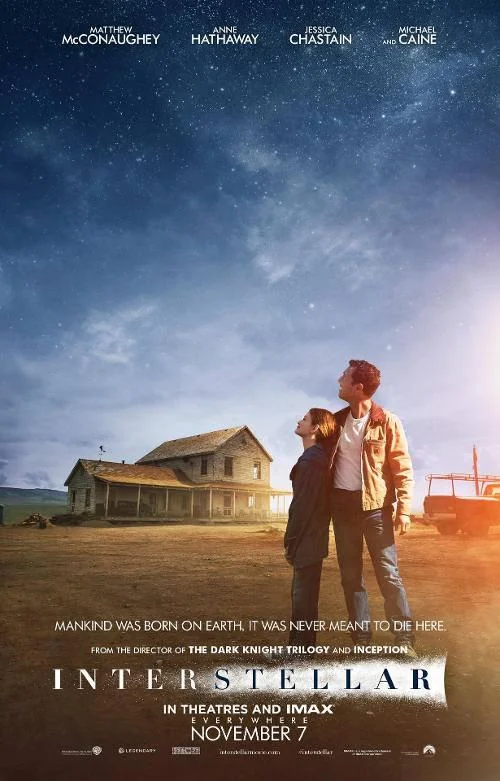
Interstellar
Epic, emotionally grounded, scientifically rigorous, melancholic yet ultimately hopeful
Based on a publicly circulated draft of this screenplay sourced online — it may differ from the official shooting script or final film. Shown to demonstrate ProofIntelligence.
A former NASA pilot leaves his children behind to lead a desperate interstellar mission through a wormhole to find humanity a new home, only to discover that the key to saving Earth lies in the bond between a father and his daughter across time and space.
Executive Summary
Interstellar is a masterclass in combining tentpole spectacle with intimate emotional storytelling — a screenplay that makes quantum physics feel like a love letter from a father to his daughter. The dual-timeline structure, anchored by Cooper's interstellar journey and Murph's parallel quest on Earth, converges in a tesseract sequence that is both conceptually audacious and emotionally devastating. The screenplay's greatest asset is its ability to make scientific concepts — time dilation, gravitational anomalies, higher dimensions — serve as mechanisms of emotional torture and ultimate redemption. The messages scene alone justifies the entire enterprise. Dr Mann's betrayal provides a perfectly calibrated antagonist turn that is both shocking and thematically inevitable. For any producer considering a project in this space, this screenplay represents the gold standard: proof that audiences will embrace complex science fiction when it is grounded in universal human emotion. The father-daughter bond at its center is the kind of emotional engine that transcends language, culture, and market — it is why this story works in Mumbai as powerfully as it does in Manhattan. Investment risk is minimal given the proven commercial track record, and the screenplay's structural integrity means it could be adapted or reimagined for different markets with confidence that the emotional architecture will hold.
Why this verdict
Interstellar is a masterfully constructed science fiction epic that weaves hard science with deeply personal father-daughter emotion into a story about humanity's survival. Its core strength is the dual-timeline structure that pays off Cooper's departure with Murph's parallel journey of discovery, culminating in the tesseract sequence where love literally bridges dimensions. The screenplay's ambition — spanning galaxies, decades, and dimensions — is matched by its emotional specificity: the messages scene (p.78-80) is one of the most devastating sequences in modern sci-fi writing. The antagonist reveal with Dr Mann is expertly seeded and thematically resonant, turning the survival instinct from virtue to vice. Areas that could be tightened include the exposition-heavy middle section around the wormhole and planet selection, and some supporting characters (Doyle, Romilly) who serve more as functional plot devices than fully realized people. In the market, this sits as a tentpole science fiction property with proven global appeal, combining the spectacle of space opera with the intimacy of a family drama — a combination that has defined the most successful entries in the genre from 2001 to Gravity to Ad Astra.
What we read
Interstellar is a generation-spanning science fiction epic about Cooper, a former pilot turned farmer on a dying Earth, who is recruited for a desperate mission through a wormhole to find humanity a new home. The central dramatic question is whether Cooper can save both humanity and his relationship with his daughter Murph, who he leaves behind as a heartbroken ten-year-old. The screenplay's dual timeline — Cooper's journey through alien worlds and black holes, Murph's parallel quest to solve the gravity equation on Earth — converges in a stunning tesseract sequence where love and gravity become the same force, allowing father and daughter to communicate across dimensions. The best thing in this screenplay is the messages scene (p.78-80), where Cooper watches twenty-three years of his children's lives compressed into minutes, culminating in adult Murph's devastating birthday message — it is among the most emotionally powerful sequences in modern science fiction writing.
Score Breakdown
Craft Scores
Weighted craft score
The screenplay's thesis — that love transcends dimensions of time and space — is not merely stated but structurally enacted: Cooper's love for Murph literally becomes the gravitational force that transmits the data that saves humanity. Every major plot element serves this theme: the ghost/gravity anomaly, the watch, Brand's love speech, Mann's loveless betrayal, Professor Brand's lie born of loveless pragmatism. The ending — Murph sending Cooper to find Brand — completes the thematic circle with devastating elegance. Band: ProofScript Masterpiece. One band up: The theme is already operating at the highest level; if anything, Tom's storyline could more explicitly mirror the theme's inverse (what happens when love is abandoned).
The messages scene (p.78-80) — particularly Murph's birthday message where she says 'today I'm the age you were when you left... so it'd be a real good time for you to come back' — is one of the most emotionally devastating sequences in modern cinema writing. The farewell scene (p.39-41), the tesseract revelation, and the reunion with elderly Murph each deliver distinct emotional payoffs that are fully earned by their setups. Band: ProofScript Elite. One band up: Giving Doyle's death more emotional weight (we barely know him) and allowing the Cooper Station homecoming more breathing room would push the emotional impact from exceptional to flawless.
The messages scene at page 78 — Cooper watching 23 years of his children's lives in minutes — is a midpoint of extraordinary structural precision, landing at almost exactly the 50% mark and transforming the story's stakes from external (find a planet) to internal (can I ever get back?). The dual-timeline convergence in the tesseract, where Cooper's Act One departure is replayed from behind the bookshelf, is structurally audacious and perfectly executed. Band: ProofScript Elite. One band up: Tightening the exposition-heavy passages between the wormhole traversal and Miller's planet (p.55-62) would eliminate the only momentum dip in an otherwise impeccably paced narrative.
Cooper's arc — from frustrated farmer to cosmic savior who discovers that love, not science, is the force that saves humanity — is enacted with extraordinary completeness across 157 pages. The moment he watches Murph's birthday message (p.80) and whispers her name is character work of the highest order. Murph's parallel arc from angry child to humanity's savior is equally powerful. Dr Mann's betrayal is brilliantly seeded through his philosophical monologues. Band: ProofScript Elite. One band up: Deepening Doyle and Romilly beyond their functional roles — giving them personal stakes and moments of vulnerability — would elevate the ensemble to match the leads.
The screenplay is written with professional precision — scene headings are clear, action lines are economical yet evocative ('Cooper STARES at dust collecting like snow on power lines'), and the visual storytelling is sophisticated. The intercut structure between Earth and space timelines is handled with confidence. Minor formatting artifacts from the PDF transfer (occasional run-together lines, missing hyphens) are cosmetic rather than structural. The screenplay occasionally includes directorial notes and camera directions that would typically be removed from a spec script, but as a shooting script this is appropriate. Band: ProofScript Elite. One band up: Some action sequences (particularly the tesseract) are written more as directorial vision than as readable screenplay prose — clearer, more grounded description of the visual concepts would improve readability.
Cooper's 'you need two numbers to measure your own ass but just one to measure my son's future' (p.12) is a perfect character line — funny, angry, and revealing of his worldview in one breath. Brand's love speech (p.85-86) is the thematic keystone of the entire film, and Tars' humor settings provide essential levity. The voice distinctness between Cooper's practical wit, Brand's intellectual precision, and Mann's philosophical grandeur is strong. Band: ProofScript Recommends. One band up: Reducing the exposition-as-dialogue passages (particularly the planet briefings) where characters explain science to each other rather than discovering it through action would push the dialogue from strong to exceptional.
Market Scores
Weighted market score
The concept — a father must travel through a wormhole to save humanity, but the journey costs him decades of his children's lives — is immediately compelling and generates inherent, escalating conflict at every turn. The one-sentence pitch ('A father leaves his dying Earth to find humanity a new home, but every hour in space costs years with his children') is irresistible. The concept's genius is that it makes physics personal: time dilation isn't a plot device but an emotional weapon. Band: ProofScript Masterpiece. One band up: The concept is already operating at the highest level — it is one of the great high-concept premises in science fiction.
The messages scene (p.78-80) — particularly Murph's birthday message where she says 'today I'm the age you were when you left... so it'd be a real good time for you to come back' — is one of the most emotionally devastating sequences in modern cinema writing. The farewell scene (p.39-41), the tesseract revelation, and the reunion with elderly Murph each deliver distinct emotional payoffs that are fully earned by their setups. Band: ProofScript Elite. One band up: Giving Doyle's death more emotional weight (we barely know him) and allowing the Cooper Station homecoming more breathing room would push the emotional impact from exceptional to flawless.
As a produced film that earned over $677M worldwide, the screenplay's market viability is empirically proven. Evaluated purely as a script, it combines tentpole spectacle (wormhole, black hole, alien worlds) with universal emotional themes (father-daughter love, sacrifice) in a package that appeals across demographics and cultures. The Indian market specifically responds powerfully to stories of parental sacrifice and intergenerational duty. Band: ProofScript Elite. One band up: The tentpole budget requirement is the only market risk — a version that could be produced at a lower budget (impossible given the premise) would be even more fundable.
While space exploration films are a well-established genre, Interstellar's specific innovation — using real physics (time dilation, gravitational lensing, higher dimensions) as emotional mechanisms rather than mere spectacle — was genuinely groundbreaking. The tesseract sequence, where a father communicates with his daughter through gravity across dimensions, has no real precedent. The concept of love as a literal physical force operating across spacetime is a philosophical proposition unique to this screenplay. Band: ProofScript Elite. One band up: The first act's dying-Earth setup, while well-executed, follows familiar dystopian tropes — a more surprising entry point into this world would push originality higher.
Casting
Hrithik Roshan
as COOPER
Hrithik combines the rugged physicality needed for Cooper's action sequences with the emotional depth required for the farewell and messages scenes. His work in films like Lakshya and Super 30 demonstrates the ability to play an everyman elevated by extraordinary circumstances.
Deepika Padukone
as BRAND
Deepika has the intellectual screen presence and emotional range to deliver Brand's love speech with conviction while holding her own in the action sequences. Her performances in Piku and Chhapaak show her ability to play strong, complex women driven by both intellect and emotion.
Naseeruddin Shah
as PROFESSOR BRAND
Naseeruddin Shah's legendary ability to convey warmth, wisdom, and hidden complexity makes him ideal for a character whose mentorship conceals a devastating lie. His gravitas would make the deathbed confession scene unforgettable.
Nawazuddin Siddiqui
as DR MANN
Nawazuddin's ability to shift from vulnerability to menace within a single scene is exactly what Dr Mann requires — a character who must be sympathetic upon revival and terrifying upon betrayal. His work in Gangs of Wasseypur and Raman Raghav demonstrates this range.
Sanya Malhotra
as MURPH
Sanya has demonstrated the ability to play both youthful determination and mature emotional complexity, as seen in Dangal and Photograph. Adult Murph requires an actress who can convey decades of anger, brilliance, and love in limited screen time.
Pankaj Tripathi
as TARS
Pankaj Tripathi's distinctive voice and impeccable comic timing would bring Tars' humor settings to life brilliantly, while his dramatic depth (Mirzapur, Newton) would ground the robot's sacrifice with unexpected emotional weight.
Pacing & Rhythm
Overall pace
Well-calibrated with deliberate rhythm shifts
The pacing follows a sophisticated wave pattern that alternates between contemplative character moments and visceral action sequences. The screenplay's rhythm is defined by three major action peaks — the Miller's planet wave (p.69), the Mann betrayal/spinning dock sequence (p.107-125), and the Gargantua plunge (p.135-137) — each more intense than the last. Between these peaks, the screenplay deliberately slows for emotional processing: the messages scene (p.78) is the slowest point in the second half, and it's also the most powerful. The only pacing concern is the mid-section (p.55-65) where exposition about the wormhole and planet selection creates a slight lull between the launch's momentum and Miller's planet's intensity. The denouement (p.150-157) is appropriately measured, allowing the audience to process the emotional journey.
SLOW · pp. 55–62
Wormhole explanation and planet selection debate — heavy exposition delivered through discussion rather than action.
Fix: Dramatize more of the scientific information through discovery and conflict — let the crew encounter the time dilation problem in real-time rather than predicting it in a meeting.
SLOW · pp. 29–36
NASA briefing sequence — Professor Brand explains the mission, Plans A and B, and the Lazarus missions through extended dialogue.
Fix: Break up the briefing with more visual reveals and character reactions — show Cooper's growing excitement and fear rather than having him passively receive information.
RUSHED · pp. 150–153
Cooper Station sequence — the transition from black hole to recovery to museum tour moves quickly through what could be a more emotionally resonant homecoming.
Fix: Allow Cooper more time to process the strangeness of his situation — a man out of time in a world his daughter built — before rushing to the reunion.
Conflict Escalation
The conflict escalation follows a masterful double-helix pattern, with Earth-side and space-side tensions rising in parallel and intersecting at key moments. The screenplay builds through three distinct escalation phases: the personal stakes of departure (Act One), the cosmic dangers and time costs of the mission (early Act Two), and the human betrayal that proves more dangerous than any alien world (late Act Two). The peak at page 122 — Mann's explosion — is perfectly placed as the moment where external and internal conflicts converge: the mission is physically destroyed by the same survival instinct that the screenplay has been examining philosophically. The denouement manages the difficult task of de-escalating tension while maintaining emotional intensity through the tesseract and reunion sequences.
Peak moment · page 122
Dr Mann forces the Endurance airlock, causing a catastrophic explosion that sends the ship into a deadly spin toward the planet — the mission's darkest moment, where everything Cooper has sacrificed appears to be for nothing.
Protagonist Arc
Cooper's arc traces a profound journey from frustrated earthbound pilot to cosmic savior, but its genius lies in the realization that his greatest achievement comes not from piloting skill but from love. His internal state follows a dramatic descent through the second act — from the hope of the mission through the devastating messages scene to Mann's betrayal — reaching its nadir when he's choking on ammonia on an ice planet, having lost everything. The recovery is not through action heroics (though the spinning dock is thrilling) but through the tesseract revelation that his love for Murph is literally the force that saves humanity. His final state — setting off to find Brand — represents a man who has reconciled his dual nature as explorer and father, understanding that they were never in conflict.
Scene Audit
115 scenes evaluated — tension, pacing contribution, and whether each earns its place.
| Pg | Scene | Purpose | Tension | Verdict |
|---|---|---|---|---|
| 2 | BLACK. THE GENTLE SOUND OF WIND IN CORN ELDERLY WOMAN | Establishes the documentary framing device and the dying-Earth atmosphere with dust and corn imagery.Haunting opening that sets tone and mystery. | 15maintains | essential |
| 2 | EXT. THE STRATOSPHERE - DAY COOPER | Introduces Cooper as a pilot through a nightmare/flashback of his crash, establishing his backstory and skills.Efficient character intro via action. | 50accelerates | essential |
| 3 | INT. COCKPIT - CONTINUOUS COOPER | Continues the crash sequence, showing Cooper losing control.Part of opening crash sequence. | 55accelerates | essential |
| 3 | INT. BEDROOM, FARMHOUSE - NIGHT COOPER · MURPH | Cooper wakes from nightmare, introduces Murph and the ghost concept, establishes their relationship.First Cooper-Murph scene, seeds ghost motif. | 10decelerates | essential |
| 4 | EXT. COOPER'S FARM - MORNING DONALD | Establishes the farm setting and dust-bowl conditions.World-building through visual detail. | 5maintains | essential |
| 4 | INT. KITCHEN, FARMHOUSE - MORNING COOPER · MURPH · TOM · DONALD | Family breakfast establishes Cooper-Tom-Murph-Donald dynamics, the ghost subplot, and Cooper's parenting style.Efficient multi-character establishment. | 10maintains | essential |
| 5 | EXT. FARMHOUSE - MOMENTS LATER COOPER · DONALD | Establishes blight crisis (okra dying), Donald-Cooper dynamic, and the dust-covered world.Seeds ecological crisis naturally. | 15maintains | essential |
| 6 | INT./EXT. PICKUP TRUCK ON DIRT ROAD - MOMENTS LATER COOPER · MURPH · TOM | Murph learning to drive, tire blowout, Murphy's Law explanation, drone discovery.Multi-purpose scene: character, theme, and inciting action. | 30accelerates | essential |
| 8 | INT./EXT. PICKUP TRUCK THROUGH FIELDS - MOMENTS LATER COOPER · MURPH · TOM | Drone chase sequence — establishes Cooper's piloting skills and resourcefulness.Thrilling set piece that doubles as character work. | 55accelerates | essential |
| 10 | EXT. RIVERBANK - MOMENTS LATER COOPER · MURPH · TOM | Cooper captures the drone, Murph shows empathy ('Couldn't we just let it go?'), Cooper's pragmatism.Character contrast between Cooper and Murph. | 15decelerates | essential |
| 11 | EXT. COUNTY SCHOOL - DAY COOPER · MURPH · TOM | Transition to school, sets up parent-teacher conference.Brief but necessary transition. | 10maintains | essential |
| 11 | INT. PRINCIPAL'S OFFICE - LATER (MORNING) COOPER · PRINCIPAL · MS HANLEY | Establishes anti-intellectual dystopia, Tom's future as farmer, moon landing denial, Cooper's wife's death.Dense world-building and character revelation. | 35maintains | essential |
| 15 | EXT. PICKUP TRUCK OUTSIDE SCHOOL - MOMENTS LATER COOPER · MURPH · BOOTS | Cooper tells Murph she's suspended, radio call about combines.Humor and plot advancement. | 15maintains | essential |
| 16 | EXT. FARMHOUSE - DAY COOPER · MURPH · BOOTS | Automated farm machines converging on house — gravitational anomaly manifesting.Escalates the anomaly mystery. | 30accelerates | essential |
| 16 | INT. FARMHOUSE - CONTINUOUS COOPER · MURPH | Cooper investigates the anomaly inside the house.Builds mystery tension. | 35accelerates | essential |
| 16 | INT. MURPH'S BEDROOM - CONTINUOUS COOPER · MURPH | Cooper discovers books falling from shelves, Murph's Morse code theory, ghost investigation.Seeds the tesseract payoff. | 30maintains | essential |
| 17 | INT. FRONT PORCH, FARMHOUSE - NIGHT COOPER · DONALD | Cooper-Donald philosophical conversation about exploration vs. caretaking, Cooper's existential frustration.Thematic heart of Act One. | 15decelerates | essential |
| 19 | EXT. BASEBALL FIELD - LATE AFTERNOON COOPER · MURPH · TOM · DONALD | Baseball game establishes normalcy, Tom's acceptance of farming, dust storm approaches.Calm before the storm, literally. | 20maintains | essential |
| 20 | INT./EXT. PICKUP TRUCK - MOMENTS LATER COOPER · MURPH · TOM · DONALD | Dust storm chase — visceral demonstration of Earth's hostility.Spectacular action that advances world-building. | 65accelerates | essential |
| 20 | INT. FARMHOUSE - CONTINUOUS COOPER · MURPH · TOM · DONALD | Family shelters from dust storm.Transition to key discovery. | 50maintains | essential |
| 21 | INT. MURPH'S BEDROOM - CONTINUOUS COOPER · MURPH | Cooper and Murph discover the gravitational dust pattern — the key anomaly that drives the plot.The inciting incident's payoff. | 45accelerates | essential |
| 21 | EXT. FARMHOUSE - DAWN - MORNING | Brief transition showing calm after storm.Visual breathing room. | 10decelerates | essential |
| 21 | INT. TOM'S ROOM - CONTINUOUS COOPER · MURPH | Murph sneaks back to her room to find Cooper studying the pattern.Shows Cooper's obsession with the anomaly. | 20maintains | essential |
| 22 | INT. SAME - LATER COOPER · MURPH · DONALD | Donald sees the dust pattern, Cooper decodes binary coordinates.Plot-critical discovery. | 35accelerates | essential |
| 22 | INT. KITCHEN, FARMHOUSE - LATER COOPER · MURPH | Cooper and Murph find the coordinates on a map.Drives toward NASA discovery. | 40accelerates | essential |
| 22 | EXT. FARMHOUSE - MOMENTS LATER COOPER · MURPH | Cooper packs to investigate, Murph insists on coming.Cooper-Murph dynamic under pressure. | 30maintains | essential |
| 23 | INT./EXT. PICKUP TRUCK ON ROAD - MOMENTS LATER COOPER · MURPH | Murph stows away in the truck — callback to her determination.Charming character moment. | 25maintains | essential |
| 24 | EXT. DIRT ROAD OFF MOUNTAIN PASS - NIGHT COOPER · MURPH · TARS | Cooper and Murph arrive at the fence, are captured by Tars.Tense discovery of NASA facility. | 60accelerates | essential |
| 25 | INT. BRIGHT, INDUSTRIAL ROOM - LATER COOPER · TARS · BRAND | Cooper interrogated by Tars, meets Brand.Introduction of Brand and Tars' personality. | 45maintains | essential |
| 26 | INT. UNDERGROUND FACILITY - MOMENTS LATER COOPER · BRAND | Cooper follows Brand, learns about the facility's secrecy.Transition and exposition. | 30maintains | essential |
| 27 | INT. CONFERENCE ROOM - CONTINUOUS COOPER · MURPH · PROFESSOR BRAND · DOYLE | Cooper reunites with Murph, meets Professor Brand, the gravitational anomaly is discussed.Key exposition and reunion. | 40maintains | essential |
| 29 | INT. UNDERGROUND FACILITY - MOMENTS LATER COOPER · PROFESSOR BRAND | Professor Brand reveals NASA's secret mission, the blight crisis, and Earth's terminal diagnosis.Stakes established at global level. | 50maintains | essential |
| 30 | INT. GREENHOUSE - CONTINUOUS COOPER · PROFESSOR BRAND · BRAND · MURPH | Professor Brand explains the blight and Earth's oxygen crisis.Scientific stakes made visceral. | 55maintains | essential |
| 31 | INT. VAST CIRCULAR CHAMBER (LAUNCH FACILITY) - MOMENTS LATER COOPER · PROFESSOR BRAND | Cooper sees the rocket and the space station under construction, learns about the Lazarus missions.Visual spectacle meets exposition. | 50maintains | essential |
| 32 | INT. CONFERENCE ROOM - LATER COOPER · ROMILLY · BRAND · DOYLE · PROFESSOR BRAND | Romilly explains the wormhole, the Lazarus missions, and the three candidate worlds.Mission briefing — necessary exposition. | 40maintains | essential |
| 35 | INT. LABORATORY - MOMENTS LATER COOPER · BRAND · PROFESSOR BRAND | Brand explains Plan B (population bomb) and the genetic diversity solution.Raises moral stakes of the mission. | 35maintains | essential |
| 36 | INT. PROFESSOR BRAND'S OFFICE COOPER · PROFESSOR BRAND | Professor Brand asks Cooper to trust him, Cooper agrees to the mission.The commitment — Cooper's point of no return. | 55accelerates | essential |
| 37 | EXT. FARMHOUSE - LATE DAY COOPER · MURPH · DONALD | Cooper returns home, Murph runs inside refusing to speak.Emotional fallout begins. | 45maintains | essential |
| 37 | INT. HALL OUTSIDE MURPH'S ROOM - CONTINUOUS COOPER · MURPH | Murph barricades her door against Cooper.Devastating child's protest. | 50maintains | essential |
| 37 | EXT. PORCH - NIGHT COOPER · DONALD | Cooper-Donald conversation about leaving — Donald's wisdom about 'the why of a thing.'Moral compass scene, seeds later themes. | 30decelerates | essential |
| 38 | INT. MURPH'S BEDROOM - MORNING COOPER · MURPH | Cooper's farewell to Murph — the watch exchange, 'STAY' message, Murph's refusal to say goodbye.The screenplay's emotional foundation. | 75maintains | essential |
| 41 | EXT. FARMHOUSE - MOMENTS LATER COOPER · TOM · DONALD · MURPH | Cooper says goodbye to Tom and Donald, drives away as Murph races out too late.Devastating departure — Act One climax. | 80accelerates | essential |
| 43 | INT. LAUNCH FACILITY - DAY COOPER | Rocket launch sequence.Visceral transition to space. | 70accelerates | essential |
| 43 | INT. RANGER COCKPIT - CONTINUOUS COOPER · TARS · DOYLE · BRAND · ROMILLY | Cooper and crew in launch, Tars' humor introduced.Establishes crew dynamic with humor. | 55maintains | essential |
| 44 | EARTH ORBIT - CONTINUOUS COOPER · BRAND · DOYLE · ROMILLY | Rangers dock with the Endurance, ship begins spinning for gravity.Technical sequence establishing the ship. | 30maintains | essential |
| 46 | INT. RING MODULE, ENDURANCE - LATER COOPER · BRAND · ROMILLY · PROFESSOR BRAND | Video call with Professor Brand, two-year journey to Saturn established.Sets timeline and emotional stakes. | 25maintains | essential |
| 47 | INT. COCKPIT, ENDURANCE - LATER COOPER · DOYLE · PROFESSOR BRAND | Endurance fires engines toward Saturn, Professor Brand recites Dylan Thomas.Poetic send-off, recurring motif established. | 35accelerates | essential |
| 48 | INT. RING MODULE, ENDURANCE - DAY COOPER · BRAND · TARS | Cooper and Brand discuss the mission, the candidate worlds, Dr Mann, and Edmunds. Cooper records a message home.Character development and mission context. | 20decelerates | essential |
| 51 | EXT. CORNFIELDS - DAY MURPH · DONALD · PROFESSOR BRAND | Earth intercut — Professor Brand delivers Cooper's truck, Murph refuses his message.Murph's anger established on Earth timeline. | 30maintains | essential |
| 52 | INT. COMMUNICATIONS BOOTH, ENDURANCE - CONTINUOUS COOPER · TOM · DONALD | Cooper watches compressed messages from Tom and Donald after two years in transit.First taste of time's passage. | 25maintains | essential |
| 53 | INT. HAB POD, RING MODULE - LATER COOPER · ROMILLY | Romilly's claustrophobia, Cooper's yachtsman analogy.Character moment for Romilly but could be deeper. | 20decelerates | needs_work |
| 54 | INT. NAVIGATION, RING MODULE, ENDURANCE - CONTINUOUS COOPER · DOYLE · BRAND | Doyle shows relay probe images, Brand announces wormhole approach.Builds anticipation for wormhole. | 35accelerates | essential |
| 55 | INT. COCKPIT, RANGER - LATER COOPER · ROMILLY | Wormhole approach — Romilly explains the sphere concept.Iconic science explanation scene. | 50accelerates | essential |
| 57 | EXT. WORMHOLE - CONTINUOUS COOPER · BRAND · DOYLE · ROMILLY | Wormhole traversal sequence — Brand's 'first handshake' with higher-dimensional beings.Spectacular set piece, seeds 'they' mystery. | 65accelerates | essential |
| 59 | INT. RING MODULE, ENDURANCE - LATER COOPER · BRAND · DOYLE · ROMILLY | Crew reviews data from the other side — Miller promising, Edmunds dark, time dilation problem introduced.Critical mission planning, stakes raised. | 45maintains | essential |
| 62 | EXT. BLACK HOLE, GARGANTUA - DAY COOPER · BRAND · DOYLE · CASE | Endurance approaches Gargantua, Ranger detaches for Miller's planet.Visual spectacle and mission execution. | 50accelerates | essential |
| 64 | EXT. MILLER'S PLANET - CONTINUOUS COOPER · CASE · BRAND · DOYLE | Atmospheric entry to Miller's planet — Cooper's aggressive piloting.Thrilling descent sequence. | 65accelerates | essential |
| 67 | EXT. MILLER'S PLANET - MOMENTS LATER (DAY) COOPER · BRAND · DOYLE · CASE | Crew explores the shallow ocean, finds Miller's wrecked beacon, discovers the 'mountains' are waves.One of the great reveals in sci-fi cinema. | 80accelerates | essential |
| 71 | INT. COCKPIT, RANGER - CONTINUOUS COOPER · BRAND · CASE | Aftermath of the wave — Doyle dead, engines waterlogged, Brand and Cooper argue about responsibility.Emotional reckoning and ticking clock. | 70maintains | essential |
| 76 | INT. COCKPIT, RANGER - CONTINUOUS COOPER · BRAND · CASE | Second wave escape — blowing cabin oxygen through thrusters.Ingenious survival solution. | 85accelerates | essential |
| 77 | INT. RING MODULE, ENDURANCE - DAY COOPER · BRAND · ROMILLY · TARS | Return to Endurance — Romilly reveals 23 years have passed, Doyle's death confirmed.Devastating time dilation payoff. | 70maintains | essential |
| 78 | INT. COMMUNICATIONS BOOTH, ENDURANCE - CONTINUOUS COOPER · TOM · MURPH | Cooper watches 23 years of messages — Tom's life, Donald's death, Murph's birthday message.The screenplay's emotional peak. Masterful. | 60decelerates | essential |
| 81 | INT. COMMUNICATION ROOM, NASA - DAY MURPH · PROFESSOR BRAND | Murph after recording her message, encounters elderly Professor Brand.Earth timeline advances, Murph's growth shown. | 25maintains | essential |
| 82 | INT. PROFESSOR BRAND'S OFFICE - MOMENTS LATER MURPH · PROFESSOR BRAND | Murph and Professor Brand work on the equation, Murph realizes it's recursive.Seeds Professor Brand's deception. | 40maintains | essential |
| 83 | INT. LAUNCH FACILITY - LATER MURPH · PROFESSOR BRAND | Murph and Professor Brand eat sandwiches, he reflects on mortality and time.Quiet character moment before revelation. | 20decelerates | essential |
| 83 | INT. PROFESSOR BRAND'S OFFICE - MOMENTS LATER MURPH · PROFESSOR BRAND | Murph confronts the equation's impossibility, Professor Brand deflects.Tension builds around the lie. | 45accelerates | essential |
| 84 | INT. RING MODULE, ENDURANCE - DAY COOPER · BRAND · ROMILLY | Crew debates Mann vs. Edmunds — Brand's love speech, Cooper overrules her.Thematic centerpiece, seeds third act. | 50maintains | essential |
| 87 | INT. RING MODULE, ENDURANCE - LATER COOPER · BRAND | Cooper apologizes to Brand, she warns him about the personal decision ahead.Foreshadows Cooper's sacrifice. | 35maintains | essential |
| 88 | EXT. FARMHOUSE - DAY MURPH · TOM · LOIS | Murph visits Tom's farm, fields burning, family dinner with Lois and Coop.Earth timeline stakes raised. | 30maintains | essential |
| 89 | INT. CORRIDOR, NASA - NIGHT MURPH · GETTY | Murph rushes to Professor Brand's deathbed.Urgent transition. | 55accelerates | essential |
| 89 | INT. HOSPITAL ROOM, NASA - MOMENTS LATER MURPH · PROFESSOR BRAND | Professor Brand's deathbed confession — Plan A was always a lie.Devastating revelation, reshapes entire story. | 85accelerates | essential |
| 91 | INT. COMMUNICATION ROOM, NASA - DAY MURPH | Murph records angry message to Brand, accusing them of abandoning Earth.Emotional fallout of the lie. | 70maintains | essential |
| 92 | EXT. DR MANN'S PLANET - DAY COOPER · BRAND · ROMILLY · TARS | Ranger descends through ice clouds to Mann's planet.Atmospheric entry with ice-cloud danger. | 50accelerates | essential |
| 93 | EXT. DR MANN'S POD - MOMENTS LATER COOPER · DR MANN · TARS | Crew finds and revives Dr Mann from cryo-sleep.Powerful resurrection scene. | 45maintains | essential |
| 94 | INT. DR MANN'S POD - NIGHT DR MANN · COOPER · BRAND · TARS · ROMILLY | Dr Mann describes his world's conditions, data from probes, Kipp's degeneration.Exposition that seeds the betrayal. | 30maintains | essential |
| 96 | INT. DR MANN'S POD - LATER COOPER · BRAND · DR MANN · ROMILLY | Brand watches Murph's angry message, Dr Mann reveals Professor Brand's lie was known.Triple revelation — lie confirmed, Mann complicit. | 80accelerates | essential |
| 99 | INT./EXT. PICKUP TRUCK ON DUSTY PLAIN - DAWN MURPH · GETTY | Murph and Getty discuss the equation's incompleteness, Murph's ghost memory, dust storm.Murph's detective work begins. | 40maintains | essential |
| 101 | EXT. RANGER, DR MANN'S PLANET - DAWN COOPER · ROMILLY · TARS · CASE | Cooper prepares to leave, Romilly suggests sending Tars into the black hole.Seeds the black hole plan. | 30maintains | essential |
| 103 | EXT. RANGER, DR MANN'S PLANET - DAY COOPER · DR MANN · BRAND · ROMILLY | Cooper and Dr Mann set out to survey probe sites.Setup for the betrayal. | 35maintains | essential |
| 104 | EXT. DR MANN'S PLANET - LATER COOPER · DR MANN | Cooper follows Dr Mann through ice canyon, Mann philosophizes about survival instinct.Chilling dramatic irony — villain's monologue. | 55accelerates | essential |
| 105 | INT. KITCHEN, FARMHOUSE - DAY MURPH · GETTY · LOIS · TOM | Murph introduces Getty to examine Coop's lungs, visits her old bedroom.Earth timeline parallel action. | 30maintains | essential |
| 106 | EXT. ICE FIELD, DR MANN'S PLANET - CONTINUOUS COOPER · DR MANN | Dr Mann's betrayal — rips Cooper's transmitter, attacks him, leaves him to die.Shocking antagonist reveal. | 90accelerates | essential |
| 108 | INT. KITCHEN, FARMHOUSE - DAY MURPH · TOM · GETTY · LOIS | Tom confronts Murph about trying to take his family, punches Getty.Earth-side conflict peaks. | 65accelerates | essential |
| 109 | EXT. ICE FIELD, DR MANN'S PLANET - DAY COOPER · DR MANN | Dr Mann's helmet-butting attack, Cooper choking on ammonia.Visceral survival sequence. | 95accelerates | essential |
| 111 | INT./EXT. PICKUP TRUCK ON DUSTY PLAIN - DAY MURPH · GETTY · DR MANN · COOPER | Murph and Getty drive past refugees, Dr Mann walks away from dying Cooper.Cross-cutting builds unbearable tension. | 85accelerates | essential |
| 113 | EXT. CORNFIELDS - DAY MURPH | Murph sets fire to Tom's corn to lure him away from the house.Desperate, clever action. | 75accelerates | essential |
| 113 | EXT. ICE PLAIN, DR MANN'S PLANET - CONTINUOUS COOPER · BRAND · CASE | Brand rescues Cooper, realizes Romilly is in danger.Race against time on two fronts. | 85accelerates | essential |
| 115 | INT. DR MANN'S POD - CONTINUOUS ROMILLY · TARS | Kipp explodes, killing Romilly — Mann's booby trap.Devastating loss, Mann's full villainy revealed. | 90accelerates | essential |
| 117 | INT. COCKPIT, LANDER - DAY COOPER · BRAND · CASE | Brand and Cooper pursue Dr Mann to the Endurance.Chase sequence begins. | 80accelerates | essential |
| 119 | INT. COCKPIT, RANGER - CONTINUOUS DR MANN · COOPER · BRAND | Dr Mann attempts to dock with Endurance, ignoring warnings.Hubris-driven disaster. | 90accelerates | essential |
| 122 | EXT. ENDURANCE - CONTINUOUS DR MANN · COOPER · BRAND | Dr Mann blows the hatch, explosion sends Endurance spinning.Catastrophic turning point. | 95accelerates | essential |
| 123 | INT. COCKPIT, LANDER - CONTINUOUS COOPER · BRAND · CASE · TARS | Cooper decides to dock with the spinning Endurance — 'No. It's necessary.'Iconic moment of determination. | 95accelerates | essential |
| 127 | INT. RING MODULE, ENDURANCE - MOMENTS LATER COOPER · BRAND · TARS · CASE | Cooper and crew assess damage — navigation destroyed, not enough fuel for Earth, plan to slingshot around Gargantua.New plan formulated under pressure. | 70maintains | essential |
| 129 | INT. COCKPIT, LANDER - CONTINUOUS COOPER · TARS · BRAND · CASE | Cooper explains the slingshot plan: Tars will detach in the lander as sacrificial mass, while Cooper keeps quiet that he will detach Ranger 2 as well.Sacrifice plan established. | 75accelerates | essential |
| 131 | EXT. ENDURANCE - CONTINUOUS COOPER · BRAND · TARS · CASE | Gargantua slingshot sequence — engines fire, lander and ranger detach sequentially.Spectacular action climax. | 90accelerates | essential |
| 136 | EXT. GARGANTUA - CONTINUOUS COOPER | Cooper plunges into the black hole — crossing the horizon into absolute white.Transcendent visual sequence. | 95accelerates | essential |
| 137 | INT. MURPH'S BEDROOM - TWILIGHT MURPH | Adult Murph sits in her old bedroom, examining the box and lunar lander.Parallel timeline converging. | 50maintains | essential |
| 137 | EXT. GARGANTUA - DAY COOPER | Cooper falls through dimensional spheres into the tesseract.Mind-bending dimensional descent. | 85accelerates | essential |
| 138 | INT. THE TESSERACT - CONTINUOUS COOPER · MURPH | Cooper discovers the tesseract — books as walls, Murph's bedroom visible through gaps, he realizes he is the ghost.The screenplay's grand revelation. | 80maintains | essential |
| 142 | INT. MURPH'S BEDROOM - TWILIGHT MURPH | Adult Murph realizes her father was the ghost, cries with joy.Emotional payoff of the entire film. | 75maintains | essential |
| 143 | INT. THE TESSERACT - DAY COOPER · TARS | Cooper communicates with Tars, realizes he must transmit quantum data through the watch.Solution discovered through love. | 80accelerates | essential |
| 146 | INT. MURPH'S BEDROOM - TWILIGHT MURPH · TOM | Adult Murph finds the watch, sees the second hand moving with data, realizes Cooper is communicating.The watch payoff — devastating and triumphant. | 90accelerates | essential |
| 147 | INT. PROFESSOR BRAND'S OFFICE - DAY MURPH | Murph transcribes the quantum data.Scientific salvation in progress. | 70accelerates | essential |
| 148 | INT. LAUNCH FACILITY - CONTINUOUS MURPH · GETTY | Murph shouts 'Eureka!' — humanity is saved.Triumphant climax of Earth timeline. | 85accelerates | essential |
| 148 | EXT. THE TESSERACT - DAY COOPER · BRAND | Tesseract closes, Cooper swept through expanding cosmos, touches Brand through the wormhole.Transcendent sequence, wormhole handshake explained. | 75accelerates | essential |
| 150 | INT. OUTER SPACE - LATER COOPER | Cooper found floating near Saturn.Brief but necessary recovery beat. | 30decelerates | essential |
| 150 | INT. HOSPITAL ROOM - DAY COOPER · DOCTOR | Cooper wakes on Cooper Station orbiting Saturn, learns humanity was saved.Revelation of success, emotional relief. | 40decelerates | essential |
| 151 | INT. HANGAR, COOPER STATION - DAY COOPER | Administrator shows Cooper the station, his preserved farmhouse.Bittersweet homecoming. | 20decelerates | essential |
| 152 | EXT. FARMHOUSE - CONTINUOUS COOPER | Cooper visits the preserved farmhouse museum.Poignant callback to Act One. | 25decelerates | essential |
| 153 | INT. KITCHEN, FARMHOUSE - NIGHT COOPER · TARS | Cooper reactivates Tars, adjusts his settings.Warm character moment, humor returns. | 15decelerates | essential |
| 153 | INT. HOSPITAL WAITING ROOM - DAY COOPER | Cooper arrives to see elderly Murph.Anticipation for the reunion. | 50maintains | essential |
| 154 | INT. HOSPITAL ROOM - CONTINUOUS COOPER · MURPH | Cooper reunites with elderly Murph — she sends him to find Brand.The screenplay's emotional resolution. Perfect. | 70maintains | essential |
| 156 | EXT. EDMUNDS' DESERT PLANET - DAY BRAND | Brand alone on Edmunds' planet, mourning Edmunds, breathing alien air.Haunting parallel ending. | 30decelerates | essential |
| 156 | INT. HANGAR, COOPER STATION - NIGHT COOPER · TARS | Cooper and Tars steal a Ranger to find Brand.Final adventure begins — hope restored. | 45accelerates | essential |
| 157 | INT. RANGER IN HANGAR, COOPER STATION - NIGHT COOPER · TARS | Cooper and Tars launch into space toward Brand.Perfect open ending — love as compass. | 40maintains | essential |
Beat Sheet · Save The Cat
| Beat | Scene | Timing | Present | Quality |
|---|---|---|---|---|
Opening Image Dust falling through books, elderly woman's voice, wind in corn — a dying world established through sensory detail. | BLACK. THE GENTLE SOUND OF WIND IN CORN | On target | 95 | |
Theme Stated Cooper tells Donald: 'We used to look up and wonder at our place in the stars. Now we just look down and worry about our place in the dirt.' — exploration vs. survival as the film's central tension. | INT. FRONT PORCH, FARMHOUSE - NIGHT | On target | 90 | |
Set-Up Pages 4-21 establish Cooper's world: the dying Earth, his family, the ghost anomaly, the school's anti-intellectualism, and Cooper's frustrated brilliance. | INT. KITCHEN, FARMHOUSE - MORNING | On target | 92 | |
Catalyst Cooper and Murph discover the gravitational dust pattern encoding binary coordinates — the anomaly that will lead them to NASA. | INT. MURPH'S BEDROOM - CONTINUOUS | On target | 90 | |
Debate Pages 29-37: Cooper learns about the mission, the wormhole, Plans A and B, and wrestles with leaving his children. Professor Brand asks him to trust. | INT. UNDERGROUND FACILITY - MOMENTS LATER | On target | 88 | |
Break into Two Cooper launches into space, leaving Murph behind — the countdown intercut with Murph racing out of the house too late is devastating. | INT. LAUNCH FACILITY - DAY | On target | 95 | |
B Story Professor Brand visits the farm, offers to mentor Murph — establishing the Earth-side storyline that will parallel and ultimately converge with Cooper's journey. | EXT. FRONT PORCH, FARMHOUSE - DAY | On target | 85 | |
Fun and Games Pages 48-66: The journey to Saturn, wormhole traversal, approach to Gargantua, and descent to Miller's planet — the 'promise of the premise' of interstellar exploration. | INT. RING MODULE, ENDURANCE - DAY | On target | 82 | |
Midpoint Cooper watches 23 years of messages — Tom's life, Donald's death, Murph's devastating birthday message. False defeat: the mission's time cost becomes viscerally real. | INT. COMMUNICATIONS BOOTH, ENDURANCE - CONTINUOUS | On target | 98 | |
Bad Guys Close In Pages 89-113: Professor Brand's deathbed confession, Dr Mann's betrayal, Romilly's death, the Endurance crippled — everything falls apart on both timelines simultaneously. | INT. HOSPITAL ROOM, NASA - MOMENTS LATER | On target | 92 | |
All Is Lost Dr Mann blows the hatch, the Endurance is sent spinning toward the planet, the mission appears doomed — Cooper faces the loss of everything. | EXT. ENDURANCE - CONTINUOUS | On target | 93 | |
Dark Night of the Soul Cooper and Brand assess the damage — no way home, not enough fuel, falling into Gargantua. Cooper must choose between seeing his children and saving humanity. | INT. RING MODULE, ENDURANCE - MOMENTS LATER | On target | 88 | |
Break into Three Cooper detaches from the Endurance, sacrificing himself to give Brand enough momentum — 'Newton's third law. You have to leave something behind.' | INT. COCKPIT, RANGER 2 - CONTINUOUS | On target | 95 | |
Finale The tesseract sequence — Cooper discovers he is Murph's ghost, transmits quantum data through the watch, Murph solves the equation, humanity is saved. | INT. THE TESSERACT - CONTINUOUS | On target | 95 | |
Final Image Brand alone on Edmunds' planet breathing alien air as Cooper steals a Ranger to find her — love as compass, exploration continuing, the mirror of the opening's dust and despair replaced by alien sunlight and hope. | EXT. EDMUNDS' DESERT PLANET - DUSK | On target | 95 |
What's Working
Emotional Architecture of Epic Proportions
The screenplay builds its emotional payoffs with extraordinary patience — Cooper's departure, the messages scene, the tesseract reunion, and the final bedside scene with elderly Murph form a chain of escalating emotional devastation that earns every tear through meticulous setup. The watch motif alone carries the weight of an entire relationship across decades and dimensions.
Hard Science as Dramatic Engine
Relativity, time dilation, wormholes, and gravitational physics are not window dressing but the actual mechanisms of dramatic tension. The revelation that every hour on Miller's planet costs seven years on Earth transforms a scientific concept into unbearable stakes, making the audience feel the cost of every second.
Proven Tentpole Commercial Viability
The screenplay combines spectacle-driven set pieces (wormhole traversal, mountain waves, spinning docking sequence) with universal emotional themes (parent-child love, sacrifice, survival) in a package that has demonstrated massive global box office appeal across all demographics and markets.
Thematic Unity Across All Story Layers
Every subplot, character choice, and set piece serves the central theme that love transcends time and space. Dr Mann's betrayal, Brand's argument for love as a force, Professor Brand's lie, and Cooper's sacrifice all orbit this thesis with gravitational precision, making the screenplay's intellectual ambition and emotional core inseparable.
The Dr Mann Betrayal — Masterful Antagonist Reveal
Dr Mann's introduction as a savior figure who is gradually revealed as a desperate coward is one of the screenplay's most sophisticated narrative moves. His philosophical justifications for betrayal ('the survival instinct is our single greatest source of inspiration') make him a thematically resonant antagonist rather than a simple villain, and his actions trigger the screenplay's most thrilling action sequence.
What to Fix
Exposition-Heavy Second Act Passages
Several sequences in the mid-section — particularly the wormhole explanation (p.55-56), the planet selection debate (p.60-62), and Dr Mann's data exposition (p.93-95) — rely heavily on characters explaining science to each other. While the information is necessary and often elegantly delivered, these stretches slow momentum and occasionally feel like lectures rather than drama.
Underdeveloped Supporting Crew
Doyle and Romilly serve primarily as exposition delivery systems and plot functions rather than fully realized characters. Doyle's death on Miller's planet lacks the emotional weight it should carry because we barely know him beyond his role as 'the cautious one.' Romilly fares slightly better but his twenty-three years alone are told rather than shown.
Tom's Arc Feels Underserved
Tom's storyline — from eager teenager to embittered farmer refusing to leave the poisoned land — has strong thematic potential as a mirror to Cooper's journey, but it receives too little screen time to land with full force. His confrontation with Murph (p.108-109) is powerful but arrives without sufficient buildup of his perspective.
Tesseract Mechanics Risk Audience Confusion
The tesseract sequence (p.137-148), while conceptually brilliant, pushes the boundaries of what can be clearly communicated on the page. The simultaneous presentation of multiple timelines, world lines, and dimensional mechanics may leave some audiences behind, and the resolution — transmitting quantum data via a watch's second hand — requires a significant leap of faith.
Rewrite priorities
Add one or two personal moments for each — a message from someone they left behind, a private fear, a hobby — so their fates carry emotional weight proportional to their screen time.
Issue: Doyle and Romilly lack personal dimension beyond their scientific functions, making Doyle's death feel like a plot beat rather than a loss and Romilly's 23-year vigil more told than felt.
Dramatize more of the scientific information through action and conflict rather than discussion — let the crew discover dangers in real-time rather than predicting them in meetings.
Issue: The planet selection debate and wormhole explanation sequences are exposition-heavy, slowing momentum between the emotional departure and the first planet landing.
Add one or two scenes showing Tom's gradual hardening — perhaps a scene of him burying his son Jesse, or a moment where he almost leaves but can't — to earn his stubbornness as a character choice rather than a plot obstacle.
Issue: Tom's arc from hopeful teenager to embittered farmer is compressed into too few scenes, making his refusal to leave the farm feel abrupt rather than tragic.
Simplify the visual language of the tesseract description and add one more beat of Cooper understanding the mechanism before he acts on it, giving the audience a clearer emotional anchor in the conceptual complexity.
Issue: The tesseract sequence's mechanics — world lines, dimensional manipulation, the watch transmission — push the limits of screenplay readability and risk losing the audience at the story's most critical moment.
A clean formatting pass to standardize scene headings, fix run-together lines, and ensure consistent spacing throughout.
Issue: Minor formatting inconsistencies from PDF transfer — occasional missing hyphens, run-together action lines, and inconsistent spacing — create small reading friction.
Biggest improvement lever
Deepening the supporting crew's characterization — particularly giving Doyle and Romilly distinct personal stakes, backstories, or moments of vulnerability before their respective fates — would make the mission's human cost land harder and reduce the sense that some characters exist only to explain science or die at plot-convenient moments. Even two or three additional character beats per person would transform functional roles into felt losses.
Emotional Rhythm
The emotional rhythm of Interstellar is extraordinary in its range and precision. The screenplay operates like a symphony, with movements of wonder and awe (wormhole traversal, Gargantua approach) counterpointed by devastating emotional lows (the departure, the messages, the betrayal). The deepest emotional valley — Cooper watching 23 years of messages at page 78 — is perfectly placed at the midpoint, creating a gravitational well of feeling that pulls the entire second half of the screenplay toward it. The screenplay's genius is that its most emotionally devastating moments are also its most scientifically rigorous: time dilation isn't just a plot device but an emotional weapon. The final movement — from Cooper's sacrifice through the tesseract to the reunion with elderly Murph — achieves a rare emotional alchemy, transforming grief into triumph without cheapening either.
Act Structure
Act One
pp. 2–42On a dying Earth ravaged by blight and dust storms, former NASA pilot Cooper discovers gravitational anomalies in his daughter Murph's bedroom that lead him to a secret NASA facility. Professor Brand recruits him for an interstellar mission through a wormhole to find humanity a new home. Cooper makes the agonizing decision to leave his children — particularly Murph, who begs him to stay — and launches into space.
Key turning point
Cooper's decision to accept the mission and his devastating departure from Murph, who refuses to say goodbye and whose notebook reads 'STAY' (p.39-42).
Act One is masterfully constructed, establishing the dying world, Cooper's character, and the father-daughter bond with remarkable efficiency. The escalation from drone chase to school meeting to NASA discovery to departure creates a perfect ramp of rising stakes. The act break — Cooper driving away as Murph races out too late — is one of the most emotionally devastating departures in science fiction cinema. Every scene serves double duty: the drone chase establishes Cooper's skills AND the world's decay; the school meeting establishes the anti-science culture AND Cooper's values. The only slight weakness is the speed of Cooper's recruitment, though this is mitigated by the revelation that 'they chose him.'
Act Two
pp. 43–127The Endurance crew traverses the wormhole and faces catastrophic time dilation on Miller's water world, losing Doyle and twenty-three years. Cooper watches decades of messages from his aging children. The crew debates which remaining planet to visit, choosing Dr Mann's over Brand's preference for Edmunds'. On Mann's ice planet, they discover Mann faked his data and he attempts to kill Cooper and steal the Endurance, resulting in Romilly's death and a desperate spinning docking sequence to save the crippled ship. Meanwhile on Earth, adult Murph discovers Professor Brand's deathbed confession that Plan A was always a lie.
Key turning point
Dr Mann's betrayal — ripping Cooper's transmitter and leaving him to die on the ice (p.107-108) — which shatters the mission's premise and forces a complete recalculation of how to save humanity.
Act Two is dense, ambitious, and largely successful in juggling multiple timelines, three planet visits, and the parallel Earth storyline. The Miller's planet sequence is a masterpiece of tension and consequence. The messages scene is the emotional centerpiece of the entire film. Dr Mann's betrayal is brilliantly seeded and thematically perfect. The spinning docking sequence provides a visceral action climax. Weaknesses include the exposition-heavy planet selection debate and the somewhat functional treatment of Doyle and Romilly. The act runs long but earns its length through escalating stakes and emotional devastation.
Act Three
pp. 128–157Cooper sacrifices himself by detaching into Gargantua's black hole to give Brand enough momentum to reach Edmunds' planet. Inside the black hole, he discovers a tesseract built by future humans, allowing him to communicate quantum data to young Murph through the second hand of a watch. Adult Murph decodes the data, solves the gravity equation, and saves humanity. Cooper is recovered near Saturn, reunites briefly with the elderly Murph on Cooper Station, and steals a Ranger to find Brand on Edmunds' planet.
Key turning point
Cooper's realization inside the tesseract that 'they' are future humans and that love — not science alone — is the force that bridges dimensions, enabling him to transmit the quantum data to Murph (p.144-146).
Act Three is audacious and emotionally overwhelming. Cooper's sacrifice, the tesseract sequence, and the reunion with elderly Murph form a triple climax that pays off every setup in the screenplay. The tesseract is conceptually demanding but anchored by Cooper's desperate love for his daughter. The final reunion scene is perfectly restrained — Murph sending Cooper away to find Brand is both heartbreaking and liberating. The Cooper Station coda provides necessary decompression. The only risk is the tesseract's conceptual density, which demands enormous trust from the audience.
Midpoint · page 78
Cooper watches twenty-three years of messages from his children after returning from Miller's planet, learning that his grandson Jesse has died, Donald has died, Tom has given up on him, and adult Murph — now the same age Cooper was when he left — makes a devastating birthday message begging him to come back.
This is one of the most powerful midpoints in modern screenwriting. It transforms the story from an external mission (find a habitable planet) to an internal crisis (can Cooper ever get back to his children, and will there be anything left to get back to?). The time dilation, previously an abstract concept, becomes viscerally real as Cooper watches his children age in minutes. The stakes shift from 'save humanity' to 'save my family' — and the screenplay's genius is that these turn out to be the same thing. Tom's farewell and Murph's birthday message are devastating in sequence.
Character Analysis
Protagonist · arc 95/100
COOPER
want
To save humanity by finding a new habitable world and return to his children
need
To understand that his love for Murph is not a weakness pulling him from the mission but the very force that will save humanity
flaw
His guilt over leaving his children and his desperate need to return home cloud his judgment and make him dismiss emotional reasoning (Brand's argument for love) in favor of 'objective' logic
Cooper is a superbly realized protagonist whose arc operates on both intimate and cosmic scales simultaneously. His defining trait — the tension between being a good father and being the person who can save humanity — generates conflict in every scene. The screenplay earns his transformation by making him wrong about the Brand/Edmunds debate in a way that costs him everything, then rewarding his love for Murph as the actual solution. His emotional range — from the wry humor of the drone chase to the devastation of the messages scene to the desperate hope of the tesseract — is extraordinary.
Antagonist · threat 85/100
DR MANN
Dr Mann is a brilliantly conceived antagonist precisely because he is not evil — he is a good man broken by isolation and fear. His philosophical justifications for betrayal ('Evolution has yet to transcend that simple barrier') are chillingly logical, and his actions serve as the dark mirror of Cooper's own survival instinct. The screenplay seeds his villainy perfectly: his desperate embrace of Cooper upon waking, his insistence on keeping Kipp's archives locked, his philosophical musings about the survival instinct — all read as character depth on first encounter and as red flags in retrospect. His death by his own hubris (forcing the airlock) is thematically perfect.
Supporting cast
15 characters · 8 distinct voicesThe supporting cast is functional but unevenly developed. Tars and Case provide excellent robot characterization through contrasting personalities (verbose vs. laconic). Doyle and Romilly serve their plot functions competently but lack the personal dimension that would make their fates more devastating. Getty is a useful Earth-side ally but thinly drawn. The Old-Timers in the documentary framing device add atmospheric texture. Ms Hanley and the Principal efficiently establish the anti-intellectual dystopia. The cast is appropriately sized for the story's scope but could benefit from deeper characterization of the crew members who share Cooper's journey.
Character Presence
Screen presence by act; total scene count on the right.
Dialogue
Subtext
Voice
Density: Medium-High — the screenplay balances substantial dialogue scenes (debates, emotional confrontations, scientific exposition) with extended action sequences that play largely without dialogue (Miller's planet wave, the spinning dock, the tesseract).
The dialogue operates on multiple registers with considerable skill. Cooper's voice — wry, practical, emotionally guarded — is immediately distinct from Brand's intellectual precision, Dr Mann's philosophical grandeur, and Tars' deadpan humor. The screenplay's greatest dialogue achievement is making scientific exposition feel like character revelation: Cooper's 'you need two numbers to measure your own ass' is both funny and revealing of his worldview. The subtext level is strong in key scenes — Cooper's 'I'm coming back' to Murph is a lie they both know is a lie, and Brand's love speech is simultaneously a scientific argument and a personal plea. Weaknesses include some exposition-heavy passages where characters explain concepts to each other that feel more like audience education than natural conversation. The humor settings for Tars are a brilliant device that makes robot dialogue feel fresh.
The screenplay achieves an effective balance that shifts appropriately across its three acts. Act One is dialogue-heavy, establishing character relationships and the world's crisis through conversation — appropriate for a setup that must convey both emotional bonds and complex exposition. Act Two tilts toward action as the mission encounters physical dangers (Miller's waves, Mann's betrayal, the spinning dock), though it maintains substantial dialogue in the debate scenes and the messages sequence. Act Three is the most action-driven, with the Gargantua slingshot and tesseract sequences playing largely through visual spectacle and internal monologue. The overall balance serves the screenplay's dual nature as both intimate family drama and cosmic adventure.
Notable lines
“Murphy's Law doesn't mean bad stuff will happen. It means 'whatever can happen, will happen'. And that sounded just fine to us.”
COOPER · page 7
Establishes the film's philosophical framework and Cooper's parenting style in one elegant exchange.
“Mankind was born on Earth. It was never meant to die here.”
COOPER · page 38
The screenplay's thesis statement, delivered with quiet conviction that earns its grandeur.
“You once told me that when you came back we might be the same age... and today I'm the age you were when you left.”
MURPH · page 80
The emotional devastation of time dilation made personal — possibly the most affecting line in the screenplay.
“Love is the one thing we're capable of perceiving that transcends dimensions of time and space. Maybe we should trust that, even if we can't yet understand it.”
BRAND · page 86
The thematic keystone of the entire film, dismissed by Cooper in the moment but proven correct by the entire third act.
“No. It's necessary.”
COOPER · page 124
Three words that encapsulate Cooper's character — the refusal to accept impossible odds, delivered at the moment of greatest danger.
“No parent should have to watch their child die. My kids are here for me now. Go.”
MURPH · page 155
Murph's final gift to Cooper — releasing him from guilt, completing her arc from the child who couldn't let go.
Lines to fix
“Look, Dr Mann's data is promising, but we won't get there for months. Edmunds is even further.”
DOYLE · page 61
Functional exposition that could be more dramatically charged — Doyle is essentially reading a briefing document aloud.
“The days are sixty-seven cold hours, the nights are sixty-seven far colder hours...”
DR MANN · page 94
Extended planetary description that reads more like a science report than natural dialogue, though Mann's character somewhat justifies the clinical tone.
Market & Audience
Interstellar occupies the rare sweet spot of being both a tentpole spectacle and a prestige drama, appealing to audiences who want both visual grandeur and emotional depth. Its market positioning is exceptionally strong: the father-daughter emotional core is universally resonant across cultures, the science fiction spectacle demands theatrical viewing, and the intellectual depth rewards repeat viewing on streaming platforms. In the Indian market context, the film's themes of family sacrifice, parental duty, and intergenerational love align powerfully with cultural values. The screenplay's proven commercial success (over $677M worldwide) validates its market positioning, though as a new property it would face the challenge of establishing its complex premise with audiences.
Audience
Broad mainstream audience aged 15-55 who respond to emotionally grounded spectacle — families, science enthusiasts, Christopher Nolan fans, and prestige blockbuster audiences
Budget band
Tentpole (₹100Cr+ equivalent)
Trend
The post-Gravity, post-Interstellar wave of scientifically grounded space films (The Martian, Arrival, Ad Astra, First Man) has proven there is a massive global audience for intelligent sci-fi that doesn't sacrifice emotion for spectacle. Indian audiences have shown strong appetite for this genre through the success of dubbed Hollywood releases and homegrown efforts like Mission Mangal.
Platforms
Theatrical (IMAX/Premium Large Format) · Premium OTT (Netflix, Amazon Prime Video) · Satellite Television
Interstellar achieves the rare feat of appealing strongly across nearly all audience segments. Its mass appeal comes from spectacular set pieces and a clear emotional throughline; its critical appeal from thematic ambition and structural sophistication; its OTT appeal from rewatch value and intellectual depth; its youth appeal from the science fiction spectacle and aspirational themes of exploration. Family appeal is slightly lower due to the film's emotional intensity and complex science, but the father-daughter core makes it deeply resonant for parents. The screenplay's ability to function simultaneously as a blockbuster, a prestige drama, and a science fiction think-piece is its greatest commercial asset.
Risks · Low-Moderate
- • Tentpole budget requirement creates high financial exposure
- • Complex scientific concepts may alienate casual audiences
- • Nearly three-hour runtime demands exceptional audience engagement
- • Emotionally demanding narrative may limit repeat theatrical viewing
- • The tesseract sequence's conceptual density risks losing audiences at the climax
Mitigations
- • Universal father-daughter emotional core transcends cultural and intellectual barriers
- • Spectacular set pieces (waves, spinning dock, black hole) provide visceral entertainment value
- • Star-driven casting can anchor marketing to accessible emotional hooks
- • IMAX/premium format presentation justifies theatrical premium pricing
- • The screenplay's proven track record as a produced film with massive global success eliminates most market uncertainty
Investment Case
Franchise Potential
standalone- The Lazarus missions — twelve astronauts sent to twelve worlds, each with their own survival story
- Brand's colony on Edmunds' planet — the founding of a new human civilization
- The bulk beings / future humans — their origin story and relationship to present humanity
- Cooper Station and the exodus fleet — humanity's journey from Earth to the stars
Interstellar is fundamentally a standalone story whose emotional power derives from its completeness — Cooper's arc from departure to reunion is a closed circle. However, the world-building is rich enough to support expansion: the twelve Lazarus missions alone could generate a series of survival stories, and Brand's colony on Edmunds' planet offers a natural continuation. The 'bulk beings' as future humans creates an intriguing temporal loop that could be explored. That said, any sequel risks diminishing the original's emotional impact, and the screenplay's themes are fully resolved. The franchise potential lies more in universe expansion (prequels, parallel stories) than direct sequels.
International Viability
Interstellar's international viability is exceptional, as proven by its actual global performance. The father-daughter emotional core is universally resonant — perhaps even more so in cultures with strong family-centric values like India, East Asia, and Latin America. The scientific spectacle transcends language barriers, and the film's themes of sacrifice, love, and survival are deeply human rather than culturally specific. The American space program setting is a minor barrier, offset by the story's cosmic scope that makes national identity irrelevant. In the Indian market specifically, the themes of parental sacrifice, duty vs. desire, and intergenerational love align powerfully with cultural narratives.
Strong markets: North America, Europe, East Asia (China, South Korea, Japan), India, Latin America, Middle East, Australia/New Zealand
Cultural barriers: American-centric space program setting may feel distant to some audiences; Some scientific concepts require baseline science literacy; English-language dialogue limits direct accessibility in non-English markets; The Dylan Thomas poetry motif may not resonate universally
Investment Readiness
low riskReady for packagingAs a produced and globally successful film, the screenplay's investment readiness is essentially proven. Evaluated purely as a script, it is exceptionally well-structured, emotionally powerful, and commercially viable. The screenplay is production-ready with clear visual sequences, manageable (if expensive) VFX requirements, and roles that would attract top talent. The primary investment consideration is the tentpole budget requirement — this is not a film that can be made cheaply — but the screenplay's emotional core and spectacle deliver commensurate return potential. Every major element is in place: a clear hook, escalating stakes, a satisfying resolution, and universal themes.
Attachment suggestions
- • A-list leading man with proven dramatic range and blockbuster appeal for Cooper (the role demands both action credibility and emotional vulnerability)
- • Acclaimed actress in her 30s-40s for Brand who can hold the screen against the lead and deliver the love speech with conviction
- • Veteran character actor with gravitas for Professor Brand — the role requires warmth that conceals deception
- • Visionary director with experience in both spectacle and intimate drama — someone who can handle IMAX-scale visuals and close-up emotional scenes equally
- • Top-tier VFX house for black hole, wormhole, and tesseract sequences
Comparable Films
Gravity (2013)
Shares the visceral, scientifically grounded approach to space survival and the theme of a parent's love as motivation for survival against impossible odds in the void.
2001: A Space Odyssey (1968)
Direct spiritual ancestor — the journey beyond human comprehension, the transcendent finale, the hard-science aesthetic — but Interstellar adds the emotional warmth Kubrick deliberately withheld.
Arrival (2016)
Both use hard science fiction concepts (time dilation / non-linear time perception) as mechanisms for deeply personal parent-child emotional stories, with female scientists as key figures.
Contact (1997)
Father-daughter relationship as emotional anchor for a journey to the cosmic unknown, with themes of faith vs. science and the personal cost of exploration.
Ad Astra (2019)
A father's journey through the solar system that is ultimately about reconciling with family and understanding that human connection matters more than cosmic discovery.
Tik Tik Tik (2018)
Indian space mission film that similarly centers a father-child relationship within a high-stakes space narrative, though at a very different scale and tone.
Cinema DNA
The directorial sensibilities this script most resembles, weighted by influence.
✦Your Cinema DNA
The screenplay is Nolan's own work, embodying his signature fusion of high-concept science fiction with deeply personal emotional stakes, non-linear time structures, and practical spectacle — the DNA of Inception, The Prestige, and Dunkirk runs through every page.
The epic scale of emotion, the father-child bond as cosmic force, and the willingness to let spectacle serve sentiment rather than replace it echoes Rajamouli's approach in Baahubali and RRR, where personal relationships drive world-shaking events.
The film's direct lineage to 2001: A Space Odyssey is unmistakable — the hard science aesthetic, the journey beyond human comprehension, the transcendent finale — but where Kubrick kept humanity at arm's length, this screenplay pulls it into a crushing embrace.
The verdict, in full
Set in a near-future Earth ravaged by blight and dust storms, former NASA pilot Cooper is recruited for a last-ditch interstellar mission through a wormhole near Saturn to find a habitable planet for humanity. Leaving behind his young daughter Murph — who begs him to stay — Cooper joins Dr Brand and a small crew aboard the Endurance. Their journey takes them to three candidate worlds orbiting a massive black hole called Gargantua, where time dilation means hours on the surface cost decades on Earth. After a catastrophic visit to Miller's water world and the betrayal of the marooned Dr Mann on an ice planet, Cooper sacrifices himself by plunging into the black hole. Inside, he discovers a tesseract constructed by future humans, allowing him to communicate gravitational data back through time to his now-adult daughter Murph via the second hand of a watch he gave her. Murph decodes the quantum data, solves the gravity equation, and enables humanity's exodus from Earth. Cooper is recovered near Saturn, reunites briefly with the elderly Murph on a space station named after her, and sets off to find Brand on Edmunds' planet.
Your screenplay deserves this.
Every section you just read — scores, cast, pacing curves, scene-by-scene audit, market read, and a producer-ready verdict — generated for your script in minutes.
Registered with tamper-evident timestamps · Yours alone
Analysis of a publicly available draft of this screenplay sourced online. It may differ from the official shooting script or final film. Shown to demonstrate ProofIntelligence — not an official or licensed screenplay.