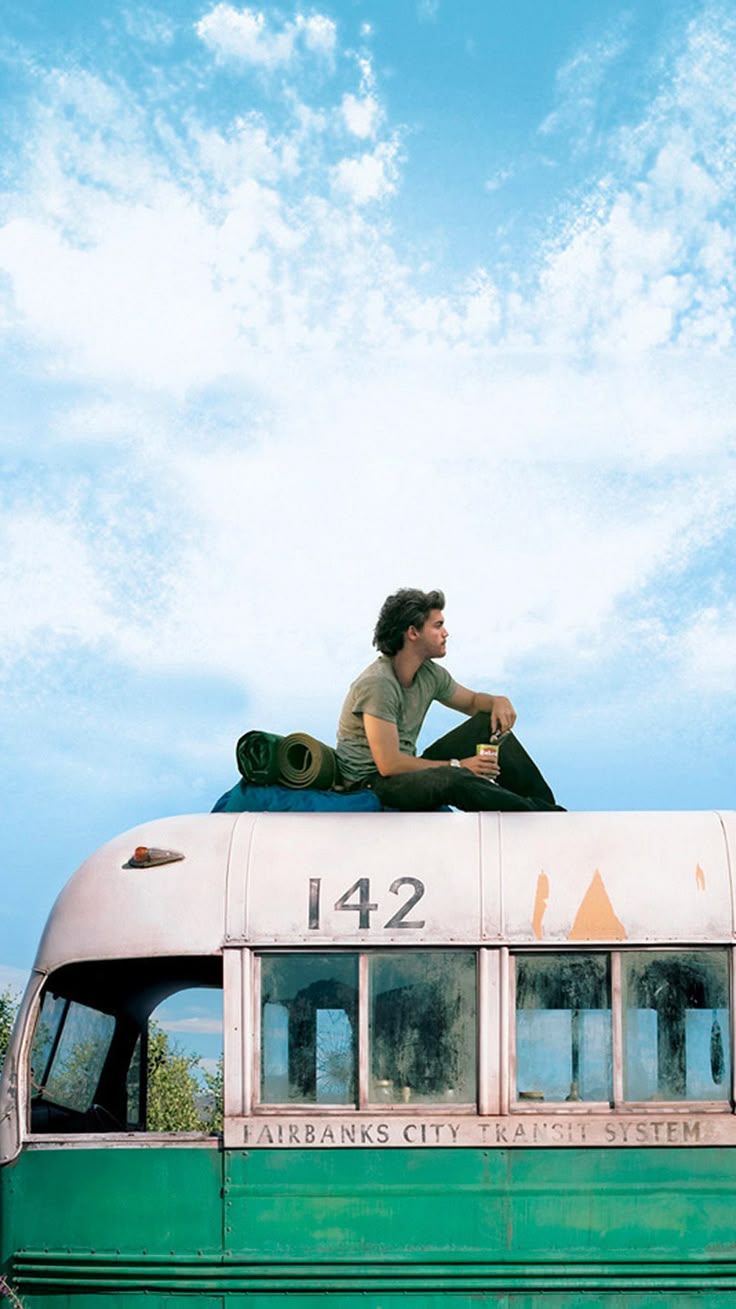
Into the Wild
Lyrical, contemplative, elegiac, with bursts of youthful exuberance
Based on a publicly circulated draft of this screenplay sourced online — it may differ from the official shooting script or final film. Shown to demonstrate ProofIntelligence.
A gifted young man, disillusioned by his parents' hypocrisy and society's materialism, abandons his identity and possessions to wander across America before embarking on a fatal odyssey into the Alaskan wilderness.
Executive Summary
Sean Penn's 'Into the Wild' is a prestige drama adaptation of Jon Krakauer's bestselling true story, offering a star-making lead role for a young actor and stunning wilderness locations that provide inherent visual spectacle. The screenplay's episodic structure and tragic ending position it as a limited-theatrical-to-awards-season release rather than a mass commercial play, but the built-in book audience, Penn's directorial attachment, and the story's enduring cultural resonance provide a strong foundation for ₹40-60Cr equivalent budget with significant upside through awards recognition and long-tail streaming value. The supporting roles (particularly Ron Franz and Wayne Westerberg) will attract veteran character actors, and the eclectic soundtrack opportunities add marketing hooks. Primary risk is managing the production's multi-location logistics while maintaining the intimate, character-driven tone that makes the material work.
Why this verdict
Sean Penn's adaptation of Jon Krakauer's book is a deeply felt, emotionally resonant screenplay that captures the spiritual and physical journey of Christopher McCandless with genuine power. The structure is episodic by design — a picaresque road narrative — which gives it tremendous emotional range but occasionally sacrifices dramatic momentum. The dialogue is naturalistic and often moving, though some scenes lean heavily on Carine's voiceover narration rather than dramatizing conflict directly. The final act in Alaska is devastating and beautifully rendered, delivering an emotional payoff that justifies the sprawling journey preceding it.
Score Breakdown
Casting
Emile Hirsch
as CHRIS
Hirsch has the lean, athletic build and boyish intensity the role demands, with proven range in both physical and emotionally vulnerable performances. His work in Alpha Dog and Lords of Dogtown demonstrates the charismatic rebel energy Chris requires.
Hal Holbrook
as RON
Holbrook's weathered dignity and quiet emotional power make him ideal for the elderly veteran whose losses have made him both fragile and wise. His career-long ability to convey deep feeling through restraint perfectly matches Ron's measured, moist-eyed tenderness.
Vince Vaughn
as WAYNE
Vaughn's rapid-fire verbal energy and physical presence capture Wayne's manic, renaissance-man-of-the-plains quality. His ability to shift from comedy to genuine warmth mirrors Wayne's character — a man who hides real depth behind relentless humor.
Catherine Keener
as JAN
Keener's naturalistic warmth and ability to convey maternal longing without sentimentality make her perfect for Jan Burres. Her indie-film sensibility and gift for underplayed emotion match the character's Woodstock-era authenticity and quiet heartbreak over her lost son.
Marcia Gay Harden
as BILLIE
Harden's ability to convey both strength and vulnerability in equal measure suits Billie's complex position as both victim and accomplice in the family's dysfunction. Her dark, striking features match the physical description in the script.
William Hurt
as WALT
Hurt's capacity for portraying intellectual arrogance masking deep emotional pain is precisely what Walt requires — a brilliant man whose taciturn exterior conceals both guilt and heartbreak. His physical bearing conveys the authority figure Chris rebels against.
Jena Malone
as CARINE
Malone's combination of youthful vulnerability and emotional intelligence suits Carine's role as the family's conscience and narrator. Her expressive eyes and naturalistic delivery would bring authenticity to the extensive voiceover narration that anchors the film's emotional throughline.
Kristen Stewart
as TRACY
Stewart's ability to convey adolescent longing and awkward intensity makes her ideal for the 16-year-old Tracy who falls for Chris at the Slabs. Her naturalistic, unpolished performance style matches the character's raw, unguarded emotional openness.
Pacing & Rhythm
Overall pace
Deliberately measured with lyrical interludes, building to an intense final act
The pacing curve reflects the screenplay's episodic, chapter-based structure — it operates in waves rather than a steady climb, with each chapter containing its own internal rhythm. The Colorado River rapids sequence (page 57) provides the screenplay's most kinetic action set piece, while the final Alaska section delivers a sustained, relentless escalation that is the screenplay's pacing triumph. The middle sections (Slabs, Ron Franz) are deliberately slower, prioritizing emotional depth over narrative speed. This is a screenplay that trusts its audience to stay engaged through character and theme rather than plot mechanics.
SLOW · pp. 80–100
The Mexico/kayak sequence and immigration office scenes feel extended, with multiple omitted scenes suggesting Penn himself recognized pacing issues in this stretch.
Fix: Tighten the Mexico section — the immigration office framing device is clever but the back-and-forth slows momentum. Consider consolidating the river journey into fewer, more impactful beats.
SLOW · pp. 44–55
The Orick Beach sequence with Jan and Rainey, while emotionally rich, lingers through multiple campfire scenes and montages that cover similar emotional ground.
Fix: Combine some of the campfire conversations and reduce the number of montage sequences to maintain forward momentum while preserving the emotional core of the Jan/Rainey relationship.
RUSHED · pp. 119–125
The entire journey from the American Southwest to Fairbanks, Alaska is compressed into a montage with minimal dramatization, despite being the most consequential decision of Chris's life.
Fix: Consider adding one dramatized scene during the journey north — perhaps a final human encounter that underscores what Chris is leaving behind — to give the Alaska commitment more dramatic weight.
RUSHED · pp. 130–135
The early Alaska survival period moves very quickly through diary entries and brief vignettes, making it hard to feel the passage of time and the gradual shift from triumph to desperation.
Fix: Expand the early Alaska section with at least one extended scene showing Chris in his element — perhaps a successful hunt or a moment of genuine wilderness communion — before the decline begins.
Conflict Escalation
The conflict escalation follows an unconventional but effective pattern — rather than a steady climb, it operates in waves corresponding to the chapter structure, with each episode containing its own mini-arc of tension. The overall trajectory is a slow burn that explodes in the final 25 pages. The Alaska section delivers a relentless, almost unbearable escalation from the flooded river through the poisoning to the final death scene. The screenplay's genius is that the ultimate conflict is internal — Chris versus his own philosophy — and the external survival crisis merely crystallizes the spiritual crisis that has been building throughout.
Peak moment · page 143
Chris's death in the bus — the convergence of physical agony, spiritual revelation, and the devastating vision of running into his parents' arms that can never be fulfilled. The drumbeats, the clearing cloud, the final breath, and the settling into stillness create the screenplay's most powerful moment.
Protagonist Arc
Chris's internal arc is a masterfully constructed tragedy — a young man who begins at a high point of righteous conviction, experiences peaks of exhilaration and troughs of pain, and ultimately arrives at wisdom only at the moment of death. The arc's genius is that Chris's highest external moment (discovering Bus 142, page 126) is followed by his steepest internal decline, while his lowest physical moment (dying) coincides with his highest spiritual realization. The curve is not a simple descent but a complex oscillation that mirrors the episodic structure — each human encounter temporarily lifts Chris before he pushes away again. The final uptick from -95 to +40 in the last three pages is the screenplay's most powerful achievement: Chris dies not in despair but in hard-won understanding.
Scene Audit
37 scenes evaluated — tension, pacing contribution, and whether each earns its place.
| Pg | Scene | Purpose | Tension | Verdict |
|---|---|---|---|---|
| 1 | EXT. THE STAMPEDE TRAIL CHRIS · DRIVER | Opens with Chris entering the Alaskan wilderness — establishes mystery and foreshadowingMasterful opening — mystery, tone, and theme in one scene. | 35maintains | essential |
| 3 | EXT. COMMENCEMENT GROUNDS, EMORY UNIVERSITY CHRIS · BILLIE · WALT · CARINE | Graduation ceremony establishes Chris's family and his rebellious energyEfficiently introduces family dynamics and Chris's character. | 20accelerates | essential |
| 6 | INT. ATLANTA RESTAURANT CHRIS · WALT · BILLIE · CARINE | Family dinner reveals tensions — Chris rejects offer of new carKey scene establishing Chris's anti-materialism and family friction. | 45accelerates | essential |
| 9 | INT. OFF-CAMPUS ROOMING HOUSE CHRIS | Chris donates savings, burns social security card — commits to new identityPowerful visual storytelling — the burning card is iconic. | 50accelerates | essential |
| 11 | INT. DATSUN CHRIS | Flash flood hits Chris's car in the desertFirst physical danger — Chris's calm response reveals character. | 55accelerates | essential |
| 12 | INT. COLLEGE BUILDING CHRIS | Home video of Chris's college journalism project about 'slaying the beast'Overlong — the metaphor is clear by page 14, trim to half. | 10decelerates | needs_work |
| 22 | INT. TENT CHRIS · FOREST RANGER | Forest Ranger encounter — Chris lies about identity for first timeEstablishes Chris's new identity and relationship with authority. | 30maintains | essential |
| 24 | INT./EXT. CAR-HIGHWAY CHRIS · POLICEMAN | Police ticket for hitchhiking — Chris gives real nameCreates plot consequence — ticket leads family to California. | 40accelerates | essential |
| 27 | INT. RAINEY & JAN VAN CHRIS · JAN · RAINEY | Chris meets Jan and Rainey — first significant human connection on the roadWarm, natural introduction of key surrogate family. | 15maintains | essential |
| 31 | EXT. ORICK BEACH CHRIS · RAINEY · JAN | Chris counsels Rainey about Jan, then swims with JanBeautiful scene — Chris as healer, surrogate son to Jan. | 20decelerates | essential |
| 36 | EXT. CAMPSITE, ORICK BEACH CHRIS | Chris reads Thoreau while Jan and Rainey make loveThematically neat but slightly precious — could be trimmed. | 10decelerates | needs_work |
| 39 | INT. MCCANDLESS HOME, ANNANDALE CHRIS · WALT · CARINE | Flashback — Chris gives Walt telescope, then reveals his disillusionment to CarineCrucial scene — shows Chris's pain beneath the performance. | 50accelerates | essential |
| 41 | INT. DOUBLE-WIDE CHRIS · WAYNE | Chris meets Wayne Westerberg — dinner and conversationWayne's energy lifts the screenplay — great character intro. | 15maintains | essential |
| 49 | INT. CABARET BAR, CARTHAGE CHRIS · WAYNE · GAIL | Drunken conversation about Alaska — Chris reveals his dreamFirst articulation of Alaska plan — Wayne's warning resonates. | 25maintains | essential |
| 52 | EXT. GRAIN ELEVATOR WAYNE | Wayne arrested by FBI for satellite TV fraudComic and poignant — removes Chris's anchor, propels him south. | 45accelerates | essential |
| 57 | EXT. COLORADO RIVER CHRIS | Chris shoots the rapids in a kayak — no experience, no safety gearThrilling set piece — captures Chris's immortal recklessness. | 60accelerates | essential |
| 57 | EXT. FURTHER ALONG THE RIVER CHRIS · MADS · SONJA | Chris meets Danish couple — warmth, humor, hotdogsDelightful comic relief — Mads and Sonja are unforgettable. | 15decelerates | essential |
| 66 | INT. IMMIGRATION OFFICE CHRIS | Chris recounts Mexico adventure to immigration officerFraming device is clever but slows pace — consider cutting. | 20decelerates | needs_work |
| 76 | INT. TRAIN CAR CHRIS | Railroad bull beats Chris on freight trainMidpoint violence — shatters Chris's romantic tramping vision. | 70accelerates | essential |
| 79 | INT. MCCANDLESS HOME, ANNANDALE CHRIS · CARINE · WALT · BILLIE | Flashback — parents' violent fight witnessed by young Chris and CarineMost powerful family scene — should be expanded, not isolated. | 65accelerates | essential |
| 83 | INT. BURGER KING, BULLHEAD CITY CHRIS · LORI | Chris works at Burger King — comic contrast with his philosophyAmusing but could be shorter — one scene instead of two. | 10decelerates | needs_work |
| 88 | EXT. THE SLABS CHRIS · JAN · RAINEY · TRACY | Reunion at the Slabs — Chris reconnects with Jan and Rainey, meets TracyWarm reunion — Tracy's introduction adds romantic tension. | 20maintains | essential |
| 91 | EXT. RAINEY & JAN'S VAN, THE SLABS CHRIS · JAN · TRACY | Jan tells Chris about her lost son Reno — parallel to Chris's situationCrucial thematic scene — Jan as mirror of Billie's suffering. | 30maintains | essential |
| 95 | INT. TRACY'S PARENTS RIG CHRIS · TRACY | Tracy attempts seduction — Chris maintains moral boundariesReveals Chris's moral code and capacity for tenderness. | 35maintains | essential |
| 103 | EXT. CHRIS' CAMP BESIDE THE STONE WALL CHRIS · RON | Ron visits Chris's camp — beginning of their deep friendshipBeautifully paced introduction of the screenplay's key relationship. | 15maintains | essential |
| 106 | INT. ELEVATION RESTAURANT CHRIS · RON | Chris vents about his parents — Ron offers wisdom about forgivenessThematic heart of the film — forgiveness and God's light. | 35maintains | essential |
| 115 | EXT. CHRIS' CAMP BESIDE THE STONE WALL CHRIS · RON | Chris and Ron climb the stone wall — Ron asks about AlaskaCulmination of Ron/Chris relationship — joy and foreboding. | 30maintains | essential |
| 118 | INT. RON'S TRUCK CHRIS · RON | Ron asks to adopt Chris — Chris deflectsDevastating — the most painful rejection of love in the script. | 50accelerates | essential |
| 122 | INT. BEDROOM, MCCANDLESS HOME BILLIE · WALT | Billie wakes hearing Chris's voice — supernatural dreadChilling transition to Alaska — maternal instinct as horror. | 55accelerates | essential |
| 126 | EXT. WOODS BESIDE RIVER CHRIS | Chris discovers Bus 142 — his new homeIconic discovery — the bus as both sanctuary and tomb. | 25accelerates | essential |
| 131 | EXT. BUS ENVIRONS CHRIS | Chris kills moose but fails to preserve meat — great tragedyTurning point — triumph becomes disaster, hubris exposed. | 60accelerates | essential |
| 135 | EXT. TEKLANIKA RIVER CHRIS | Chris discovers river is impassable — trapped in the wildPoint of no return — nature as implacable antagonist. | 80accelerates | essential |
| 138 | INT./EXT. BUS CHRIS | Chris discovers potato seeds are poisonousDevastating revelation — the CRASH ZOOM is perfectly placed. | 90accelerates | essential |
| 140 | EXT. SUSHANA RIVER CHRIS | Emaciated Chris encounters bear — too small to be preyHaunting image — Chris has become invisible to nature itself. | 75maintains | essential |
| 141 | INT. BUS CHRIS | Day 100 — Chris writes 'happiness only real when shared'The screenplay's thesis — devastating in its simplicity. | 95accelerates | essential |
| 143 | INT./EXT. ANNANDALE HOUSE CHRIS · BILLIE · WALT | Chris's vision of returning home — embrace that never happensHeartbreaking fantasy — the embrace cut short by reality. | 85accelerates | essential |
| 144 | INT. BUS CHRIS | Chris's death — final breath, settling to stillnessTranscendent ending — 'he died alive' is unforgettable. | 100accelerates | essential |
Beat Sheet · Save The Cat
The screenplay follows the Save the Cat structure in spirit but not in conventional page placement — the episodic, chapter-based structure means beats arrive at unconventional positions. The 'Fun and Games' section is enormously expanded (spanning roughly 60 pages of road adventures), while the 'All Is Lost' through 'Finale' beats are compressed into the final 10 pages with devastating effectiveness. The midpoint arrives late and is somewhat underplayed. The screenplay's greatest structural achievement is the final sequence, where the Dark Night of the Soul, Break Into Three, and Finale arrive in rapid succession with escalating emotional power. The unconventional beat placement is a deliberate choice that serves the story's picaresque nature rather than a structural flaw.
| Beat | Expected | Actual | Present | Quality |
|---|---|---|---|---|
Opening Image A vast Alaskan wilderness — a tiny figure walks away from a truck into nowhere, refusing watch, comb, and money | p. 1 | p. 1 | 95 | |
Theme Stated Chris reads Sharon Olds poem about parents — 'you are going to do bad things to children' — establishes the wound driving his journey | p. 5 | p. 2 | 80 | |
Setup Graduation, family dinner, Chris's rejection of materialism, the family dynamics of Walt, Billie, Carine, and Chris established | p. 10 | p. 3 | 75 | |
Catalyst Chris donates his $24,000 savings, burns his remaining cash, destroys his identity documents, and drives west | p. 12 | p. 9 | 90 | |
Debate Flash flood nearly kills Chris in the desert — brief moment of questioning whether this path is survivable, but he pushes forward | p. 15 | p. 10 | 65 | |
Break Into Two Chris burns his money, abandons the Datsun, and walks into the wilderness on foot — fully committed to life as Alexander Supertramp | p. 25 | p. 13 | 85 | |
B Story Carine's voiceover narration begins tracking the family's response to Chris's disappearance — the B story is the family he left behind | p. 30 | p. 20 | 70 | |
Fun and Games Chris's picaresque adventures — meeting Jan and Rainey, working with Wayne's harvest crew, shooting the Colorado rapids, meeting Mads and Sonja | p. 40 | p. 27 | 85 | |
Midpoint Railroad bull beats Chris on a freight train — the romantic vision of tramping life collides with brutal reality | p. 55 | p. 77 | 70 | |
Bad Guys Close In Chris's encounters become more emotionally demanding — Jan asks about his parents, Ron offers adoption, Tracy offers love — the 'bad guys' are the human connections he can't accept | p. 75 | p. 80 | 80 | |
All Is Lost The Teklanika River is impassable at full flood — Chris is trapped in the wilderness, unable to walk out | p. 85 | p. 135 | 90 | |
Dark Night of the Soul Chris discovers the potato seeds are poisonous — he is starving, trapped, and dying. Day 100: too weak to walk out, no game in sight | p. 90 | p. 138 | 95 | |
Break Into Three Chris reads 'happiness only real when shared' and writes his final testament — the spiritual revelation that synthesizes his entire journey | p. 95 | p. 141 | 95 | |
Finale Chris's vision of returning home to his parents' embrace, cut short by reality — his final breath, the settling to stillness, 'he died alive' | p. 100 | p. 143 | 95 | |
Final Image The real photograph of Christopher McCandless smiling on the Stampede Trail — the dedication and Carine carrying his ashes in her backpack | p. 110 | p. 144 | 90 |
What's Working
Devastating Emotional Arc
The screenplay builds toward one of the most powerful endings in modern American cinema — Chris's dying realization that 'happiness only real when shared' lands with the force of genuine tragedy because every preceding scene has shown him rejecting the love offered to him. The final vision of running into his parents' arms is heartbreaking precisely because it can never happen.
Vivid Supporting Characters
Every person Chris encounters on his journey is drawn with specificity and warmth — from Wayne's manic energy to Ron's quiet dignity to Mads's exuberant hospitality. These characters feel like real people rather than plot devices, and each represents a different philosophy of living that enriches the screenplay's thematic exploration.
Star-Making Lead Role
The role of Chris McCandless is an extraordinary opportunity for a young actor — charismatic, physically demanding, intellectually complex, and emotionally devastating. This is the kind of role that launches careers and generates awards attention, making the project highly attractive for talent packaging.
Built-In Audience and Cultural Relevance
Krakauer's book was a massive bestseller and McCandless's story continues to generate passionate debate about idealism, privilege, and the American wilderness myth. The screenplay taps into enduring cultural conversations about materialism, authenticity, and the cost of radical freedom.
Thematic Cohesion
Despite its episodic structure, the screenplay maintains remarkable thematic unity — every encounter, every landscape, every conversation circles back to the central tension between freedom and connection, solitude and love. The Tolstoy and Pasternak quotations are woven organically into the narrative rather than imposed upon it.
What to Fix
Over-Reliance on Voiceover Narration
Carine's extensive V.O. carries enormous narrative weight — delivering family backstory, emotional context, and thematic commentary that should ideally be dramatized. While the V.O. is well-written, it creates a literary rather than cinematic experience in several stretches, particularly the family history sections. The screenplay tells us about Walt's double life and the parents' fights rather than fully showing them.
Episodic Structure Sacrifices Momentum
The chapter-based, picaresque structure means the screenplay lacks conventional dramatic escalation through its long second act. Each encounter is self-contained, and while they accumulate emotional weight, there are stretches (particularly the Mexico/kayak section) where the narrative feels like it's treading water rather than building toward the Alaska climax.
Underdeveloped Family Dynamics
The McCandless family scenes are mostly delivered through V.O. and brief flashbacks rather than fully dramatized sequences. Walt and Billie remain somewhat abstract figures — we understand Chris's resentment intellectually but rarely feel the family dysfunction in real-time dramatic scenes. The single flashback of the parents fighting (Scene 136) is powerful but isolated.
Screenplay Format and Craft Issues
The screenplay contains extensive director's notes, camera directions, and editorial commentary that would typically be removed from a shooting script. Passages like '(Director's Note: Cast a Kevin who knows this shit)' and detailed crane/helicopter shot descriptions break the reading experience and suggest this was written as a director's blueprint rather than a spec screenplay meant to attract collaborators.
Rewrite priorities
Convert 2-3 key V.O. passages into dramatized scenes — show Chris discovering Walt's secret family, show a full confrontation between Chris and his parents, show Carine's own emotional journey rather than narrating it
Issue: Carine's V.O. carries too much narrative weight, particularly regarding family backstory and Chris's motivations
Consolidate the Mexico section into a tighter sequence — either commit to the immigration office framing device or cut it entirely. Reduce the number of river scenes and focus on the most visually and emotionally impactful moments
Issue: The Mexico/kayak section (pages 65-72) contains numerous OMITTED scenes and feels structurally uncertain, with the immigration office framing device slowing momentum
Add 1-2 scenes showing Carine's own life and emotional journey rather than having her exist solely as narrator. Show her engagement, her relationship with her parents, her own processing of Chris's absence
Issue: Carine is essential to the film's structure but underdeveloped as a character — her own arc (engagement, growing closeness to parents) is mentioned but never shown
Remove or minimize director's notes ('Cast a Kevin who knows this shit'), reduce specific camera directions to essential visual storytelling moments, and let the prose do the work of conveying the visual approach
Issue: Extensive director's notes, camera directions, and editorial commentary break the reading experience and make the screenplay feel like a personal blueprint rather than a professional document
Trust the subtext more — let Chris's anti-materialism emerge through behavior and choice rather than explicit statements. The car scene could be shortened, and the Jesse Jackson moment could be cut entirely
Issue: Some of Chris's philosophical speeches are overly didactic, particularly the restaurant scene about the new car and the bar scene pointing at Jesse Jackson
Biggest improvement lever
Reduce reliance on Carine's voiceover narration by dramatizing 2-3 key family scenes — particularly the discovery of Walt's double life and at least one full-length confrontation between Chris and his parents. The screenplay's emotional power would increase significantly if we experienced the family dysfunction through scenes rather than being told about it, allowing the audience to feel Chris's rage rather than having it explained to them.
Emotional Rhythm
The emotional rhythm is remarkably varied and well-orchestrated. Penn alternates between peaks of youthful exuberance (the rapids, the bus discovery) and valleys of family anguish (Walt's collapse, Billie's midnight awakening), creating a rich emotional texture that prevents the film from becoming either a simple adventure story or a simple tragedy. The final sequence achieves something rare — moving from devastation through transcendence to grief in a matter of pages, with Chris's death scene managing to be simultaneously the most painful and most peaceful moment in the screenplay. The emotional range is one of the screenplay's greatest achievements.
Act Structure
Act One
pp. 1–30Chris McCandless graduates from Emory University, donates his savings to charity, burns his remaining cash, abandons his car in the desert, and begins his journey westward. Through Carine's voiceover, we learn of the family's dysfunction — Walt's secret double life, the parents' violent fights, and Chris's growing resentment. He meets Jan and Rainey on the California coast, establishing the pattern of meaningful but temporary human connections.
Key turning point
Chris burns his money and abandons his Datsun in the desert, committing fully to his new identity as Alexander Supertramp.
The first act efficiently establishes Chris's motivations through a clever interplay of present-action and Carine's retrospective narration. The graduation scene, the restaurant confrontation over the new car, and the burning of money are all strong visual storytelling moments. However, the heavy reliance on Carine's V.O. to deliver backstory about the family secrets risks making the act feel more told than shown.
Act Two
pp. 30–120Chris's two-year odyssey across America unfolds in episodic chapters: working with Wayne Westerberg's harvest crew in South Dakota, kayaking the Colorado River illegally, working at Burger King in Bullhead City, spending Christmas at the Slabs commune with Jan, Rainey, and the young Tracy, and forming a deep bond with the elderly Ron Franz in the Anza-Borrego desert. Each encounter deepens Chris's philosophy while revealing his inability to accept the love being offered to him. Meanwhile, his family deteriorates under the weight of his absence.
Key turning point
Ron Franz asks to adopt Chris, and Chris deflects the offer — the clearest dramatization of his inability to accept love even as he craves connection.
The sprawling second act is the screenplay's greatest strength and its structural vulnerability. Each chapter introduces vivid, memorable characters — Wayne, Jan, Mads and Sonja, Ron — and Penn writes these encounters with warmth and authenticity. But the episodic structure means tension doesn't escalate conventionally; it accumulates emotionally rather than narratively. The Carine V.O. sections about the family's suffering provide necessary counterweight but occasionally feel like a parallel documentary rather than integrated drama.
Act Three
pp. 120–144Chris arrives in Alaska and finds Bus 142, establishing his wilderness camp. Initial triumph gives way to desperate struggle as hunting proves difficult, his rice runs out, and he grows dangerously thin. After killing a moose but failing to preserve the meat, he discovers edible plants — but fatally misidentifies poisonous wild potato seeds. Trapped by the flooded Teklanika River and too weak to walk out, Chris faces his mortality, arriving at the revelation that 'happiness only real when shared.' He dies alone in his sleeping bag, imagining a final embrace with his parents.
Key turning point
Chris discovers the potato seeds are poisonous and realizes he is trapped — the river is impassable and he is too weak to walk out.
The third act is the screenplay's most powerful section. Penn masterfully compresses time through the diary/log entries while maintaining visceral physical detail. The slow deterioration is harrowing, and the final sequence — Chris's vision of returning home, the cathartic tear, the settling into stillness — is genuinely transcendent filmmaking on the page. The thematic payoff ('happiness only real when shared') lands with devastating force because the entire journey has been building toward this realization.
Midpoint · page 78
Chris is beaten by a railroad bull after hopping a freight train, marking the first time his romantic vision of tramping life collides violently with reality.
The bull beating is an effective midpoint that introduces genuine physical danger and punctures Chris's sense of invincibility. It shifts the stakes from philosophical (can Chris find meaning outside society?) to physical (can Chris survive this lifestyle?). However, it's somewhat underplayed in the larger narrative — the scene passes quickly and Chris moves on without much visible processing of the trauma, which slightly diminishes its structural impact.
Character Analysis
Protagonist · arc 90/100
CHRIS
want
To live authentically in the wild, free from society's materialism and his parents' hypocrisy
need
To forgive his parents and accept that happiness requires human connection
flaw
Moral absolutism and inability to forgive — he holds others to impossible standards while romanticizing dangerous solitude
Chris McCandless is a brilliantly rendered protagonist — charismatic, infuriating, idealistic, and deeply wounded. Penn captures the specific texture of a young man whose intelligence and moral passion have curdled into self-destructive absolutism. The arc is complete and devastating: every person Chris meets offers him love, and every time he walks away, until the final revelation comes when it's too late to act on it. The character works because Penn never reduces him to either hero or fool.
Antagonist · threat 55/100
WALT
Walt is an effective antagonist precisely because he's not villainous — he's a brilliant, flawed man whose arrogance and infidelity created the wound that drives Chris's entire journey. Penn wisely keeps Walt mostly in the background, letting his presence be felt through Carine's narration and Chris's rage. The scene of Walt collapsing to his knees on the Annandale street is one of the screenplay's most powerful moments, humanizing the antagonist without excusing him.
Supporting cast
18 characters · 14 distinct voicesThe supporting cast is one of the screenplay's greatest strengths. Penn has a gift for creating vivid, memorable characters in just a few pages — Mads and Sonja's exuberant hospitality, Wayne's manic energy, Ron's quiet dignity. Each encounter feels specific and lived-in rather than schematic. The characters represent different philosophies of living outside convention, creating a rich tapestry of American marginality. Even minor characters like the Forest Ranger and the social worker at the Midnight Mission have distinct voices and feel like real people rather than plot functions.
Character Presence
Screen presence by act; total scene count on the right.
Dialogue
Subtext
Voice
Density: Moderate — balanced between dialogue scenes, visual storytelling, and extensive voiceover narration
Penn's dialogue is naturalistic and character-specific — Wayne's rapid-fire energy sounds nothing like Ron's measured wisdom, which sounds nothing like Mads's exuberant broken English. Chris's dialogue effectively captures a young intellectual's tendency to quote literature and philosophy while also revealing genuine vulnerability beneath the posturing. The screenplay's most powerful lines emerge organically from character and situation rather than feeling imposed. However, some of Chris's philosophical speeches (particularly the restaurant scene about the new car) veer toward didacticism, and the heavy reliance on Carine's V.O. means that much of the screenplay's most eloquent language is narration rather than dramatic dialogue.
The dialogue-to-action balance shifts dramatically across the screenplay's three movements. Acts 1 and 2 are dialogue-heavy, driven by Chris's conversations with the people he meets on the road and Carine's extensive voiceover narration. Act 3 in Alaska is almost entirely action and description, with Chris increasingly alone and silent — the shift from verbal to physical storytelling mirrors his isolation and deterioration. The description percentage is elevated throughout due to Penn's detailed visual directions and nature writing. The balance works thematically: Chris moves from a world of words and ideas to a world of pure physical reality.
Notable lines
“I don't want to know what time it is, what day it is, or where I am. None of that matters.”
CHRIS · page 2
Establishes Chris's entire philosophy in a single exchange — economical, memorable, and sets the tone for the entire film.
“When you forgive, you love. And when you love, God's light shines on you.”
RON · page 116
The thematic heart of the film delivered by the character with the most moral authority to say it — earned by Ron's own story of loss and recovery.
“Happiness only real when shared.”
CHRIS · page 141
The screenplay's devastating thesis statement, arriving at the moment of Chris's death — the simplicity of the language makes it land like a hammer.
“Children can be harsh judges when it comes to their parents. They don't grant clemency easily.”
RAINEY · page 93
Rainey's observation about Jan's son Reno doubles as commentary on Chris's relationship with his own parents — subtext working beautifully.
“I love this. Don't you love this? This is nature. We see it in the American movies. How come you're crazy?”
MADS · page 58
Perfectly captures the exuberant Danish tourist's voice while providing an outsider's perspective on Chris's American romanticism.
Lines to fix
“Thing, thing, thing.”
CHRIS · page 8
Chris's outburst about the new car feels slightly on-the-nose in its anti-materialism. Consider letting the subtext do more work — his discomfort could be shown through behavior rather than stated so directly.
“Now, that's who could be President!”
CHRIS · page 50
Chris pointing at Jesse Jackson on TV and yelling to a bar of cowboys feels like it's trying too hard to establish his political idealism. The moment is tonally jarring in an otherwise naturalistic bar scene.
“Whatever drawer he was opening now must have something sweet in it.”
CARINE · page 63
This V.O. metaphor connecting four-year-old Chris raiding a candy drawer to his adult adventures is a bit too cute and literary for the otherwise grounded narration.
Market & Audience
This is a prestige drama with strong awards potential and a built-in audience from Krakauer's bestselling book. The combination of stunning wilderness locations, a charismatic young male lead role, and a true story with cultural resonance positions it well for theatrical release with awards-season timing. The episodic structure and contemplative pace are better suited to adult audiences than mass commercial release, but the adventure elements and young protagonist broaden appeal beyond typical arthouse fare. Sean Penn's involvement as writer-director adds significant packaging value.
Audience
Adults 25-55 who appreciate character-driven drama, nature/adventure enthusiasts, literary film audiences, and viewers drawn to true stories of unconventional lives
Budget band
mid
Trend
Wilderness survival and anti-establishment narratives have proven durable at the box office and on streaming platforms, from 127 Hours to Nomadland to The Revenant. The 'return to nature' theme has only grown more resonant in the post-pandemic era.
Platforms
Theatrical (limited release expanding) · Premium OTT (Netflix, Amazon Prime) · Festival circuit (Toronto, Sundance)
The screenplay's primary audience is the prestige/festival circuit — this is awards-season material with a literary pedigree, a star director, and thematic depth that critics will engage with seriously. The OTT/streaming appeal is strong due to the contemplative pace and character-driven narrative that rewards home viewing. Youth appeal is significant because Chris McCandless has become a cultural icon for young people questioning conventional paths — the story speaks directly to the idealism and restlessness of 18-25 year olds. Mass commercial appeal is limited by the episodic structure, tragic ending, and contemplative pace, while family appeal is constrained by the dark family dynamics and the protagonist's death. The ideal release strategy is a limited theatrical run building to awards consideration, followed by premium streaming availability.
Risks · Moderate
- • Episodic structure may test mainstream audience patience — no conventional antagonist or escalating plot
- • Protagonist dies at the end, which limits feel-good commercial appeal
- • Heavy reliance on voiceover narration could feel literary rather than cinematic if not executed perfectly
- • The protagonist's privilege (white, educated, choosing poverty) may generate audience resistance or accusations of romanticizing recklessness
- • Extensive wilderness shooting in Alaska and multiple US locations will drive up production costs
Mitigations
- • Built-in audience from Jon Krakauer's bestselling book
- • Sean Penn's name as writer-director attracts A-list talent and festival attention
- • The lead role is a star-making part that will attract top young actors
- • Stunning natural locations provide inherent visual spectacle
- • The true story has enduring cultural fascination — McCandless remains a polarizing, discussed figure
- • Strong supporting roles (Ron, Wayne, Jan) attract veteran character actors
Investment Case
Franchise Potential
standalone- The real-life stories of other wilderness adventurers inspired by McCandless
- Carine McCandless's own memoir and perspective
This is definitively a standalone film with no franchise potential. The protagonist dies, the story is based on a specific true event, and the narrative reaches complete thematic closure. Any sequel or spinoff would fundamentally undermine the story's power. The only tangential expansion possibility would be a documentary or limited series exploring the broader cultural impact of McCandless's story, but this would be a separate project rather than a franchise extension.
International Viability
The screenplay's universal themes of youthful rebellion, family dysfunction, and the search for meaning transcend cultural boundaries, but the specifically American mythology of wilderness freedom and frontier individualism may limit resonance in some markets. The film performed well internationally in its actual release, suggesting that the emotional core — a young man running from pain toward an ideal that ultimately destroys him — is universally understood. European audiences in particular respond to the anti-materialist philosophy and the tragic romanticism.
Strong markets: Europe (particularly UK, France, Germany, Scandinavia), Australia/New Zealand, Japan, South Korea, Urban India (English-speaking, OTT audiences)
Cultural barriers: Specifically American mythology of the frontier and wilderness; The privilege critique — a wealthy white man choosing poverty may not resonate universally; Heavy literary/philosophical references (Thoreau, Tolstoy, London) are Western-centric; The episodic road-movie structure is culturally specific to American geography
Investment Readiness
moderate riskReady for packagingThe screenplay is ready for packaging with Sean Penn attached as writer-director, which immediately elevates it to prestige-project status. The lead role is a genuine star-maker that will attract top young talent willing to undergo physical transformation. The primary investment risks are the extensive location shooting (Alaska, multiple US states, Mexico), the episodic structure's commercial limitations, and the tragic ending. However, the built-in audience from Krakauer's bestseller, the awards potential, and the enduring cultural fascination with McCandless's story provide strong risk mitigation. Budget should be managed carefully — this is a mid-budget prestige film (₹40-60Cr equivalent) that could over-perform if executed well.
Attachment suggestions
- • A-list young male actor (20s) for Chris — the role demands physical transformation, charisma, and emotional range
- • Veteran character actors for Ron Franz and Wayne Westerberg — roles that attract talent seeking meaty supporting parts
- • Experienced wilderness/adventure cinematographer (e.g., someone with Revenant or Everest credentials)
- • Sean Penn as director is the primary attachment — his involvement is the project's key packaging element
- • Music supervisor with indie/folk sensibility for the eclectic soundtrack Penn envisions
Comparable Films
Nomadland (2020)
Shares the same thematic DNA of rejecting conventional American life for nomadic existence, with a similarly episodic structure built around encounters with real-world drifters and outcasts.
127 Hours (2010)
A young adventurer's hubris leads to a life-threatening wilderness situation; both films use flashbacks to family and past relationships to deepen the survival narrative.
The Motorcycle Diaries (2004)
A privileged young man's transformative journey across a continent, encountering people from all walks of life, leading to a radical philosophical awakening.
Tracks (2013)
Solo wilderness journey driven by a desire to escape civilization, with similar themes of self-reliance, solitude, and the tension between human connection and radical independence.
Cinema DNA
The directorial sensibilities this script most resembles, weighted by influence.
✦Your Cinema DNA
The lyrical nature photography, philosophical voiceover narration, and spiritual searching through landscape are deeply Malickian — this screenplay reads like a Malick film with more conventional character development.
The road-movie structure, the protagonist fleeing family dysfunction to find himself through travel and encounters with strangers, and the tension between freedom and love echo Ali's Highway and Tamasha.
Herzog's obsession with men who push themselves to extremes in nature — Aguirre, Fitzcarraldo, Grizzly Man — is the direct spiritual ancestor of this story's exploration of idealism colliding with wilderness reality.
The verdict, in full
Sean Penn's adaptation of Jon Krakauer's 'Into the Wild' is a lyrical, emotionally devastating screenplay that traces Christopher McCandless's two-year journey from Emory University graduate to his death in an abandoned bus in the Alaskan wilderness. Structured as an episodic road narrative divided into six chapters, the screenplay follows Chris (who renames himself Alexander Supertramp) as he sheds his identity, burns his money, and encounters a series of memorable characters — harvest crew leader Wayne Westerberg, hippie couple Jan and Rainey, elderly veteran Ron Franz — each offering him the love and connection he simultaneously craves and rejects. The family backstory, delivered primarily through sister Carine's voiceover narration, reveals the wound driving Chris's flight: his father Walt's secret double life and the parents' violent, hypocritical marriage. The final act in Alaska is masterfully constructed, compressing months of survival into an inexorable countdown as Chris's romantic vision collides with the brutal reality of wilderness isolation, culminating in his poisoning by misidentified plant seeds and his dying epiphany that 'happiness only real when shared.' While the episodic structure occasionally sacrifices dramatic momentum and the heavy V.O. reliance creates a more literary than cinematic experience in places, the screenplay's emotional power is undeniable — it earns its devastating ending through the accumulated weight of every rejected embrace and every abandoned friendship along the way.
Your screenplay deserves this.
Every section you just read — scores, cast, pacing curves, scene-by-scene audit, market read, and a producer-ready verdict — generated for your script in minutes.
Registered with tamper-proof timestamps · Yours alone
Analysis of a publicly available draft of this screenplay sourced online. It may differ from the official shooting script or final film. Shown to demonstrate ProofIntelligence — not an official or licensed screenplay.