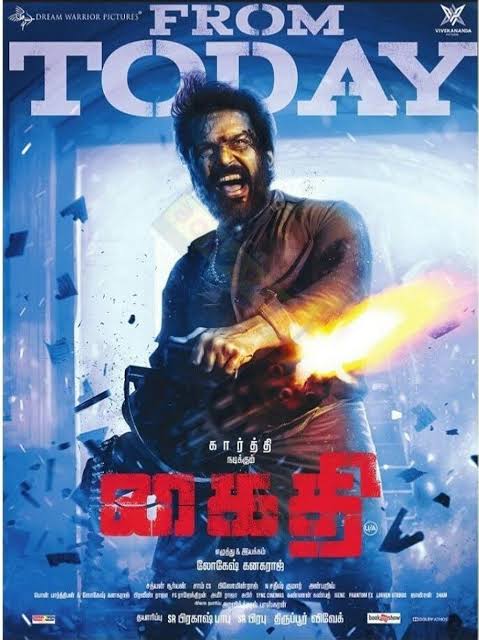
Kaithi
Gritty, tense, emotionally charged with moments of dark humor and deep paternal longing
Based on a publicly circulated draft of this screenplay sourced online — it may differ from the official shooting script or final film. Shown to demonstrate ProofIntelligence.
On the night an ex-convict is released from prison to meet his daughter for the first time, he is coerced into driving a lorry full of drugged police officers to safety while drug lords and corrupt cops close in from every direction.
Executive Summary
Kaithi is a proven, production-validated action thriller screenplay that delivers exceptional ROI potential through its budget-efficient single-night structure and emotionally resonant father-daughter narrative. The script requires a mid-budget (₹15-25Cr) investment with potential for ₹100Cr+ theatrical returns, validated by its actual box office performance. Its franchise DNA — the Adaikalam sequel hook and LCU connectivity — transforms a standalone hit into a long-term IP asset. For any production house seeking a high-concept, star-driven action vehicle with genuine emotional depth and minimal production risk, Kaithi represents the gold standard of contemporary Tamil commercial screenwriting.
Why this verdict
Kaithi is a masterfully constructed single-night thriller that delivers relentless tension while grounding its stakes in deeply emotional father-daughter longing. The screenplay demonstrates exceptional command of parallel storylines, escalating conflict, and economical character work — Dilli's arc from reluctant ex-convict to selfless protector is earned through action rather than exposition. The concept is high-concept yet budget-efficient, and the script's proven theatrical success (₹100Cr+ worldwide) validates its commercial instincts. Minor craft issues in formatting and some expository dialogue in early scenes are the only notable weaknesses in an otherwise investment-ready, production-proven screenplay.
Score Breakdown
Casting
Karthi
as Dilli
Karthi possesses the ideal combination of physical imposingness and emotional vulnerability required for Dilli — his performances in Madras and Theeran demonstrate both raw action capability and nuanced interiority. His natural screen presence conveys the quiet intensity of a man who has survived 10 years in prison.
Narain
as Bijoy
Narain's authoritative screen presence and ability to convey moral complexity make him ideal for Bijoy — a man who manipulates a convict while genuinely caring about his team. His work in Pudhupettai and various supporting roles demonstrates the range needed for a character who shifts between command and vulnerability.
Dheena
as Kamaatchi
Dheena brings the motor-mouth warmth and grounded comic timing that make Kamaatchi the film's emotional anchor — a catering-lorry owner whose banter never tips into caricature and whose fatherhood monologue becomes the turning point of Dilli's decision to sacrifice himself. He plays the humor and the heart in equal measure.
George Maryan
as Napolean
George Maryan's everyman authenticity suits Napoleon's arc from terrified constable to the man who holds the line at the commissioner's office — grounding both the fear and the reluctant courage so the transformation feels earned rather than heroic, while his warmth keeps the character human under pressure.
Arjun Das
as Anbu
Arjun Das brings a volatile, unpredictable energy that perfectly matches Anbu's cocaine-fueled menace — his breakout performance in this very film validated his ability to make a functional antagonist feel genuinely dangerous. His lean physicality and intense eyes create an immediate threat presence.
Kanna Ravi
as Ajas
Kanna Ravi's controlled intensity fits Ajas — the undercover officer posing as Sampath whose true identity is reclaimed only in his final moments. He plays the double life with restraint so the death-scene reveal lands as tragedy rather than twist, carrying convincingly as both a gang member and a hidden cop.
Pacing & Rhythm
Overall pace
Relentlessly propulsive with well-calibrated breathers
The pacing curve follows a masterful wave pattern that builds progressively higher peaks while maintaining strategic valleys for emotional breathing room. The screenplay never sustains maximum intensity for too long — each action peak (bamboo trap at 60, road fight at 76, mountain at 90, Tips ambush at 119, minigun at 128) is followed by a character moment that recharges the audience. The overall trajectory is upward, with each wave cresting higher than the last, culminating in the M134 sequence at near-maximum intensity before the gentle emotional landing of the reunion. The only pacing concern is the early exposition-heavy phone calls, which are necessary for plot but could be more visually dynamic on the page. This is textbook thriller pacing executed at an elite level.
SLOW · pp. 10–18
Multiple phone conversations between Stephen, Anbu, and Pal Pandi establishing the conspiracy — heavy exposition through dialogue
Fix: Some of the phone calls could be condensed or intercut more aggressively with visual action to maintain momentum during the setup phase.
SLOW · pp. 54–64
Extended Kamaatchi-Dilli conversation in the lorry cabin about pop culture, phones, and biryani — charming but lengthy
Fix: While these moments are essential for character bonding and comic relief, trimming 2-3 pages would tighten the mid-section without losing the warmth.
RUSHED · pp. 122–130
The M134 gun sequence and resolution happen very rapidly — multiple storylines converge and resolve in quick succession
Fix: The climactic gun battle could benefit from slightly more build-up before the trigger pull, and the aftermath/resolution could breathe a bit more to let the emotional payoff land fully.
Conflict Escalation
The conflict escalation follows a brilliantly designed wave pattern — tension builds to action peaks, then recedes briefly for emotional moments before climbing higher. Each wave crests higher than the last: the bamboo trap is topped by the mountain siege, which is topped by the Tips ambush, which is topped by the commissioner office climax. The screenplay never plateaus for long. The emotional breathers (Amudha's voice, the photo, Kamaatchi's fatherhood speech) are strategically placed to prevent audience fatigue while deepening investment. The peak moment — the M134 sequence — delivers cathartic release after 120 pages of accumulated tension.
Peak moment · page 128
Dilli fires the M134 minigun at the rowdies who have breached the commissioner office, eliminating the threat in a spectacular display of firepower — the culmination of every obstacle and sacrifice throughout the night.
Protagonist Arc
Dilli's internal arc is a masterpiece of character construction. He begins at rock bottom — a man who has never seen his daughter's face, released into a world that immediately tries to exploit him. His arc doesn't follow a simple upward trajectory; instead, it oscillates between hope and despair, mirroring the screenplay's external conflict waves. The crucial turning points are all emotional rather than action-driven: hearing Amudha's voice (first connection), seeing her photo (commitment to fatherhood), and Kamaatchi's speech about fathers (decision to sacrifice). His lowest internal point comes not during physical danger but when he decides to give up his chance to see Amudha in order to save Bijoy — this is the moment his transformation is complete. The final reunion at +95 is the highest emotional peak precisely because we've watched him earn it through 130 pages of sacrifice.
Scene Audit
29 scenes evaluated — tension, pacing contribution, and whether each earns its place.
| Pg | Scene | Purpose | Tension | Verdict |
|---|---|---|---|---|
| 7 | INT - ASHRAM NIGHT AMUDHA · ASHRAM CARETAKER | Establishes Amudha's orphan status and sets up the emotional stakes for Dilli's journeyQuiet, effective setup of the emotional core | 10decelerates | essential |
| 9 | EXT - HIGHWAY NIGHT DRIVERS | Establishes the drug transport lorry and mysterious journeyBrief visual hook creating mystery | 25maintains | essential |
| 9 | INT - THE GODOWN NIGHT THIRU · SUDHAKAR · BIJOY | Reveals the 900 kilo cocaine bust and Bijoy's teamCritical exposition delivered with urgency | 40accelerates | essential |
| 12 | INT/EXT - COMMISSIONER OFFICE NIGHT NAPOLEAN · HEAD CONSTABLE | Introduces Napoleon and establishes the commissioner office as a locationNapoleon's introduction is charming and efficient | 15decelerates | essential |
| 13 | INT - ANBU'S MEN NIGHT ANBU · TIPS · PLEADING MAN · SAMPAT | Introduces Anbu's gang, establishes the cocaine loss, and reveals Sampat's undercover statusDense scene establishing multiple antagonist threads | 55accelerates | essential |
| 15 | INT - STEPHEN HOUSE NIGHT STEPHEN · ANBU | Stephen offers to trade drug location for 20 kilos — corrupt cop dealNecessary but dialogue-heavy; could be tighter | 50maintains | needs_work |
| 17 | INT - COMMISSIONER OFFICE NIGHT TAMIZH · NEBULIYAN · HEAD CONSTABLE | Introduces Tamizh and the college students, establishes their presence at the stationSets up the student characters for Act Three payoff | 15decelerates | essential |
| 18 | INT - ANBU'S GANG NIGHT ANBU · STEPHEN · SAMPAT | Stephen reveals all five police names; Sampat's dual identity tension escalatesSampat's undercover call is peak dramatic irony | 60accelerates | essential |
| 22 | EXT/INT - IG GUEST HOUSE NIGHT BIJOY · IG · PAL PANDI | IG party, Pal Pandi drugs the drinks, Bijoy discovers the conspiracyMasterful scene — party becomes a trap | 65accelerates | essential |
| 30 | INT - COPS FLEE AT COMMISSIONER OFFICE NIGHT HEAD CONSTABLE · NAPOLEAN | Constables abandon the station, leaving Napoleon aloneCowardice of constables heightens Napoleon's heroism | 45accelerates | essential |
| 32 | EXT - DILLI TAKES THE WHEEL NIGHT DILLI · BIJOY · NALINI · KAMAATCHI | Dilli is introduced, negotiated with, threatened, and finally agrees to driveThe screenplay's central dramatic engine ignites here | 70accelerates | essential |
| 44 | INT - AT THE COMMISSIONER OFFICE NIGHT NAPOLEAN · BIJOY · ASHOK | Napoleon takes charge, Bijoy gives orders remotelyNapoleon's transformation from bystander to guardian | 50maintains | essential |
| 46 | INTERCUT - THE LORRY NIGHT DILLI · KAMAATCHI · BIJOY · PAL PANDI | Lorry journey with Kamaatchi navigating, Pal Pandi secretly reportingComic relief balanced with espionage tension | 45maintains | essential |
| 50 | EXT/INT - THE ROAD NIGHT TIPS · PAL PANDI | Tips sets up the bamboo trap ambushBuilds dread for the coming attack | 55accelerates | essential |
| 50 | INT - AT THE COMMISSIONER OFFICE NIGHT NAPOLEAN · BIJOY · AJAY | Napoleon recruits students to barricade the officeStudents stepping up is a crowd-pleasing beat | 50maintains | essential |
| 52 | INT/EXT - THE LORRY NIGHT DILLI · KAMAATCHI · BIJOY · AMUDHA | Dilli hears Amudha's voice for the first time; bamboo trap attack beginsEmotional peak interrupted by action — masterful | 75accelerates | essential |
| 61 | EXT - PETROL BUNK NIGHT DILLI · BIJOY · KAMAATCHI | Refueling stop; Dilli calls ashram watchman about AmudhaNecessary breather with deep emotional content | 35decelerates | essential |
| 66 | EXT/INT - THE TRAVEL NIGHT DILLI · KAMAATCHI · BIJOY | Extended lorry journey with Dilli-Kamaatchi bonding and photo download attemptCharming but slightly overlong; could trim 2 pages | 40maintains | needs_work |
| 69 | EXT - ANBU ARRIVES AT COMMISSIONER OFFICE NIGHT ANBU · NAPOLEAN · SANGKAR | Anbu's gang arrives at commissioner office; siege beginsParallel storyline reaches critical mass | 80accelerates | essential |
| 77 | EXT/INT - THE TIME'S UP NIGHT ANBU · NAPOLEAN · BIJOY · SANGKAR | Negotiation via video call; Dilli sees Amudha's photo; road confrontation with two gangsMultiple climactic threads converge brilliantly | 82accelerates | essential |
| 87 | EXT - THE MOUNTAIN AREA NIGHT DILLI · KAMAATCHI · BIJOY | Mountain passage with 40 gangsters surrounding; lorry pushed downhillInventive action sequence using terrain and gravity | 78accelerates | essential |
| 97 | EXT/INT - COMMISSIONER OFFICE NIGHT ANBU · TIPS · SAMPAT | Anbu learns of Tips' failure; Sampat sent to intercept; lorry reaches schoolTransitions between multiple storylines efficiently | 70maintains | essential |
| 104 | EXT - SCHOOL NIGHT DILLI · KAMAATCHI | Dilli shares his backstory with Kamaatchi — the Viji storyDevastating backstory delivered with economy | 30decelerates | essential |
| 107 | INT - ASHRAM NIGHT AMUDHA | Amudha worries no one will come to see herBrief but emotionally crucial — mirrors Dilli's fear | 15decelerates | essential |
| 109 | INT - COMMISSIONER OFFICE NIGHT ANBU · NAPOLEAN · TAMIZH · RAM · ADAIKALAM | Chittu is killed; Napoleon gives up the key; Anbu's cruelty peaksMost devastating scene — real consequences established | 92accelerates | essential |
| 113 | INT - COMMISSIONER OFFICE NIGHT TAMIZH · NAPOLEAN · RAM · ADAIKALAM | Chittu's death aftermath; Ram threatens from outside; tension peaksEmotional devastation drives the final act urgency | 88accelerates | essential |
| 116 | EXT - ROAD NIGHT DILLI · KAMAATCHI · TIPS · PAL PANDI · AJAS | Final ambush by Tips; Pal Pandi stabs Dilli; Ajas revealed and killedTriple revelation — Pal Pandi, Ajas, and Tips converge | 90accelerates | essential |
| 122 | EXT/INT - COMMISSIONER OFFICE NIGHT DILLI · BIJOY · NAPOLEAN · ADAIKALAM | Dilli crashes lorry into building; M134 minigun climax; rowdies eliminatedSpectacular climax — cathartic and earned | 98accelerates | essential |
| 129 | EXT - HOSPITAL/ROAD DILLI · BIJOY · AMUDHA · NALINI · KAMAATCHI | Dilli freed from handcuffs; meets Amudha; Adaikalam recognizes DilliPerfect emotional resolution — earned reunion | 40decelerates | essential |
Beat Sheet · Save The Cat
Kaithi adheres remarkably well to the Save the Cat structure while never feeling formulaic. The beats land with precision — the Debate section (Dilli's refusal) is particularly strong, and the All Is Lost moment (Chittu's death + Ajas's sacrifice) is devastating. The screenplay's real-time structure compresses some beats (the Dark Night and All Is Lost overlap), but this compression serves the story's urgency. The Final Image perfectly mirrors and inverts the Opening Image: Amudha was alone and waiting; now she's on her father's shoulders, walking forward. The B Story (Kamaatchi) is beautifully integrated — it's not a separate thread but an organic part of the main journey.
| Beat | Expected | Actual | Present | Quality |
|---|---|---|---|---|
Opening Image Amudha alone in the orphanage, drawing pictures of parents she's never met — establishes the emotional void at the story's center | p. 1 | p. 7 | 85 | |
Theme Stated Dilli's line about police drinking while a prisoner saves them — the theme of duty, sacrifice, and who truly protects society | p. 5 | p. 38 | 80 | |
Setup The drug bust, Anbu's empire, Stephen's corruption, the IG party, Napoleon at the commissioner office — all parallel worlds established | p. 10 | p. 9 | 82 | |
Catalyst Pal Pandi drugs the police officers at the IG guest house party — the inciting incident that creates the central crisis | p. 12 | p. 27 | 88 | |
Debate Dilli refuses to drive the lorry multiple times — Bijoy negotiates, threatens, and finally coerces him using Amudha as leverage | p. 15 | p. 32 | 90 | |
Break Into Two Dilli reluctantly starts the lorry and begins the journey — crossing the threshold from prisoner to reluctant hero | p. 25 | p. 38 | 85 | |
B Story The Dilli-Kamaatchi relationship — comic relief that deepens into genuine friendship and emotional catalyst for Dilli's transformation | p. 30 | p. 46 | 88 | |
Fun and Games The lorry journey with Kamaatchi's navigation comedy, the banter, the pop culture references, and the growing camaraderie between unlikely companions | p. 35 | p. 46 | 82 | |
Midpoint The bamboo trap ambush — Dilli transforms from reluctant driver to active combatant, destroying pursuing vehicles | p. 55 | p. 60 | 88 | |
Bad Guys Close In Anbu arrives at commissioner office; Tips sets up the final ambush; Pal Pandi continues feeding information; the net tightens on all fronts | p. 65 | p. 70 | 85 | |
All Is Lost Chittu is killed at the commissioner office; Ajas is revealed and murdered; Dilli is stabbed by Pal Pandi — everything seems lost | p. 75 | p. 113 | 92 | |
Dark Night of the Soul Dilli tells Kamaatchi he's decided to sacrifice his life to save Bijoy and honor his promise — accepting he may never see Amudha | p. 80 | p. 111 | 88 | |
Break Into Three Dilli crashes the lorry through the commissioner office wall — committing fully to the fight with no retreat possible | p. 85 | p. 122 | 90 | |
Finale The M134 minigun sequence eliminates the remaining gangsters; the commissioner office is secured; all surviving characters are saved | p. 100 | p. 128 | 85 | |
Final Image Dilli walks down the bypass road with Amudha on his shoulders and Kamaatchi beside him — a free man with his daughter, mirroring the opening image of Amudha alone | p. 110 | p. 133 | 92 |
What's Working
Relentless Narrative Engine
The single-night, real-time structure creates an inherent urgency that never lets up. Every scene either escalates tension or deepens character — there is virtually no fat in this screenplay. The parallel storylines (lorry journey, commissioner office siege, drug gang operations) are woven together with precision.
Emotionally Grounded Action
Unlike many action thrillers that treat emotion as an afterthought, Kaithi builds its entire narrative around a father's desperate desire to meet his daughter. Every action sequence gains weight because we understand what Dilli stands to lose. The photo download scene and the final reunion are masterclasses in earned emotion.
Budget-Efficient High Concept
The screenplay achieves blockbuster-scale tension with a remarkably contained setup — one lorry, one police station, one night. This makes it highly producible at a mid-budget level while delivering tentpole-level entertainment value. The ROI potential is exceptional.
Franchise Foundation
The screenplay elegantly seeds future stories through Adaikalam's recognition of Dilli in the final scene, creating organic sequel potential without compromising the standalone narrative. This has proven to be the foundation of the Lokesh Cinematic Universe.
Distinctive Character Voices
Each major character speaks in a distinct register — Dilli's guarded minimalism, Kamaatchi's motor-mouth warmth, Napoleon's respectful Tirunelveli dialect, Anbu's threatening street Tamil, Bijoy's authoritative code-switching. The dialogue feels lived-in rather than written.
What to Fix
Exposition-Heavy Setup
The early scenes (Scenes 5-11) rely heavily on phone conversations to establish the conspiracy between Stephen, Anbu, and Pal Pandi. While necessary for plot, these scenes are dialogue-dense and could benefit from more visual storytelling or intercutting with action to maintain energy during the setup phase.
Underdeveloped Villain Depth
Anbu, while effectively threatening, lacks the psychological complexity that would elevate him from a functional antagonist to a memorable one. His motivations are purely transactional (recover the cocaine), and his character doesn't evolve across the screenplay. A single scene revealing a more human dimension would add significant depth.
Screenplay Formatting
As a published book adaptation of the screenplay, the formatting deviates significantly from standard screenplay conventions — scene descriptions blend with action lines, character introductions include parenthetical age/description blocks, and the visual language sometimes reads more like prose than shooting script. This is a craft consideration for the written document, not the story itself.
Female Character Representation
The screenplay's female characters (Tamizh, Nalini, Amudha) are functional but limited in agency. Tamizh exists primarily as Chittu's girlfriend, Nalini as Dilli's advocate, and Amudha as the emotional goal. While the story's genre and single-night structure limit opportunities, stronger female presence would broaden audience appeal.
Rewrite priorities
Add a brief scene or dialogue beat revealing Anbu's personal relationship with Adaikalam that goes beyond business — perhaps a childhood memory or a moment of genuine fraternal concern that humanizes him without softening his threat
Issue: Anbu lacks psychological complexity beyond his drug lord function — his scenes are effective but repetitive in emotional register
Intercut the Stephen-Anbu phone calls with visual montages of the drug operation or the IG party preparations to maintain visual energy while delivering the same information
Issue: Multiple phone conversations in Scenes 5-11 deliver necessary plot information but create a dialogue-heavy stretch that slows momentum
Give Tamizh a more active role in the commissioner office siege — perhaps she's the one who comes up with a defensive strategy or makes a crucial decision that saves the group, rather than being primarily a witness to Chittu's death
Issue: Tamizh has minimal agency beyond being Chittu's girlfriend and reacting to events around her
Add 2-3 pages of cat-and-mouse tension inside the building before the minigun reveal — let Dilli and Napoleon work together briefly to create a more satisfying build to the spectacle moment
Issue: The M134 minigun sequence resolves the commissioner office siege very quickly after extensive build-up
Give Pal Pandi one or two moments of seemingly genuine helpfulness early on to make his betrayal more surprising — perhaps he assists Bijoy with something small that builds false trust
Issue: Pal Pandi's role as the mole is somewhat telegraphed by his early introduction and suspicious behavior
Biggest improvement lever
Deepening the antagonist characterization — giving Anbu one scene of genuine vulnerability or a personal stake beyond business would transform him from an effective threat into a memorable villain, elevating the entire screenplay's dramatic complexity without requiring structural changes.
Emotional Rhythm
The emotional rhythm of Kaithi is its most sophisticated achievement. The screenplay oscillates between extremes — from Kamaatchi's comic warmth to Chittu's brutal death, from Dilli's tender longing for Amudha to his savage combat with gangsters. This is quintessential Tamil masala filmmaking at its finest: the tonal shifts feel organic because they're rooted in character rather than imposed for variety. The emotional low point (Chittu's death, Ajas's sacrifice) is strategically placed just before the climactic high (the minigun, the reunion), creating maximum emotional contrast. The final reunion achieves genuine catharsis because the screenplay has earned every tear through 130 pages of sacrifice and longing.
Act Structure
Act One
pp. 1–38Establishes the drug bust by Bijoy's team, Anbu's criminal empire losing 900 kilos of cocaine, Stephen's corrupt deal to trade information for drugs, the drugging of police officers at the IG guest house party, and Dilli's introduction as a just-released life-sentence prisoner coerced into driving a lorry to save the unconscious cops. The act culminates in Dilli reluctantly agreeing to drive after Bijoy threatens his chance to see his daughter.
Key turning point
Bijoy threatens to transfer Dilli's daughter Amudha to another home, forcing Dilli to drive the lorry — establishing the central dramatic engine of the film.
Act One is efficiently constructed, establishing multiple parallel storylines — the drug bust, Anbu's criminal network, the commissioner office setup, and Dilli's personal stakes — within a tight timeframe. The setup of the drugging scheme is clever and creates genuine urgency. Bijoy's moral compromise in threatening Dilli adds complexity. The act could benefit from slightly tighter exposition in the Stephen-Anbu phone calls, but overall it's a model of economical thriller setup.
Act Two
pp. 38–86The lorry journey begins with Dilli, Bijoy, and Kamaatchi navigating back roads while Pal Pandi secretly feeds their route to Tips. They survive the bamboo trap ambush, refuel at a petrol bunk where Dilli calls the ashram and hears Amudha's voice for the first time, negotiate through the mountain passage with another gang confrontation, and Dilli makes his deal with Bijoy — education for his daughter in exchange for safe delivery. The act ends at the interval with Dilli seeing Amudha's photo and the emotional high of a father's first glimpse of his child.
Key turning point
Dilli hears Amudha's voice on the phone for the first time and later sees her photograph — transforming his motivation from coerced obligation to deeply personal mission.
Act Two is the engine of the film and it runs beautifully. The alternating rhythm between road-chase tension and intimate character moments (Dilli-Kamaatchi conversations, the phone call with the watchman) creates a compelling emotional texture. The bamboo trap sequence is a standout action set piece. The Dilli-Bijoy negotiation scene is the screenplay's finest moment — two desperate men finding common ground through their daughters. Pal Pandi's betrayal adds a constant undercurrent of dread. The interval point is perfectly placed emotionally.
Act Three
pp. 86–135The final act escalates on two fronts: at the commissioner office, Adaikalam's men breach the building, Chittu is killed, and Napoleon holds the line with the students; on the road, Dilli faces Tips' final ambush, Ajas is revealed and killed, and Dilli fights his way through. The climax converges as Dilli crashes the lorry into the commissioner office, uses the M134 minigun to eliminate the remaining gangsters, and the police officers are saved. Dilli is freed from his handcuffs and finally meets Amudha.
Key turning point
Chittu's death at the commissioner office raises the stakes to life-and-death for the students, and Ajas's sacrifice reveals the full cost of the undercover operation — propelling Dilli toward the final confrontation.
Act Three delivers on every promise the screenplay has made. The parallel siege at the commissioner office creates genuine peril for characters we've grown to care about. Chittu's death is shocking and earned — it demonstrates real consequences. The Ajas reveal and sacrifice is emotionally devastating. The M134 minigun climax is pure Tamil commercial cinema spectacle, perfectly calibrated. The final reunion between Dilli and Amudha is restrained and deeply moving. The Adaikalam recognition of Dilli in the final beat sets up future possibilities elegantly.
Midpoint · page 60
The bamboo trap ambush — Dilli's lorry is attacked by gangsters, Kamaatchi nearly falls out, and Dilli fights back by destroying the pursuing jeeps, transforming from reluctant driver to active protector
The midpoint effectively shifts the story from a tense road journey to active combat. Before this point, Dilli is a reluctant participant; after it, he becomes a committed fighter. The stakes escalate from 'deliver the cops safely' to 'survive lethal attacks while delivering the cops.' The action sequence is inventive (using a ladle as a weapon, the petrol bomb ricochet) and establishes Dilli's combat capability for the audience. It also marks the point where Bijoy begins to see Dilli as more than a convict.
Character Analysis
Protagonist · arc 90/100
Dilli
want
To meet his daughter Amudha for the first time after 10 years in prison
need
To prove he can be a worthy father by protecting others, not just himself
flaw
Deep distrust of authority and reluctance to engage with a world that imprisoned him
Dilli is a superbly constructed protagonist — his arc is driven entirely by action and choice rather than exposition. Every refusal, every negotiation, every fight reveals character. His backstory (the Viji flashback told to Kamaatchi) is devastating in its economy. The screenplay earns his transformation by making each step feel organic: he drives because he's forced, then fights because he's attacked, then commits because he sees his daughter's photo. The final reunion is earned through 120 pages of sacrifice. The co-lead Bijoy (arc completeness 75) mirrors him beautifully — a by-the-book officer who sees Dilli as a tool, then recognizes his humanity and frees him.
Antagonist · threat 82/100
Anbu
The antagonist force operates on three levels — Anbu as the volatile field commander, his brother Adaikalam (threat level 75) as the imprisoned shadow antagonist whose final recognition of Dilli sets up the LCU, and Stephen (threat level 70) as the insidious corrupt narcotics officer who orchestrates the drugging of his own colleagues. Anbu is a volatile, cocaine-fueled drug lord whose unpredictability makes him genuinely threatening. His casual violence (the Pleading Man scene) establishes stakes immediately, and his siege of the commissioner office creates the screenplay's most claustrophobic tension. However, he's somewhat one-dimensional — his motivations are purely transactional (recover the cocaine), and more shading beyond greed would elevate him from an effective threat into a memorable villain.
Supporting cast
14 characters · 9 distinct voicesThe supporting cast is remarkably well-differentiated for an action thriller. Each character serves a specific narrative function while maintaining individual personality. The college students (Ajay, Chittu, Suren, Tamizh) form a micro-community with distinct dynamics. The IG's brief appearance establishes institutional cowardice effectively. The watchman at the ashram provides a crucial emotional bridge. Pal Pandi's betrayal is well-seeded. The only weakness is that some of the rowdy gang members blur together — but this is acceptable given the genre.
Character Presence
Screen presence by act; total scene count on the right.
Dialogue
Subtext
Voice
Density: High — dialogue-driven screenplay with significant phone conversations and negotiations
The dialogue operates on multiple registers effectively — Dilli's terse, guarded speech contrasts with Kamaatchi's garrulous warmth, Napoleon's respectful Tirunelveli Tamil, and Anbu's threatening street slang. The screenplay's best dialogue moments are its negotiations (Dilli-Bijoy deal, Anbu-Stephen deal) where subtext drives every line. The Tamil is authentic to each character's social register. Some exposition-heavy phone calls in Act One could be more naturalistic, and certain villain dialogues lean toward generic threat-making. But the emotional high points — Dilli's backstory monologue, Kamaatchi's fatherhood speech, Ajas's death declaration — are genuinely powerful within the Tamil dramatic tradition.
The dialogue-to-action ratio shifts progressively across the three acts, mirroring the screenplay's escalating intensity. Act One is necessarily dialogue-heavy as it establishes the conspiracy through phone calls and negotiations. Act Two achieves the ideal balance — conversations in the lorry cabin alternate with road action sequences. Act Three tilts toward action as the climax approaches, with dialogue becoming more urgent and economical. The description percentage decreases as the screenplay progresses, reflecting the shift from world-building to pure narrative momentum. For a Tamil action thriller, this balance is well-calibrated — the dialogue never feels like padding, and the action never feels gratuitous.
Notable lines
“10 varusham ulla irundhen nu dhaan unakku theriyum... aana enna pannittu ulla ponen nu theriyadhulla??”
Dilli · page 76
Perfect punch dialogue — reveals Dilli's dangerous past while establishing his combat capability, delivered at the exact moment the audience needs to believe he can fight 15 men.
“duty paakka vendiya police thanni adichikittu irundhaanga, oru kaidhi dhaan poi station vittaangaradhum paeparla varuma saar?”
Dilli · page 38
Devastating social commentary delivered as a character beat — Dilli exposes the irony of his situation while asserting his dignity against Bijoy's authority.
“appa appa dhaane appaala ennaenae kaidhi, policenu...? adhuvum potta pulla adhukku nee dhaane hero”
Kamaatchi · page 83
The emotional turning point of the entire screenplay — Kamaatchi's simple wisdom about fatherhood convinces Dilli to continue, delivered with the authenticity of a man who lost his own father.
“en peru Sampath illa da, AJAZ AHMED, 2016 batch academy topper”
Ajas · page 119
Ajas's death declaration — reclaiming his true identity in his final moments is both heroic and heartbreaking, a perfect character payoff for 100 pages of undercover tension.
“kuzhandhaiya pethuttaa namakku saave illa illa saar”
Dilli · page 82
Dilli seeing his daughter's photo for the first time — this line captures the transformative power of parenthood in seven words, delivered with raw vulnerability.
Lines to fix
“vennaamya vennaam..., yaarukkum theriya vennaam drugs ponaa pogattum”
IG · page 29
The IG's cowardice is necessary for plot but his dialogue is somewhat on-the-nose in expressing institutional self-preservation — could be more subtly conveyed through implication rather than direct statement.
“Multiple threat dialogues across scenes”
Anbu · page 70
Anbu's threatening speeches become repetitive in register — each threat sounds similar. Varying his emotional approach (cold calculation vs. explosive rage vs. dark humor) would make each scene feel distinct.
“20 kilo evvalonu theriyaadhu, aana 900 kilo evvalonu theriyum”
Stephen · page 16
While clever, this line feels slightly too polished for a phone negotiation — Stephen's dialogue could benefit from more naturalistic hesitation to convey the danger of what he's proposing.
Market & Audience
Kaithi occupies a sweet spot in Tamil commercial cinema — it's a mass entertainer that doesn't rely on songs, romance subplots, or star-driven comedy tracks. This lean, mean approach was revolutionary for Kollywood when it released and has since influenced an entire wave of Tamil filmmaking. The budget-to-returns ratio is exceptional: the single-night, limited-location structure keeps production costs manageable while the action sequences deliver spectacle. The absence of a heroine and songs was a calculated risk that paid off enormously, proving that Tamil audiences will embrace pure narrative cinema when executed at this level. The script is perfectly positioned for both theatrical mass appeal and OTT binge-watching.
Audience
Mass commercial Tamil audience (18-45 males) with strong crossover appeal to action thriller fans across India
Budget band
Mid (₹15-25Cr)
Trend
Single-night real-time thrillers and connected universe films are trending strongly in Tamil cinema post-Kaithi's success, with the LCU (Lokesh Cinematic Universe) becoming a major franchise driver.
Platforms
Theatrical (wide release) · OTT (post-theatrical window on major platforms) · Satellite TV (mass appeal)
Kaithi's primary audience is the mass commercial Tamil moviegoer — the action spectacle, punch dialogues, and heroic protagonist are calibrated for maximum theatrical impact. However, the screenplay's lean structure and emotional depth give it significant crossover appeal to critics and OTT audiences who appreciate well-crafted genre cinema. Youth appeal is very high due to the fast pacing, minimal filler, and the 'cool factor' of Dilli's character. Family appeal is moderate — the violence and tension may be intense for younger viewers, but the father-daughter emotional core resonates universally. The screenplay's greatest audience achievement is making a no-songs, no-romance action film feel emotionally complete — proving that Tamil audiences will embrace narrative innovation when the execution is this strong.
Risks · Low
- • No romantic subplot or songs — unconventional for Tamil commercial cinema
- • Heavy reliance on sustained tension may fatigue some family audiences
- • Multiple parallel storylines require attentive viewing
- • Violence level may limit younger audience access
Mitigations
- • The father-daughter emotional core provides universal appeal that transcends genre limitations
- • Kamaatchi and Napoleon provide consistent comic relief that balances the tension
- • The proven box office success (₹100Cr+ worldwide) validates the approach
- • Strong word-of-mouth potential due to unique positioning in the market
Investment Case
Franchise Potential
franchise ready- Dilli's criminal past and his relationship with Adaikalam — the final scene explicitly sets up their history
- The Lokesh Cinematic Universe connections — Dilli's world intersects with other characters across multiple films
- Adaikalam's criminal empire and its political connections (ministers mentioned by IG)
- The undercover police program that produced Ajas — other agents, other operations
- Dilli's daughter Amudha as a future character with her own story
Kaithi is perhaps the most franchise-ready standalone screenplay in recent Tamil cinema history. The final scene — Adaikalam recognizing Dilli by name — is a masterful sequel hook that doesn't compromise the standalone story's resolution. This has been validated by the real-world creation of the Lokesh Cinematic Universe (LCU), where Dilli's character connects to Vikram and other properties. The screenplay's world-building is economical but rich: the drug networks, corrupt police hierarchies, and criminal organizations all suggest a larger universe waiting to be explored. The character of Dilli himself — with his mysterious violent past and his new motivation as a father — is infinitely expandable.
International Viability
Kaithi's international viability rests on its universal father-daughter emotional core and its genre execution, which rivals Hollywood action thrillers in tension and pacing. The single-night structure and minimal cultural exposition make it more accessible than many Indian films. However, the deeply Tamil dialogue, local humor, and India-specific police dynamics create barriers for non-South Asian audiences. The film's best international path is through OTT platforms where subtitle-friendly audiences seek out high-quality genre cinema. A Hollywood remake has been discussed, which validates the concept's universal appeal. The action sequences — particularly the lorry chase and the minigun climax — translate across cultures without any cultural context needed.
Strong markets: South Asian diaspora markets globally, Southeast Asian markets (Malaysia, Singapore, Sri Lanka), Middle East (large Indian expatriate population), South Korea and Japan (growing interest in Indian action cinema), Action genre fans globally via OTT platforms
Cultural barriers: Tamil dialogue and cultural specifics require subtitling/dubbing; The police system hierarchy and corruption dynamics are India-specific; Some humor (Kamaatchi's pop culture references) is deeply local; The masala tonal shifts may confuse audiences unfamiliar with Indian cinema conventions
Investment Readiness
low riskReady for packagingThis screenplay is fully investment-ready — in fact, it has already proven its commercial viability with ₹100Cr+ worldwide gross against a mid-budget production cost. For any investor evaluating this as a property, the risk-reward ratio is exceptional: the contained locations and single-night structure keep production costs manageable, while the action spectacle and emotional depth deliver tentpole-level audience satisfaction. The franchise potential (validated by the LCU) adds long-term value. The screenplay requires no significant rewrites for production — it is a shooting-ready document. The only investment consideration is ensuring the right star attachment for Dilli, as the role demands both physical prowess and emotional depth.
Attachment suggestions
- • A-list Tamil action star for Dilli (physically imposing, capable of both intensity and vulnerability)
- • Established Tamil character actor for Bijoy (authoritative presence, wounded physicality)
- • Strong comic actor for Kamaatchi (naturalistic, not slapstick)
- • Experienced action choreographer for the lorry sequences and hand-to-hand combat
- • Director with proven thriller credentials and visual economy
Comparable Films
Mad Max: Fury Road (2015)
Single-journey chase structure with a vehicle as the central set piece, relentless forward momentum, and minimal backstory delivered through action.
Assault on Precinct 13 (1976)
Siege scenario at a police station with unlikely allies defending against an overwhelming criminal force, real-time tension.
Drishyam (2013)
An ordinary man using street-smart intelligence to outmaneuver the system, with family protection as the core emotional driver.
Theeran Adhigaaram Ondru (2017)
Tamil police procedural with gritty realism, large-scale criminal operations, and a dedicated officer navigating institutional challenges.
Vikram Vedha (2017)
Morally complex Tamil thriller that blurs the line between law and criminality, with layered character dynamics and a taut narrative structure.
Cinema DNA
The directorial sensibilities this script most resembles, weighted by influence.
✦Your Cinema DNA
Raw, gritty realism grounded in working-class Tamil milieu, with protagonists who are morally complex and physically weathered — the same unflinching authenticity that defines Vetrimaaran's Asuran and Vada Chennai.
Multi-threaded crime narratives with parallel timelines, ensemble casts of morally ambiguous characters, and a willingness to depict institutional corruption — echoing the sprawling criminal ecosystems of Gangs of Wasseypur.
The single-journey chase structure, relentless forward momentum, and vehicle-as-set-piece approach directly mirrors Mad Max: Fury Road's narrative philosophy — tell the story through motion, not exposition.
The verdict, in full
Kaithi is a masterfully constructed single-night action thriller that follows Dilli, a life-sentence prisoner released after 10 years, who is coerced into driving a lorry full of drugged police officers to safety while drug cartels, corrupt cops, and street gangs close in from every direction. Written by Lokesh Kanagaraj, the screenplay demonstrates exceptional command of parallel narrative construction — weaving together the lorry chase, the commissioner office siege, and the criminal conspiracy with precision timing. The emotional core — a father desperate to meet his daughter for the first time — grounds every action sequence in genuine human stakes, making this far more than a genre exercise. The screenplay's greatest achievement is its economy: no songs, no romantic subplot, no flashback sequences, yet it delivers both mass commercial spectacle and intimate emotional payoff. While the antagonist characterization could be deeper and some early exposition is dialogue-heavy, these are minor concerns in a screenplay that redefined what Tamil commercial cinema could be. The script remains a benchmark for lean, propulsive Indian action filmmaking.
Your screenplay deserves this.
Every section you just read — scores, cast, pacing curves, scene-by-scene audit, market read, and a producer-ready verdict — generated for your script in minutes.
Registered with tamper-proof timestamps · Yours alone
Analysis of a publicly available draft of this screenplay sourced online. It may differ from the official shooting script or final film. Shown to demonstrate ProofIntelligence — not an official or licensed screenplay.