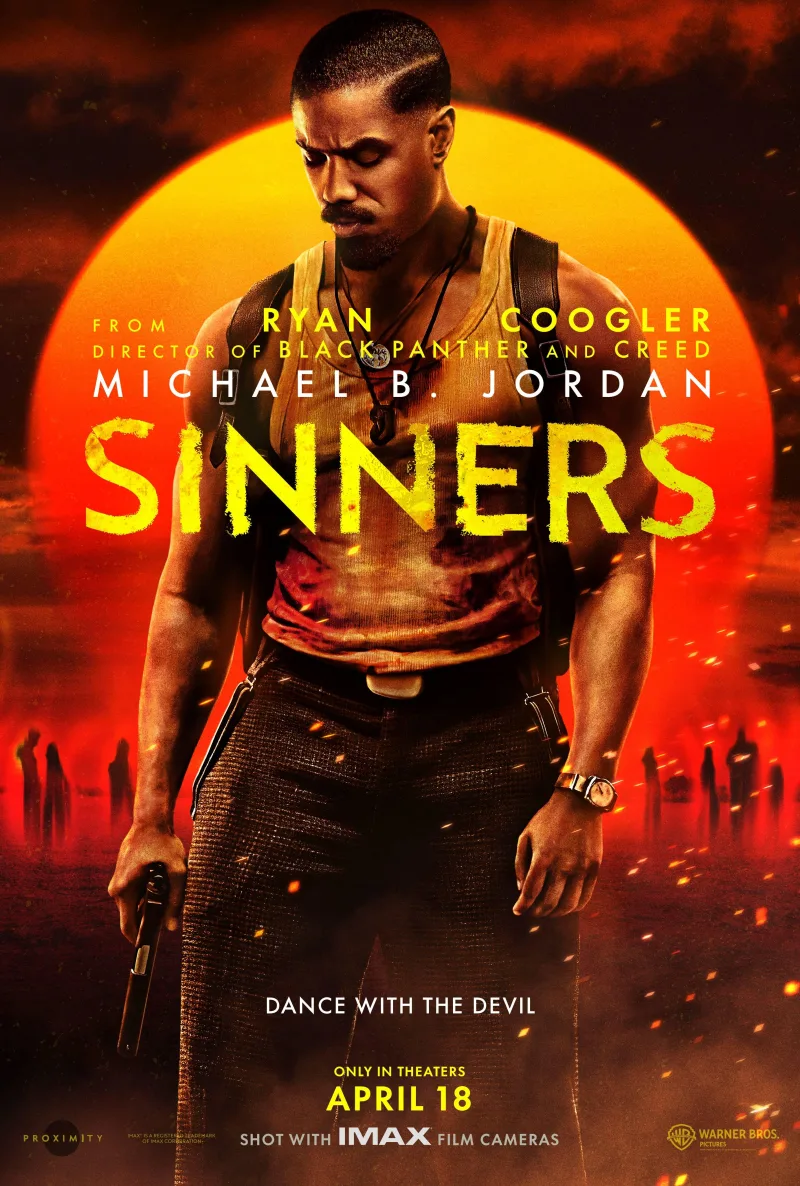
Sinners
Lyrical, muscular, and mournful — blending warm, profane humor with escalating dread and deep cultural reverence
Based on a publicly circulated draft of this screenplay sourced online — it may differ from the official shooting script or final film. Shown to demonstrate ProofIntelligence.
In 1930s Mississippi, twin brothers return from Chicago to open a juke joint, but when ancient vampires crash the grand opening and begin turning their loved ones, a young blues guitarist must survive the night and reckon with the cost of the music that summoned evil to their door.
Executive Summary
SINNERS is a masterfully crafted genre-hybrid from Ryan Coogler that fuses 1930s Mississippi Delta blues culture with vampire horror to create a searing allegory about Black freedom, cultural inheritance, and the predatory systems that consume Black joy. The script's greatest asset is its dual appeal: it delivers visceral, commercially viable horror thrills while operating as a profound meditation on race, music, and identity that will command critical attention and awards conversation. The ensemble offers multiple star-making roles — the twin leads, the spiritual healer Annie, the charismatic villain Remmick, and the young blues prodigy Sammie. The musical component (live blues performances integral to the plot, a surreal ancestral montage that is the film's signature set piece) provides unique marketing hooks and soundtrack potential. At an estimated budget of ₹40-80Cr ($30-50M USD equivalent), this represents a strong risk-reward proposition given Coogler's commercial track record (Black Panther franchise: $2.6B+ worldwide) and the proven market for elevated horror (Get Out: $255M on $4.5M). The script needs minor tightening in its first-half setup sequences but is substantially ready for production. Recommend immediate packaging with A-list talent attachments and a theatrical-first release strategy targeting fall festival premieres (Venice/Toronto) followed by wide release.
Why this verdict
SINNERS is a powerfully conceived and executed genre-hybrid screenplay by Ryan Coogler that fuses the Mississippi Delta blues tradition with vampire mythology to create a searing allegory about Black American freedom, cultural inheritance, and the predatory systems that consume Black joy. Its core strength is the marriage of a deeply felt cultural thesis — that the blues is a sacred, ancestral gift — with visceral horror mechanics that never feel gratuitous. The character work, particularly the twin dynamic between Smoke and Stack and the ensemble of Delta voices, is rich and distinctive. The dialogue crackles with period authenticity, humor, and subtext. The script needs minor tightening in the second act's setup sequences, which occasionally prioritize world-building charm over narrative urgency, and the vampire mythology rules could be established with slightly more clarity before the turn. But this is an elite piece of genre filmmaking on the page — a film that would command attention at festivals and in commercial release alike, sitting comfortably alongside Get Out and Interview with the Vampire as horror that means something.
What we read
SINNERS is a 1930s Mississippi-set horror film about twin brothers Smoke and Stack who build a juke joint as a sanctuary for Black joy, only to have it invaded by ancient vampires led by the charismatic Remmick, who offers eternal life as a twisted form of the freedom America denies them. The central dramatic question is whether Sammie — the young blues prodigy caught between his preacher father's faith and his cousins' sinful world — can survive the night and carry the music forward without losing his soul. The screenplay's best element is its thematic architecture: the vampires don't just kill, they seduce with a promise of equality and freedom from racism, making the horror genuinely philosophical. The surreal montage where Sammie's blues playing summons ancestral spirits across centuries is a breathtaking piece of screenwriting that earns the film's thesis — that Black music is a sacred, unbroken chain connecting past, present, and future. Coogler's dialogue is extraordinary throughout, giving every character a distinct voice rooted in period, place, and personality.
Score Breakdown
Craft Scores
Weighted craft score
Stack's speech to Mary — 'We all deserve it, but you was born wit a paint job to give you a shot at beating the system' (p.61) — is a masterclass in subtext: ostensibly about racial strategy, actually a declaration of love too painful to say directly. Every character has a distinct linguistic fingerprint. Band: ProofScript Elite. One band up: A few lines in the siege section (Sammie's self-blame on p.99, Slim's vampire girlfriend joke on p.100) are slightly on-the-nose; subtler alternatives would push the dialogue toward Masterpiece.
The 170-point emotional swing from Sammie's transcendent performance (p.63, ecstasy) to Stack's death in Smoke's arms (p.87, devastation) is one of the most effective emotional arcs in recent genre writing. Annie's death scene — 'If you love me you'll—' followed by Smoke driving the stake (p.111) — is genuinely shattering. The epilogue's final line ('for a few hours, we was free') reframes the entire film as an elegy. Band: ProofScript Elite. One band up: Pearline's death could land harder if her character had slightly more development in the first half — her loss would be more devastating if we knew her better.
Smoke's line 'Best thing about me was him' (p.89) after Stack's death distills an entire character arc into seven words — a man defined by protection who has failed at the one thing that matters. The twin dynamic, Annie's spiritual authority, and Remmick's seductive villainy are all enacted through specific choices, not exposition. Band: ProofScript Elite. One band up: Giving Sammie slightly more agency in the climax (the silver guitar is somewhat accidental) would complete his arc from passive vessel to active hero.
Every major scene serves the central theme: the blues as sacred inheritance vs. the forces (Jim Crow, vampirism, religious repression) that seek to consume or suppress Black cultural expression. The plantation currency subplot, the ancestral montage, Remmick's baptism monologue, and the epilogue all reinforce this thesis from different angles. Band: ProofScript Elite. One band up: The connection between Sammie's music and the vampires' arrival could be made slightly more explicit in the mythology — does the music literally summon them, or do they simply sense it? — to fully unify the thematic and plot mechanics.
The midpoint performance/montage (p.63) is a structurally perfect pivot that transforms the film's genre, stakes, and emotional register in a single sequence. Band: ProofScript Elite. One band up: Tightening the first act by 8-10 pages would bring the horror turn earlier and create a more balanced three-act structure, pushing toward Masterpiece territory.
The prose is muscular and efficient, with strong visual writing ('His eyes are two calm lakes at midnight') and confident scene construction. Action lines are lean and evocative. The script reads like a produced screenplay by a filmmaker who knows exactly what he wants on screen. Minor issues: occasional OCR-style spacing artifacts, a few 'OMITTED' slugs, and one revision marker ('Buff Rev.') remain in the draft. Band: ProofScript Recommends (high end). One band up: A final polish pass to remove production artifacts and standardize heading formats would push this into Elite craft territory.
Market Scores
Weighted market score
'Twin gangsters open a juke joint in 1930s Mississippi and vampires crash the grand opening' is an immediately compelling, highly pitchable concept that combines proven genre elements (vampires, period setting, music) in a genuinely fresh configuration. The allegory (vampirism as the ultimate expression of racial consumption) adds intellectual depth without compromising the hook. Band: ProofScript Elite. One band up: The concept is already near-perfect; the only improvement would be making the 'music summons evil' mechanic slightly more specific in the mythology.
The fusion of Mississippi Delta blues culture with vampire mythology is genuinely unprecedented — no existing film occupies this specific intersection. The use of vampirism as a metaphor for racial consumption, the ancestral montage bridging centuries of Black musical tradition, and the philosophical villain who offers equality through monstrosity are all fresh contributions to both the vampire and racial allegory genres. Band: ProofScript Elite. One band up: The basic siege structure (barricaded survivors vs. monsters outside) is familiar from many horror films; a more unconventional third-act structure would push the originality higher.
The 170-point emotional swing from Sammie's transcendent performance (p.63, ecstasy) to Stack's death in Smoke's arms (p.87, devastation) is one of the most effective emotional arcs in recent genre writing. Annie's death scene — 'If you love me you'll—' followed by Smoke driving the stake (p.111) — is genuinely shattering. The epilogue's final line ('for a few hours, we was free') reframes the entire film as an elegy. Band: ProofScript Elite. One band up: Pearline's death could land harder if her character had slightly more development in the first half — her loss would be more devastating if we knew her better.
This script sits at the intersection of multiple proven market trends: elevated horror (Get Out, $255M), Black cultural storytelling (Black Panther, $1.3B), period drama, and music-driven narrative. The Ryan Coogler brand provides massive built-in awareness. The ensemble offers multiple A-list attachment points. The budget requirement (estimated ₹40-80Cr) is justified by the commercial track record. Band: ProofScript Elite. One band up: The dialogue-heavy first half may test pure horror audiences; a slightly tighter setup would broaden commercial appeal.
Casting
Michael B. Jordan
as SMOKE
Jordan's established collaboration with Coogler and his ability to project coiled intensity beneath a controlled exterior make him the natural choice for Smoke. His work in Creed demonstrated the physical and emotional range needed for a character who is both a lethal fighter and a grieving lover.
Michael B. Jordan
as STACK
The dual role would showcase Jordan's range — Stack's charismatic, profane warmth is the polar opposite of Smoke's terse authority. Jordan has demonstrated this kind of tonal versatility across the Creed and Black Panther franchises.
Kelvin Harrison Jr.
as SAMMIE
Harrison Jr.'s work in Waves and Luce demonstrated his ability to play young men caught between worlds, and his musical background (he's a trained multi-instrumentalist) would bring authenticity to Sammie's blues performances. His youthful energy and emotional transparency are perfect for the role.
Lupita Nyong'o
as ANNIE
Nyong'o's combination of spiritual gravitas, fierce intelligence, and emotional depth — demonstrated in 12 Years a Slave and Us — makes her ideal for Annie's role as both root worker and moral center. Her existing relationship with Coogler's production ecosystem is an additional asset.
Bill Skarsgård
as REMMICK
Skarsgård's ability to project otherworldly menace beneath surface charm — perfected as Pennywise in IT — would serve Remmick's seductive, philosophical villainy. His physicality and willingness to commit to extreme transformation would bring the ancient vampire to terrifying life.
Tessa Thompson
as MARY
Thompson's ability to navigate racial ambiguity with intelligence and emotional complexity — demonstrated in Passing and Sorry to Bother You — makes her ideal for Mary's mixed-race identity crisis. Her chemistry with potential co-stars and her action credentials (Thor: Ragnarok) cover both the romantic and horror demands of the role.
Samuel L. Jackson
as DELTA SLIM
Jackson's legendary screen presence, his ability to deliver monologues with both humor and gravitas, and his deep connection to Southern Black culture make him the definitive Delta Slim. His jailhouse story monologue and sacrificial last stand would be career-highlight material.
Colman Domingo
as JEDIDIAH
Domingo's Tony-nominated stage work and his powerful screen presence in Rustin and Euphoria demonstrate the exact combination of pastoral authority and wounded fatherhood that Jedidiah requires. His ability to convey complex emotion in minimal screen time is essential for this brief but pivotal role.
Pacing & Rhythm
Overall pace
Deliberate first half, propulsive second half — classic slow-burn horror structure
The pacing follows a classic slow-burn horror structure: a deliberately paced first act (averaging 35-45) that builds world and character, a midpoint acceleration through the performance montage, and then a sustained high-pace second half (averaging 70-85) once the horror begins. The script earns its slow first half by making every conversation thematically essential, though 2-3 scenes in the 17-50 range could be tightened. The post-horror pacing is excellent — brief moments of grief and reflection (Stack's death, the garlic test) provide necessary breathing room between action peaks. The deceleration to the church and epilogue is perfectly judged.
SLOW · pp. 17–35
The supply-gathering and recruitment sequence — Stack recruiting Delta Slim, Smoke shopping at the Chows, the thief shooting, driving conversations — covers essential world-building but at a leisurely pace
Fix: Consolidate 2-3 of these scenes. The Delta Slim recruitment and Annie reunion are essential anchors; the thief shooting and some driving conversations could be trimmed or combined.
SLOW · pp. 41–50
The Cornbread recruitment and final setup montage — charming but extending an already long first act
Fix: The Cornbread recruitment could be shortened to its punchline (Therise asking about the money). The montage is efficient but could start 2-3 pages earlier.
RUSHED · pp. 109–112
The vampire breach and battle inside the juke happens very rapidly — Annie's death, Grace and Bo's immolation, Delta Slim's sacrifice all occur within 3-4 pages
Fix: While the rapid pace is appropriate for a siege breaking, Annie's death scene could benefit from one additional beat of Smoke's internal struggle before he drives the stake. This is the film's most emotionally important death and deserves 30 more seconds of screen time.
Conflict Escalation
The conflict escalation follows a masterful double-wave pattern. The prologue spikes to 85 then drops to a sustained low-tension first act (pages 8-50) that builds world and character. The tension begins its main ascent at page 63 (the midpoint performance) and escalates relentlessly through the horror turn, siege, and climax, peaking at 100 during the river baptism. The brief deceleration around page 80 (Smoke's conversation with Sammie) provides necessary breathing room before the final escalation. The post-climax drop to the church and epilogue provides emotional resolution without feeling anticlimactic.
Peak moment · page 115
Remmick's river baptism of Sammie — the ancient vampire dunks the young bluesman while delivering his most seductive philosophical monologue, surrounded by his vampire army. The convergence of physical threat, philosophical temptation, and thematic culmination makes this the script's most intense moment.
Protagonist Arc
The protagonist arc (tracked primarily through Smoke and Sammie as dual leads) follows a devastating trajectory: from cautious hope (+20-40) through transcendent joy (+80 at the midpoint) to catastrophic loss (-90 at Stack's death) and partial recovery (+40 in the epilogue). Smoke's arc is a downward spiral from protector to sacrificial figure — he loses everything he loves but saves Sammie, the future of the music. Sammie's arc is more hopeful — he descends into horror but emerges carrying the blues forward, choosing art over safety. The dual-protagonist structure means the emotional weight is distributed: Smoke carries the tragedy, Sammie carries the hope.
Scene Audit
65 scenes evaluated — tension, pacing contribution, and whether each earns its place.
| Pg | Scene | Purpose | Tension | Verdict |
|---|---|---|---|---|
| 2 | INT. DARK VOID - NIGHT ANNIE | Establishes the mythological framework — music as a bridge between life and death across culturesSets thematic stakes elegantly through woodcut imagery and Annie's voiceover. | 30maintains | essential |
| 3 | EXT. FARMHOUSE - SUNSET INJURED MAN | Introduces the vampire threat through the Injured Man approaching the farmhousePrologue hook — establishes period, danger, and the Choctaw pursuit. | 45accelerates | essential |
| 3 | INT. FARMHOUSE - SUNSET JOAN · BERT | Introduces Joan and Bert, establishes their humanity before their transformationThe fertility subplot and KKK uniform plant crucial details for later. | 50maintains | essential |
| 5 | EXT. FARMHOUSE - SUNSET - CONTINUOUS JOAN · INJURED MAN | The Choctaw search party warns Joan — establishes the invitation ruleFirst demonstration of the invitation mechanic; Chayton's warning creates dramatic irony. | 65accelerates | essential |
| 7 | INT. NURSERY - NIGHT JOAN · BERT · INJURED MAN | Reveals the Injured Man as a vampire — Bert is killed and turnedPrologue payoff — horrifying reveal that sets up Remmick, Joan, and Bert for the main story. | 85accelerates | essential |
| 8 | EXT. LUMBER MILL - DAY SMOKE · STACK · HOGWOOD | Introduces Smoke and Stack, establishes their twin dynamic and criminal edgeFirst impression of the protagonists — Stack's humor vs Smoke's intensity established immediately. | 25decelerates | essential |
| 8 | INT. LUMBER MILL - FIRST FLOOR - DAY SMOKE · STACK · HOGWOOD | The twins purchase the mill — establishes their plan and the threat from Hogwood/KlanThe bloodstain on the floor plants the mill's violent history. | 35maintains | essential |
| 10 | EXT. GREY OAKS PLANTATION - DAY SAMMIE | Introduces Sammie as a sharecropper and musicianEstablishes Sammie's work ethic, musical gift, and plantation life in one efficient scene. | 10decelerates | essential |
| 11 | EXT. MOORE SHACK - SHARECROPPERS QUARTERS' - GREY OAKS PLANTATION - DAY SAMMIE · RUTHIE | Sammie's relationship with his mother Ruthie; guitar is missingWarm domestic moment that grounds Sammie's world before the adventure begins. | 10maintains | essential |
| 11 | INT. MOORE SHACK - SHARECROPPERS QUARTERS - DAY SAMMIE | Sammie searches for his guitarVery brief — could be folded into the previous or next scene. | 10maintains | needs_work |
| 12 | INT. CHURCH - GREY OAKS PLANTATION - DAY SAMMIE · JEDIDIAH | Establishes Sammie-Jedidiah conflict: blues vs. church musicCore thematic conflict established through specific, lived-in father-son tension. | 30maintains | essential |
| 14 | EXT. CHURCH - GREY OAKS PLANTATION - DAY SMOKE · STACK · SAMMIE · JEDIDIAH | Twins pick up Sammie; Jedidiah watches with concernStack's reassurance to Jedidiah and Smoke's silent exchange plant family dynamics. | 20accelerates | essential |
| 14 | I/E. SMOKE AND STACK'S SEDAN - DAY SMOKE · STACK · SAMMIE | Twins and Sammie catch up; establishes Chicago backstory and racial realitiesEfficient exposition through natural conversation; 'Mississippi with tall buildings' is a key line. | 15maintains | essential |
| 17 | EXT. SIDE OF THE ROAD - DAY SMOKE · STACK · SAMMIE | Twins retrieve hidden supply truck; rattlesnake encounterThe snake kill establishes Smoke's lethal competence; debate about timing sets up the day's urgency. | 35accelerates | essential |
| 18 | INT. STACK'S SEDAN - DAY STACK · SAMMIE | Stack tells Sammie that Smoke killed their father; guitar's origin revealedCritical backstory delivered with Stack's characteristic deflection; Charlie Patton guitar is a great detail. | 20maintains | essential |
| 20 | EXT. DOWNTOWN STREET - DAY SMOKE | Smoke arrives in town; recruits the Teenager to watch the truckThe negotiation lesson is charming but slightly extends the setup. Could be trimmed. | 15decelerates | needs_work |
| 23 | INT. DELTA GROCERY STORE - DAY SMOKE · BO CHOW | Smoke meets Bo Chow; orders supplies for the jukeIntroduces the Chow family and establishes the community network. | 15maintains | essential |
| 24 | EXT. DELTA GROCERY STORE - DAY SMOKE | Smoke shoots two thieves trying to rob his truckEntertaining and establishes Smoke's reputation, but the scene's length slightly pads the setup. | 45accelerates | needs_work |
| 25 | INT. DELTA GROCERY STORE - DAY SMOKE · BO CHOW | Smoke resumes shopping; arranges medical care for the thievesFunctional but could be combined with the previous grocery scene. | 15decelerates | needs_work |
| 27 | INT. OTHER DELTA GROCERY STORE - DAY GRACE | Reveals the segregated twin stores; introduces Grace ChowBrilliant visual metaphor for Jim Crow — same family, same goods, separate stores. | 10maintains | essential |
| 27 | INT. DELTA GROCERY STORE - DAY SMOKE · GRACE · BO CHOW | Grace negotiates sign-making with Smoke; flowers purchasedGrace's business savvy established; flowers for Annie's baby's grave planted. | 15maintains | essential |
| 29 | EXT. RAILROAD STATION - DAY STACK · SAMMIE · DELTA SLIM · PEARLINE · MARY | Stack recruits Delta Slim; Sammie meets Pearline; Mary appearsThree crucial introductions in one bustling location — efficient and atmospheric. | 30accelerates | essential |
| 36 | EXT. ANNIE'S SHOP - DAY SMOKE · ANNIE | Smoke visits Annie; the baby's grave; their complicated historyThe emotional core of Smoke's character — grief, love, and guilt in one location. | 25decelerates | essential |
| 38 | INT. ANNIE'S SHOP - DAY SMOKE · ANNIE | Smoke and Annie's reunion — plantation currency debate, mojo bag, sexTheir argument about money and magic is the film's central philosophical debate in miniature. | 30maintains | essential |
| 41 | EXT. MISSISSIPPI ROAD - DAY STACK · SAMMIE · DELTA SLIM | Stack educates Sammie about women; driving conversationEntertaining character work but covers ground already established. Could be trimmed. | 10decelerates | needs_work |
| 43 | INT. STACK'S SEDAN - DAY STACK · SAMMIE · DELTA SLIM | Delta Slim's jailhouse story; chain gang encounterOne of the script's best monologues — establishes the exploitation of Black musicians as a historical pattern. | 25maintains | essential |
| 47 | EXT. MAYBELL PLANTATION - DAY STACK · CORNBREAD · SAMMIE | Stack recruits CornbreadFunny but somewhat redundant with other recruitment scenes. Could be shortened. | 15maintains | needs_work |
| 48 | BEGIN MONTAGE SMOKE · STACK · SAMMIE · ANNIE · CORNBREAD · DELTA SLIM | Setup montage — supplies loaded, mill transformed into juke jointEfficiently compresses hours of work into a propulsive sequence. Great energy. | 20accelerates | essential |
| 49 | INT. JUKE JOINT - LUMBER MILL - NIGHT SAMMIE · DELTA SLIM | Delta Slim tunes piano with Sammie; delivers 'blues from Africa' speechSlim's mentorship of Sammie and the Africa speech are thematically crucial. | 15maintains | essential |
| 50 | INT. JUKE JOINT - LUMBER MILL - NIGHT SMOKE · STACK · ANNIE · SAMMIE | First patron arrives; plantation currency crisis beginsThe wooden nickels introduce the economic conflict that drives the twins' vulnerability. | 30accelerates | essential |
| 51 | INT. BACK ROOM - LUMBER MILL - NIGHT SMOKE · STACK · ANNIE | Twins argue about accepting plantation currencyCore business conflict — Smoke's pragmatism vs Stack and Annie's community instinct. | 35maintains | essential |
| 53 | INT. JUKE JOINT - LUMBER MILL SMOKE · STACK · SAMMIE · DELTA SLIM · PEARLINE | The juke fills up; Delta Slim performs; party beginsThe juke coming alive is the payoff for the entire first act's setup. | 20accelerates | essential |
| 54 | INT. ENTRY HALLWAY - LUMBER MILL - NIGHT SAMMIE · PEARLINE · MARY · CORNBREAD | Sammie and Pearline flirt; Mary arrives and is recognized by CornbreadMary's arrival raises stakes — her racial ambiguity and connection to Stack create tension. | 25maintains | essential |
| 56 | INT. JUKE JOINT - LUMBER MILL - NIGHT MARY · SAMMIE · SMOKE | Mary and Sammie talk; she reveals her backstoryMary's mixed-race identity and connection to the twins' mother deepens the family web. | 20maintains | essential |
| 58 | INT. JUKE JOINT - LUMBER MILL - NIGHT STACK · MARY · DELTA SLIM | Delta Slim performs; Stack confronts MaryThe Stack-Mary confrontation is the emotional peak of their relationship — raw and painful. | 40maintains | essential |
| 61 | INT. DANCE FLOOR - NIGHT SAMMIE · SMOKE · STACK · ANNIE · MARY · DELTA SLIM · PEARLINE | Sammie performs 'I Lied to You' — the surreal ancestral montageThe film's centerpiece — a transcendent musical sequence that is also the thematic thesis statement. | 30accelerates | essential |
| 64 | EXT. JUKE JOINT - LUMBER MILL - NIGHT REMMICK · JOAN · BERT | Remmick, Joan, and Bert approach the millThe horror plot begins — Remmick's arrival at the end of the montage is perfectly timed. | 55accelerates | essential |
| 64 | INT. BACK ROOM - DAY - MOMENTS LATER SAMMIE · PEARLINE | Sammie and Pearline have sexEarthy, funny, and human — grounds the characters before the horror. | 10decelerates | essential |
| 65 | INT. CATWALK - UPPER LEVEL - NIGHT SMOKE · STACK | Smoke tallies the till; plantation currency crisis deepensThe economic threat is as real as the supernatural one — brilliant parallel. | 35maintains | essential |
| 66 | EXT. JUKE JOINT - LUMBER MILL REMMICK · JOAN · BERT · SMOKE · STACK · CORNBREAD · SAMMIE | Remmick's trio arrives at the door; confrontation with the twinsThe invitation refusal scene — tense, well-paced, with Remmick's charm masking menace. | 60accelerates | essential |
| 70 | INT. JUKE JOINT - LUMBER MILL - NIGHT SMOKE · STACK · CORNBREAD · ANNIE · MARY | Twins and group discuss the white strangers; decide to keep them outStrategic huddle that establishes the group's defensive posture. | 45maintains | essential |
| 72 | INT. JUKE JOINT - LUMBER MILL STACK · MARY | Mary offers to investigate the strangers; Stack gives her his gunMary's agency and Stack's vulnerability — she's the one who acts. | 50accelerates | essential |
| 73 | EXT. LUMBER MILL - NIGHT MARY · REMMICK · JOAN · BERT | Mary confronts Remmick; he reveals his seductive power; she pulls a gunFirst direct encounter with Remmick's supernatural nature — his eyes flicker, he drools. | 70accelerates | essential |
| 76 | EXT. LUMBER MILL - NIGHT MARY · CORNBREAD | Mary returns; tells Cornbread the strangers are leavingBrief but crucial — Mary's lie (or is she already turned?) creates ambiguity. | 55maintains | essential |
| 77 | INT. JUKE JOINT - LUMBER MILL PEARLINE · CORNBREAD · DELTA SLIM · MARY · STACK | Pearline performs; Cornbread leaves his post and Joan finds him; Mary returns to Stack wiping her mouthMultiple threads converge — Cornbread's absence, Mary's transformation, Pearline's performance. | 50maintains | essential |
| 79 | INT. BACK ROOM - JUKE JOINT - NIGHT - CONTINUOUS STACK · MARY · SMOKE | Stack and Mary have sex; she bites him; Smoke discovers themThe horror turn — devastating because the sex scene is genuinely tender before the bite. | 85accelerates | essential |
| 85 | INT. BACK ROOM - NIGHT SMOKE · STACK · ANNIE · SAMMIE | Stack dies in Smoke's arms; Annie assesses the situation'Best thing about me was him' — the emotional nadir. Perfectly paced grief. | 80maintains | essential |
| 89 | INT. ENTRY HALLWAY - JUKE JOINT - LUMBER MILL - NIGHT - CONTINUOUS SMOKE · ANNIE · PEARLINE · SAMMIE · DELTA SLIM · BO CHOW | Smoke announces Stack's death; patrons begin to leaveThe juke empties — the dream dies with Stack. | 65maintains | essential |
| 91 | EXT. LUMBER MILL - NIGHT CORNBREAD · ANNIE · SMOKE · DELTA SLIM | Cornbread returns; Annie tests him at the door; he's revealed as a vampireBrilliantly constructed scene — Annie's folk knowledge vs Cornbread's manipulation. | 80accelerates | essential |
| 94 | INT. JUKE JOINT - LUMBER MILL - NIGHT STACK · SMOKE · SAMMIE · ANNIE | Stack knocks from the back room; revealed as a vampireThe knife through the door is a great horror beat; Stack's voice mimicry is chilling. | 85accelerates | essential |
| 97 | INT. JUKE JOINT - LUMBER MILL GRACE · ANNIE · SMOKE · SAMMIE · DELTA SLIM · PEARLINE | Grace argues for rescue; group debates strategyGrace's desperation about Lisa creates the pressure that will break the siege. | 70maintains | essential |
| 100 | INT. DANCE FLOOR - JUKE JOINT - LUMBER MILL - NIGHT ANNIE · SMOKE · SAMMIE · PEARLINE · DELTA SLIM · GRACE | Garlic test; survivors arm themselves; Annie reads bonesThe garlic-eating sequence is tense and well-paced; Slim's vomit fake-out is effective. | 65maintains | essential |
| 101 | EXT. LUMBER MILL - NIGHT SAMMIE · SMOKE · REMMICK · STACK · MARY | Sammie and Smoke see the vampire army; Remmick's Irish danceThe vampires' own juke — a dark mirror of the earlier celebration. Remmick's dance is haunting. | 75accelerates | essential |
| 102 | INT. DANCE FLOOR - JUKE JOINT - NIGHT ANNIE · SMOKE · SAMMIE · PEARLINE · DELTA SLIM · GRACE | Annie's garlic test; Gambler 2 found dead; wine not bloodThe wine/blood misdirect is clever; raises paranoia about who's been turned. | 70maintains | essential |
| 104 | EXT. LUMBER MILL - NIGHT REMMICK · BO CHOW · GRACE · SMOKE · ANNIE · SAMMIE · STACK · MARY | Bo Chow revealed as vampire; Remmick's ultimatum; Grace's breakdownRemmick's demand for Sammie and his threat to Lisa are the siege's breaking point. | 90accelerates | essential |
| 109 | INT. DANCE FLOOR - JUKE JOINT - NIGHT GRACE · SMOKE · ANNIE · SAMMIE | Grace invites vampires in; the breach beginsThe invitation — devastating because Grace's motivation is understandable. | 95accelerates | essential |
| 110 | INT. DANCE FLOOR - JUKE JOINT SMOKE · ANNIE · STACK · REMMICK · DELTA SLIM · SAMMIE · PEARLINE · GRACE | Battle inside the juke — Annie staked, Delta Slim sacrifices himselfRapid-fire losses; Annie's death scene is the emotional peak of the horror. | 95accelerates | essential |
| 112 | INT. CATWALK - UPPER LEVEL - NIGHT SMOKE · STACK · SAMMIE · REMMICK · PEARLINE | Final stand upstairs — Smoke vs Stack, Sammie vs RemmickThe twin fight is emotionally devastating; Pearline's bite raises stakes further. | 95accelerates | essential |
| 114 | EXT. RIVER - NIGHT SAMMIE · REMMICK · SMOKE | Remmick's river baptism of Sammie; silver guitar revelation; Smoke stakes RemmickThe climax — Remmick's monologue, the silver guitar, and Smoke's arrival converge perfectly. | 100accelerates | essential |
| 117 | EXT. LUMBER MILL - DAY SMOKE · SAMMIE | Aftermath — Smoke sends Sammie home; guitar's true origin revealed'That lyin' son of a bitch. That's our daddy's guitar.' — perfect character beat. | 40decelerates | essential |
| 118 | EXT. LUMBER MILL - DAY SMOKE · HOGWOOD | Smoke's last stand against Hogwood and the KlanCathartic violence — Smoke destroys the human evil that enabled the supernatural. | 85accelerates | essential |
| 120 | EXT. CHURCH HOUSE - DAY SAMMIE · JEDIDIAH | Sammie returns to his father's churchThe prodigal son returns — Jedidiah's embrace is earned and moving. | 30decelerates | essential |
| 121 | INT. CHURCH HOUSE - DAY SAMMIE · JEDIDIAH | Sammie sings in church; Jedidiah asks him to renounce the bluesThe thematic climax — will Sammie abandon his gift? The guitar neck in his hand says no. | 50maintains | essential |
| 121 | EXT. MISSISSIPPI STREET - DAY SAMMIE | Sammie drives away, pressing the guitar neck to his heartBrief but powerful — he chose the blues. The guitar neck is his inheritance. | 25decelerates | essential |
| 122 | INT. PEARLINE'S BLUES BAR - NIGHT SAMMIE · STACK · MARY | 1992 epilogue — elderly Sammie performs; Stack and Mary returnA masterful coda that reframes the entire film. Stack's gold ring spelling 'SMOKE' is devastating. | 40maintains | essential |
Beat Sheet · Save The Cat
| Beat | Scene | Timing | Present | Quality |
|---|---|---|---|---|
Opening Image Woodcut images of musicians across cultures summoning spirits — establishes the mythic framework | INT. DARK VOID - NIGHT | On target | 90 | |
Theme Stated Jedidiah warns Sammie: 'You keep dancing with the devil... one day he gon' follow you home' — the film's central thematic question | INT. CHURCH - GREY OAKS PLANTATION - DAY | On target | 95 | |
Set-Up The twins purchase the mill, recruit Sammie, and begin assembling their team — establishing the world, relationships, and stakes | EXT. LUMBER MILL - DAY | On target | 85 | |
Catalyst Stack insists on opening tonight rather than next weekend — the decision that commits everyone to the fateful night | EXT. SIDE OF THE ROAD - DAY | On target | 80 | |
Debate Smoke debates with Annie about money, magic, and whether coming back was worth it — the emotional cost of the plan | INT. ANNIE'S SHOP - DAY | Arrives late | 85 | |
Break into Two The juke joint opens and the first patron arrives — the twins' dream becomes reality and the night begins | INT. JUKE JOINT - LUMBER MILL - NIGHT | Arrives late | 85 | |
B Story Sammie and Pearline's romance begins — the love story that will be destroyed by the horror | INT. ENTRY HALLWAY - LUMBER MILL - NIGHT | Arrives late | 80 | |
Fun and Games The juke joint in full swing — music, dancing, gambling, flirting, the party at its peak | INT. JUKE JOINT - LUMBER MILL | On target | 92 | |
Midpoint Sammie's performance triggers the surreal ancestral montage — the blues summons spirits and attracts Remmick | INT. DANCE FLOOR - NIGHT | On target | 95 | |
Bad Guys Close In Remmick's trio arrives at the door; Mary goes to investigate and is turned; Stack is killed | EXT. JUKE JOINT - LUMBER MILL | Arrives early | 88 | |
All Is Lost Stack dies in Smoke's arms — 'Best thing about me was him.' The twins are broken. | INT. BACK ROOM - JUKE JOINT - NIGHT | On target | 90 | |
Dark Night of the Soul The survivors barricade inside, testing each other with garlic, debating whether to fight or hide as the vampire army grows outside | INT. ENTRY HALLWAY - JUKE JOINT - LUMBER MILL - NIGHT - CONTINUOUS | Arrives early | 85 | |
Break into Three Grace invites the vampires in — the siege breaks and the final battle begins | INT. DANCE FLOOR - JUKE JOINT - NIGHT | On target | 88 | |
Finale Sammie fights Remmick at the river; the silver guitar wounds him; Smoke stakes him; sunrise destroys the vampires | EXT. RIVER - NIGHT | On target | 92 | |
Final Image Stack tells elderly Sammie: 'Last time I seen my brother... last time I seen the sun. And for a few hours, we was free.' — freedom redefined through memory | INT. PEARLINE'S BLUES BAR - NIGHT | On target | 95 |
What's Working
Thematic Brilliance — Horror as Racial Allegory
The vampire mythology operates on multiple levels simultaneously: as visceral genre thrills, as a metaphor for systems that consume Black bodies and culture, and as a philosophical argument about freedom. Remmick's offer of eternal life as the only true escape from Jim Crow is genuinely provocative and elevates the horror far beyond its genre conventions.
Extraordinary Dialogue with Distinct Voices
Every character speaks with a voice rooted in their specific background, age, and worldview. Stack's profane charm, Smoke's terse authority, Annie's spiritual pragmatism, Delta Slim's weathered wit, and Remmick's seductive eloquence are all immediately distinguishable. The dialogue is simultaneously period-authentic and emotionally accessible.
The Surreal Ancestral Montage
The sequence where Sammie's blues playing summons spirits from across centuries — Senegalese xalam players, 1970s rock guitarists, Zaouli dancers, Memphis jookers — is a visually stunning and thematically essential set piece that would be a signature cinematic moment, the kind of scene that sells a film in a trailer.
Built-In Musical Identity
The screenplay is structured around live musical performances that are integral to the plot, not decorative. This creates enormous opportunities for a distinctive soundtrack, music-driven marketing, and cross-platform cultural conversation — a significant commercial asset.
Ensemble Cast with Star-Making Roles
The script offers at least five roles that would attract top-tier talent: the twins (a dual role or two stars), Annie, Remmick, and Sammie. The 1992 epilogue adds further range. This is a highly packageable project with multiple attachment points.
What to Fix
Second Act Setup Pacing
The extended sequence of Stack and Smoke separately gathering supplies, recruiting musicians, and setting up the juke (roughly pages 17-50) is charming and world-building but occasionally prioritizes vibe over narrative urgency. Several scenes — the thief shooting, the Cornbread recruitment, some of the driving conversations — could be tightened without losing their character value.
Vampire Mythology Rules Slightly Unclear
The rules governing the vampires — invitation required, garlic sensitivity, silver vulnerability, sunlight destruction, the connection between Remmick and his turned victims — emerge piecemeal during the crisis. While this creates naturalistic discovery, some rules arrive as surprises in the climax (the silver resonator's effect is revealed only at the river on p.116; the link that lets the vampires feel Remmick's pain is found mid-battle on p.110). Slightly earlier seeding would strengthen the horror mechanics.
Grace's Invitation Feels Mechanically Convenient
Grace's emotional breakdown that leads her to invite the vampires inside is the script's most critical plot turn, but it happens somewhat abruptly. While her motivation (Remmick threatening Lisa) is strong, the transition from rational fear to screaming an invitation could use one more beat of psychological escalation to feel fully earned rather than plot-convenient.
Rewrite priorities
Consolidate 2-3 of the driving/recruitment scenes, trimming roughly 8-10 pages from this section. Keep the Delta Slim recruitment and the Annie reunion as anchors, but tighten the transitions between them.
Issue: The setup section from pages 17-50 contains several scenes that, while individually charming, collectively slow momentum before the horror turn. The thief-shooting scene, some driving conversations, and the Cornbread recruitment cover overlapping thematic territory.
Remmick already names Lisa and the grocery store (p.106) and Bo sings to Grace through the window (p.110). Add one quiet beat between those moments where Grace weighs letting them in to fight, so the invitation reads as a desperate mother's deliberate gamble rather than a burst of rage.
Issue: Grace's invitation to the vampires — the critical plot turn that breaks the siege — happens somewhat abruptly. Her motivation is clear but the psychological escalation from fear to action needs one more beat.
Plant silver earlier, for instance by having someone note the resonator's metal when Stack tells Sammie the guitar's story, and let Annie hint at the bond between a vampire and the ones it turns during her briefing, so both payoffs feel earned rather than discovered.
Issue: The vampire mythology rules emerge piecemeal, and two of them arrive as surprises in the climax: the silver resonator's effect is revealed only at the river, and the link that lets the vampires feel Remmick's pain is discovered mid-battle.
Give Pearline a moment during the siege where her musical ability becomes tactically relevant — perhaps she helps Sammie understand something about the vampires' vulnerability to music, or she sings to buy time as Delta Slim does.
Issue: Pearline's arc is somewhat thin — she functions primarily as Sammie's love interest and then a victim. Her singing talent is established but never fully deployed in the narrative.
Clean pass to remove production artifacts, standardize heading format, and remove OMITTED placeholders.
Issue: Minor formatting inconsistencies: occasional revision markers ('Buff Rev.'), some scene headings shift between styles, and a few 'OMITTED' slugs remain in the draft.
Biggest improvement lever
Tightening the first half's setup sequences (pages 17-50) by 8-10 pages would sharpen the pacing without sacrificing the world-building charm, and would make the horror turn at the midpoint land with even greater impact. Several driving conversations and recruitment scenes cover similar thematic ground (the cost of Black life in the Delta) and could be consolidated.
Emotional Rhythm
The emotional rhythm is extraordinary — a carefully orchestrated journey from mythic dread through warmth and humor, peaking in transcendent joy at the midpoint, then plunging into sustained horror and grief before finding bittersweet resolution. The key achievement is the contrast between the ecstatic high of page 63 (Sammie's performance, valence +80) and the devastating low of page 87 (Stack's death, valence -90) — a 170-point emotional swing in 24 pages. The epilogue's gentle rise to +40 provides closure without false comfort. The emotional range is remarkably wide for a genre film, encompassing genuine humor, sensuality, spiritual awe, and existential terror.
Act Structure
Act One
pp. 1–50The prologue establishes the vampire threat in 1932 Clarksdale. We meet twins Smoke and Stack as they purchase a lumber mill, then follow their day-long hustle to recruit musicians (Sammie, Delta Slim), workers (Cornbread), and Annie to transform the mill into a juke joint for its grand opening that night. The act establishes the world of Jim Crow Mississippi, the twins' criminal past, Sammie's musical gift and conflict with his preacher father, and the complex web of relationships.
Key turning point
The montage of the juke joint setup culminating in the doors opening and the first patron arriving — the twins' dream becomes real, committing everyone to the night ahead.
A richly textured first act that builds a complete world with remarkable efficiency. Every character introduction doubles as thematic exposition — the plantation currency debate, Delta Slim's jailhouse story, the Mound Bayou conversation all establish the central question of Black freedom. At roughly 50 pages it runs slightly long for a 127-page script, but the character work is so strong that the investment pays off when the horror arrives.
Act Two
pp. 50–109The juke joint comes alive with music, dancing, gambling, and romance. Sammie performs his breakthrough song, triggering the surreal ancestral montage. Remmick's trio of vampires arrives and is turned away. Mary goes to investigate them and is turned. She kills Stack, triggering the siege. The survivors barricade inside, discovering the vampire rules through trial and error — garlic, invitations, the connection between Remmick and his turned victims. Grace's breakdown ends with her inviting the vampires inside.
Key turning point
Mary biting Stack's neck — the moment the juke joint transforms from sanctuary to slaughterhouse, and the genre shifts from period drama to survival horror.
A masterfully constructed act that executes one of the most effective tonal pivots in recent genre writing. The transition from joy to horror is devastating precisely because the first half earns the audience's emotional investment. The siege mechanics are tense and inventive, with Annie's folk knowledge providing a culturally specific vampire-fighting toolkit. The act's only weakness is Grace's invitation, which could use one more beat of escalation.
Act Three
pp. 109–127The vampires breach the mill. Delta Slim sacrifices himself. The survivors flee upstairs where Smoke fights Stack and Sammie confronts Remmick at the river. Sammie's guitar — revealed to have a silver resonator — wounds Remmick, and Smoke stakes him. Sunrise destroys the remaining vampires. Smoke sends Sammie home and wages a final war against Hogwood's Klan before dying beside a vision of Annie. Sammie returns to his father's church. The 1992 epilogue reunites elderly Sammie with a vampiric Stack for a bittersweet coda.
Key turning point
Smoke staking Remmick from behind after Sammie's silver resonator wounds him: the convergence of faith, family, and violence that resolves the central conflict.
A propulsive, emotionally devastating third act that pays off every thematic thread. Delta Slim's sacrifice is heroic and earned. Smoke's final stand against Hogwood is cathartic and thematically essential — he destroys the human evil that enabled the supernatural kind. The epilogue is a masterstroke, reframing the entire film as a story about memory, survival, and the persistence of music. The church scene with Jedidiah provides necessary emotional release.
Midpoint · page 63
Sammie performs 'I Lied to You' on the juke joint stage, triggering the surreal ancestral montage where spirits from across centuries appear — the moment where the blues is revealed as a sacred, world-bridging force, and Remmick's trio is drawn to the mill.
A brilliant structural midpoint that functions on multiple levels: it's the emotional peak of the 'fun and games' section, the thematic thesis statement of the entire film, and the inciting incident for the horror plot (Remmick is drawn by Sammie's gift). The shift from celebration to threat is seamless — the montage ends with Remmick's hungry gaze, and the stakes transform from 'will the juke succeed?' to 'will anyone survive the night?'
Character Analysis
Protagonist · arc 90/100
SMOKE
want
To build a legitimate business and protect his family after a life of violence
need
To accept that he cannot control everything and that love requires vulnerability, not just protection
flaw
Controlling, emotionally closed off, believes money and violence solve everything
Smoke is a magnificently drawn protagonist — a man whose every act of violence is rooted in love, whose every act of love is shadowed by violence. His arc from Chicago gangster to sacrificial protector is enacted through specific, escalating choices: buying the mill, threatening Hogwood, refusing to let Stack's body be moved, staking Annie, and finally assembling his war chest. The vision of Annie and their baby in his final moments is devastating and earned.
Antagonist · threat 92/100
REMMICK
Remmick is a superb villain — an ancient Irish vampire whose own colonial trauma (his fathers' land was stolen, Christianity was forced upon him) makes his seduction of Black Americans genuinely compelling rather than simply evil. His offer of equality through vampirism is the film's most provocative idea. His physicality escalates perfectly from charming drifter to flying predator. The river baptism scene is his masterpiece — eloquent, terrifying, and thematically rich.
Supporting cast
18 characters · 14 distinct voicesThe supporting cast is remarkably well-differentiated for a genre film. The Chow family adds a crucial dimension of Asian-American experience in the Jim Crow South. Jedidiah's brief appearances carry enormous thematic weight. Even minor characters like the Teenager Smoke hires to watch the truck and the first Patron at the bar have distinct personalities. The script manages an ensemble of 18+ speaking roles without any feeling interchangeable.
Character Presence
Screen presence by act; total scene count on the right.
Dialogue
Subtext
Voice
Density: High — dialogue-driven with extended conversational scenes balanced by action sequences
The dialogue is exceptional across the board. Every character has a distinct linguistic fingerprint: Smoke speaks in clipped, transactional sentences; Stack in expansive, profane charm; Annie in spiritual directness; Delta Slim in weathered storytelling cadence; Remmick in seductive, quasi-biblical eloquence. The period language feels authentic without being museum-piece stiff — characters say 'cracka' and 'cooze' and 'nigga' with the casual specificity of people who live in this world. The subtext is particularly strong in the Stack-Mary scenes, where every line about money and safety is really about love and fear. Remmick's river baptism monologue is a masterclass in villain dialogue — eloquent, persuasive, and terrifying.
The dialogue-to-action ratio shifts dramatically across the three acts, mirroring the genre transition. Act One is heavily dialogue-driven (60%) as characters are established through conversation — the driving scenes, the Annie reunion, the Delta Slim recruitment. Act Two balances dialogue and action as the horror emerges, with extended dialogue scenes (the Stack-Mary confrontation, the garlic test) punctuated by violent action beats. Act Three inverts the ratio, becoming action-dominant (50%) as the siege breaks and the climax unfolds. This progression is structurally sound and genre-appropriate — the audience needs to know these people before watching them die.
Notable lines
“Best thing about me was him.”
SMOKE · page 89
Devastating in its simplicity — Smoke's entire character distilled into seven words after Stack's death.
“Blues wasn't put on us like that religion. We brought this with us from home.”
DELTA SLIM · page 50
The film's philosophical thesis statement, delivered with the casual authority of a man who has lived it.
“We all deserve it, but you was born wit a paint job to give you a shot at beating the system.”
STACK · page 61
Stack's most vulnerable moment — acknowledging the racial calculus behind pushing Mary away.
“We are earth, and beast, and God. We are woman and man. We are connected, you and I, to everything.”
REMMICK · page 116
Remmick's seduction is terrifying because it's beautiful — a genuine philosophical vision weaponized.
“Last time I seen my brother... last time I seen the sun. And for a few hours, we was free.”
STACK · page 125
The epilogue's final line reframes the entire film as an elegy for a single day of freedom.
Lines to fix
“It's cuz of me. My daddy told me. Said the Devil was coming on account of my music.”
SAMMIE · page 99
Sammie's self-blame feels slightly on-the-nose here — the thematic connection between his music and the vampires' arrival is already clear from the montage. A subtler expression of guilt would trust the audience more.
“I had a girl who was a vampire. Light skinned too. She bit me everywhere but my neck.”
DELTA SLIM · page 100
While in character for Slim, this joke slightly undercuts the tension at a moment when the horror needs to breathe. The timing could be adjusted.
Market & Audience
SINNERS is positioned at the intersection of several proven market trends: elevated horror, Black cultural storytelling, period drama, and music-driven narrative. The Ryan Coogler brand (Black Panther franchise, Creed franchise) provides massive built-in awareness. The script's dual appeal — visceral genre thrills for commercial audiences, rich thematic depth for critics and awards voters — mirrors the Get Out model. The musical component adds a dimension that could drive soundtrack sales and cultural conversation. The period setting requires significant production investment but also provides visual distinctiveness. This is a premium theatrical release with strong awards potential and long-tail streaming value.
Audience
Adults 18-45 who appreciate elevated horror, Black cultural storytelling, and music-driven narratives — the Get Out/Us audience expanded to include blues and period drama enthusiasts
Budget band
High (₹25-100Cr equivalent / $30-50M USD production)
Trend
Elevated horror remains one of the most commercially reliable genres globally, with Get Out ($255M worldwide on $4.5M budget), Us ($255M), and Nope ($171M) proving the audience for horror with racial commentary. Period horror (The Witch, Midsommar) has also performed strongly. The blues/music angle adds cultural event potential.
Platforms
Theatrical (wide release) · Premium OTT (Netflix, Amazon, Apple TV+) · Festival Circuit (Toronto, Venice, Sundance)
The script's primary audience is the elevated horror demographic that made Get Out a phenomenon — educated adults who want their genre thrills to mean something. The critical/festival appeal is very high due to the racial allegory, period authenticity, and literary quality of the writing. Commercial appeal is strong but slightly tempered by the dialogue-heavy first half and the period setting, which may not immediately signal 'horror' to casual genre fans. Youth appeal is solid due to the music and action but may be limited by the 1930s setting. Family appeal is low due to graphic violence, sexuality, and racial slurs. The OTT potential is excellent — this is the kind of prestige genre film that drives subscriptions.
Risks · Low-Moderate
- • Period setting requires significant production design investment
- • The extended dialogue-heavy first half may test patience of pure horror audiences
- • Racial violence and slurs, while historically authentic, may limit some international markets
- • The vampire genre has been heavily mined — differentiation is essential in marketing
Mitigations
- • Ryan Coogler's track record virtually guarantees studio backing and audience awareness
- • The music-driven marketing angle (blues performances, ancestral montage) provides unique hooks
- • The From Dusk Till Dawn structure — crime film that becomes horror — has proven commercial appeal
- • The ensemble cast offers multiple star attachment points for packaging
- • The 1992 epilogue provides a contemporary frame that broadens accessibility
Investment Case
Franchise Potential
sequel possible- Stack and Mary's continued existence as vampires through the decades — 1950s civil rights era, 1970s, etc.
- Remmick's origin story — the ancient Irish vampire's centuries of predation across cultures
- The Choctaw search party and their vampire-hunting tradition
- Sammie's touring career and encounters with the supernatural through the blues circuit
- The concept of music as a bridge between worlds — other musical traditions, other cultures, other monsters
While SINNERS works powerfully as a standalone film, the epilogue deliberately leaves Stack and Mary alive as vampires in 1992, creating a natural sequel hook. The concept of vampires drawn to music across cultures and centuries could support an anthology-style franchise exploring different eras and musical traditions. However, the film's power comes partly from its specificity and completeness — a sequel would need to find equally rich thematic territory rather than simply repeating the formula. The strongest expansion path would be a prequel exploring Remmick's origins or a sequel following Stack and Mary through subsequent decades of American history.
International Viability
The film's international viability is strong due to the universality of its themes (freedom, family, music) and the global appeal of the vampire genre. The blues music provides a distinctive cultural hook that has historically traveled well internationally — the blues has devoted followings in Europe, Japan, and beyond. The racial specificity of the Jim Crow setting is both a barrier (requiring cultural context) and an asset (providing the kind of authentic, specific storytelling that international audiences increasingly seek). The Ryan Coogler brand provides global awareness. The film would perform strongest in English-speaking markets and countries with established appreciation for Black American culture.
Strong markets: United States (primary), United Kingdom, France (strong tradition of appreciating Black American culture and horror), Japan (vampire genre popularity, blues appreciation), India (elevated horror market growing; Tumbbad precedent), South Korea (genre film appreciation; Parasite audience), Brazil (large Black population, music culture)
Cultural barriers: Deep specificity of Mississippi Delta blues culture may require contextual framing for non-American audiences; Racial slurs and Jim Crow-era violence, while historically authentic, may be challenging in some markets; The vampire mythology blends multiple cultural traditions (Irish, Choctaw, West African) in ways that may not translate equally across all markets
Investment Readiness
low riskReady for packagingThis screenplay is investment-ready at a high level. It comes from an A-list writer-director with a proven track record of commercial and critical success. The script is complete, polished, and structurally sound. The genre (elevated horror) has a proven commercial track record. The musical component adds marketing hooks and soundtrack revenue potential. The ensemble cast structure provides multiple star attachment points. The primary risk is budget — the period setting, musical performances, and VFX (vampire transformations, surreal montage) require significant investment — but Coogler's track record justifies the spend. This is a project that major studios would compete for.
Attachment suggestions
- • Ryan Coogler as writer-director (attached)
- • Michael B. Jordan or Jonathan Majors for Smoke/Stack dual role
- • LaKeith Stanfield or Kelvin Harrison Jr. for Sammie
- • Viola Davis or Regina King for Annie
- • Robert Pattinson or Bill Skarsgård for Remmick
- • Janelle Monáe or Tessa Thompson for Mary
- • Ludwig Göransson for score (Coogler's regular composer)
Comparable Films
Get Out (2017)
The gold standard for horror-as-racial-allegory — both films use supernatural threats as metaphors for the consumption of Black bodies and culture, with genre thrills that never compromise thematic depth.
Interview with the Vampire (1994)
Period vampire drama that treats immortality as a philosophical condition rather than just a monster movie — Remmick's seductive offer of eternal life echoes Lestat's recruitment of Louis.
From Dusk Till Dawn (1996)
The structural DNA is identical — a crime/character film that pivots into vampire horror at the midpoint, with a bar/juke joint as the siege location.
Ma Rainey's Black Bottom (2020)
Period drama about Black musicians in the Jim Crow era, exploring the exploitation of Black art and the tension between commerce and creative freedom.
Tumbbad (2018)
Indian horror that uses period setting and mythological creatures as allegory for greed and colonial exploitation — the closest Indian comp for genre-as-social-commentary.
RRR (2022)
Operatic, music-driven period film about oppressed peoples' resistance that uses genre spectacle (action instead of horror) to honor cultural heritage and celebrate defiance.
Cinema DNA
The directorial sensibilities this script most resembles, weighted by influence.
✦Your Cinema DNA
The fusion of horror genre mechanics with incisive racial commentary, using supernatural threats as metaphors for systemic oppression, directly echoes Peele's approach in Get Out and Us — but Coogler's version is rooted in historical specificity and musical tradition rather than contemporary satire.
The operatic scale of emotion, the mythic treatment of oppressed peoples' resistance, and the way musical/dance sequences carry narrative and thematic weight recalls RRR's approach to colonial-era storytelling — both filmmakers use genre spectacle to honor cultural heritage.
The lyrical, empathetic approach to monster mythology, the period setting rendered with sensory richness, and the insistence that horror can be beautiful and deeply humane echoes del Toro's work in Pan's Labyrinth and Crimson Peak — fantasy as a lens for historical trauma.
The verdict, in full
Set in 1932 Mississippi, SINNERS follows twin brothers Smoke and Stack, who return from Chicago with ill-gotten gains to open a juke joint in an old lumber mill. They recruit their young cousin Sammie, a gifted blues guitarist, along with an ensemble of Delta locals. The grand opening is a triumph of Black joy and music — until three white drifters, led by the ancient vampire Remmick, crash the party. When Mary, Stack's former lover, is turned and kills Stack, the survivors must barricade themselves inside the mill and fight for their lives through the night. The screenplay uses vampire mythology as a potent metaphor for the systems that consume Black bodies and culture, while celebrating the blues as an ancestral, sacred force powerful enough to fight back. It culminates in Sammie's survival and a bittersweet 1992 epilogue where an elderly Sammie reunites with a vampiric Stack, reflecting on the best and worst night of their lives.
Your screenplay deserves this.
Every section you just read — scores, cast, pacing curves, scene-by-scene audit, market read, and a producer-ready verdict — generated for your script in minutes.
Registered with tamper-evident timestamps · Yours alone
Analysis of a publicly available draft of this screenplay sourced online. It may differ from the official shooting script or final film. Shown to demonstrate ProofIntelligence — not an official or licensed screenplay.