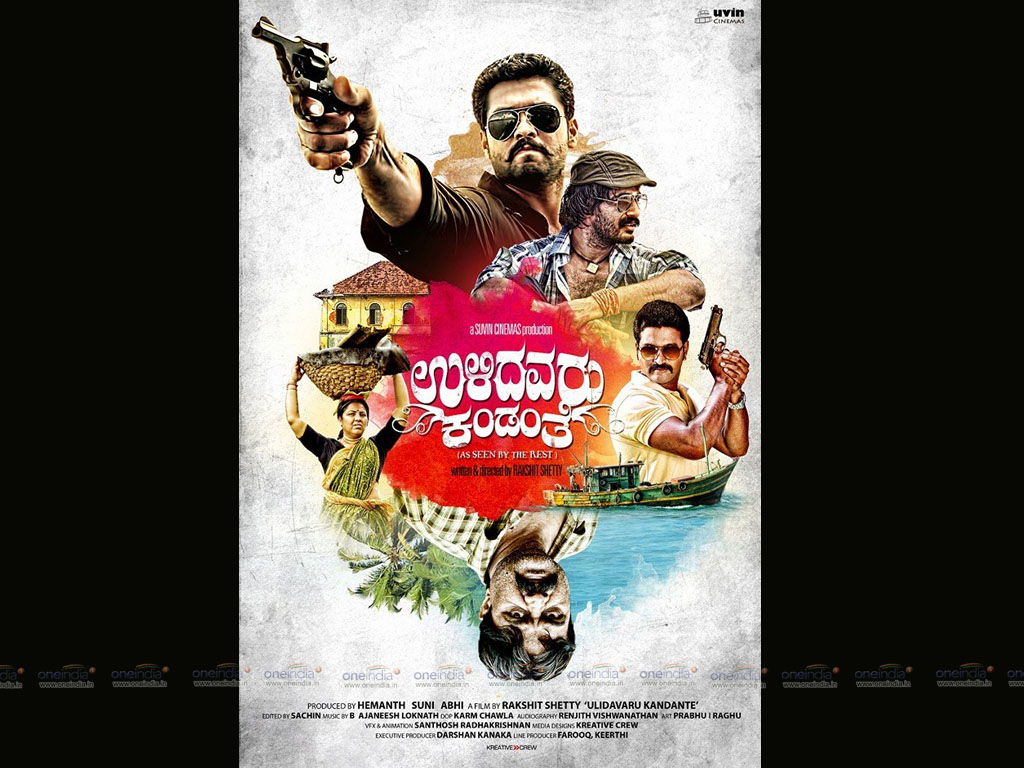
Ulidavaru Kandante
Gritty, melancholic, layered — alternating between raw street-level violence, tender emotional moments, and darkly comic interludes, unified by a pervasive sense of fatalism rooted in coastal Karnataka culture
Based on a publicly circulated draft of this screenplay sourced online — it may differ from the official shooting script or final film. Shown to demonstrate ProofIntelligence.
A young journalist reconstructs the events surrounding a violent death in the coastal town of Malpe by interviewing multiple witnesses, each revealing a different perspective on the same incident — uncovering intertwined stories of friendship, betrayal, smuggling, and revenge spanning fifteen years.
Executive Summary
Ulidavaru Kandante is a structurally ambitious multi-perspective crime drama set in coastal Karnataka that combines the narrative sophistication of Rashomon with the raw cultural authenticity of Gangs of Wasseypur, anchored by an unforgettable central character in Richie — a volatile, charismatic figure who could become iconic in Kannada cinema. At an estimated ₹8-12Cr budget, the film targets the growing urban multiplex and OTT demographic that has driven recent Kannada successes like Garuda Gamana Vrishabha Vahana and Kantara, with strong festival potential (Busan, Toronto) that adds prestige value. The key packaging priorities are: (1) a Kannada star with range for Richie, (2) a director experienced in non-linear ensemble storytelling, and (3) an OTT pre-sale to de-risk the theatrical window, given the film's 150+ minute runtime and deliberately ambiguous ending. With the right attachments, this screenplay could yield a landmark Kannada film with pan-Indian crossover potential.
Why this verdict
Ulidavaru Kandante is an ambitious, structurally inventive multi-perspective crime drama set in the coastal Malpe/Udupi region. The Rashomon-style narrative architecture — where journalist Regina pieces together overlapping accounts of a violent incident — is executed with genuine craft and emotional depth. The screenplay demonstrates strong originality in its non-linear storytelling, rich cultural texture (Yakshagana, Huli Vesha, fishing community life), and memorable character work, particularly Richie's volatile charisma. However, the screenplay's formatting is unconventional with heavy use of English technical terms mixed into Kannada prose, and some chapters feel unevenly paced. The concept is highly producible within a mid-budget Kannada framework and has strong OTT crossover potential.
Score Breakdown
Casting
Rakshit Shetty
as ರಿಚ್ಚಿ
Rakshit Shetty has demonstrated the rare combination of physical charisma, comic timing, and dramatic intensity required for Richie — his work in Kirik Party showed his ability to command the screen with theatrical energy. As the screenplay's writer, he would bring an intimate understanding of Richie's contradictions: the wounded child beneath the cowboy bravado.
Kishore Kumar G
as ರಾಘು
Kishore's understated intensity and ability to convey deep emotion through silence (as seen in his acclaimed supporting roles) make him ideal for Raghu's internalized guilt and fear. His physical presence — lean, weathered, watchful — matches the character of a man who has spent 15 years running.
Shruti Hariharan
as ರೆಜಿನ
Shruti Hariharan has proven her ability to anchor complex narratives with intelligence and restraint in films like Lucia and Godhi Banna Sadharana Mykattu. Her natural screen presence and comfort with both Kannada and English dialogue make her ideal for Regina's multilingual journalist role.
Achyuth Kumar
as ಶಂಕರ್ ಪೂಜಾರಿ
Achyuth Kumar's commanding screen presence and ability to convey menace through stillness and understatement make him perfect for the cigar-smoking crime boss. His experience with Tulu-inflected Kannada dialogue and his gravitas in authority roles are exactly what Shankar Poojary demands.
Tara Anuradha
as ಮುನ್ನ
Note: For Munna, a fresh face with genuine mechanical/working-class physicality would be ideal. However, among established actors, someone like a young Dhananjaya (pre-Popcorn Monkey Tiger fame) would bring the right combination of gentle exterior and explosive potential that Munna requires.
Child actor (fresh face)
as DEMOCRACY
Democracy requires a natural, unaffected child performer from the coastal Karnataka region who can deliver precocious dialogue with genuine innocence rather than trained cuteness. A non-professional child actor from the Udupi/Malpe area would bring irreplaceable authenticity to this crucial role.
Pacing & Rhythm
Overall pace
Deliberately measured with strategic bursts of intensity
The pacing curve reflects the screenplay's multi-chapter structure — each chapter has its own internal rhythm that peaks and resets, creating a wave-like pattern rather than a linear escalation. Richie's chapters (2 and the farmhouse confrontation) are the fastest, while Ratnakka's chapter is deliberately slow, and Munna's oscillates between dreamy romance and sudden violence. The overall effect is of a narrative that breathes — expanding and contracting like the tides of the Malpe coast. The main pacing concern is the extended deceleration in pages 59-68 (fish market sequences), which may test audience patience after the intensity of Balu's shooting. The climactic sequence (pages 100-105) accelerates rapidly, perhaps too rapidly, compressing multiple violent acts and revelations into a short span.
SLOW · pp. 59–68
Ratnakka's fish-selling daily routine and market interactions extend beyond what's needed for character establishment
Fix: Trim the fish market haggling scenes by 30% while preserving the emotional core — Ratnakka's joy at her son's return and her preparations for the meal he never comes to eat
SLOW · pp. 38–42
The Yakshagana performance and its mythological exposition about Madhwacharya and the idols runs long
Fix: Condense the Yakshagana mythology to its essential parallel — the hidden treasure in the wooden log — which directly mirrors Balu's later discovery
RUSHED · pp. 100–105
The final chapter compresses the 15-year-old backstory, Munna's shooting of Richie, Dinesh shooting Munna, and the aftermath montage into very few pages
Fix: Allow more breathing room for the climactic violence and its emotional aftermath — particularly Dinesh's decision to shoot Munna, which currently feels abrupt
Conflict Escalation
The conflict escalation follows a distinctive wave pattern rather than a linear climb, reflecting the multi-perspective structure. Each chapter has its own tension arc that peaks and resets, but the overall trajectory builds inexorably toward the climactic violence. The screenplay masterfully uses the Rashomon structure to create dramatic irony — the audience knows violence is coming because Regina is investigating its aftermath, but the specific form it takes remains surprising. The peak moment (Munna shooting Richie) is devastating precisely because it comes from the most unexpected character — the gentle, lovesick mechanic — rather than from the obvious antagonists.
Peak moment · page 102
Munna, in a drug-fueled rage after learning of Richie's brutal treatment of Balu (Sharada's brother), takes Dinesh's gun and shoots Richie during a Huli Vesha celebration at Shankar Poojary's house — the gentle mechanic becomes a killer in a single impulsive moment
Protagonist Arc
Regina's arc tracks from professional detachment to deep emotional engagement to philosophical acceptance. Her internal journey mirrors the audience's — she begins seeking facts and ends accepting that truth is subjective. The arc is more intellectual than emotional, which is both its strength (it avoids melodrama) and its weakness (she remains somewhat distant). The most significant shift occurs when she visits the farmhouse and 'feels Raghu's presence' — this is the moment she transitions from journalist to empathetic witness. Her final acceptance that she cannot provide a conclusion represents genuine character growth, even if it's more subtle than the dramatic arcs of Richie or Munna.
Scene Audit
40 scenes evaluated — tension, pacing contribution, and whether each earns its place.
| Pg | Scene | Purpose | Tension | Verdict |
|---|---|---|---|---|
| 1 | EXT. DAY: MALPE HARBOR / DOCKING AREA ರಿಟ್ಟಿ (boy) | Establish setting, mood, and the boy's anticipation — atmospheric openingEvocative opening that establishes coastal world and thematic anticipation | 15decelerates | essential |
| 1 | INT. NIGHT: LADIES HOSTEL ರೆಜಿನ | Introduce Regina as journalist writing the article — framing deviceEstablishes narrative structure and Regina's voice-over framework | 20maintains | essential |
| 2 | INT. DAY: POLICE STATION ರೆಜಿನ · CONSTABLE · ದಿನೇಶ | Regina visits Dinesh in jail — establishes investigation premiseKey setup scene connecting journalist to prisoner witness | 30maintains | essential |
| 3 | EXT. DAY: SHANKER POOJARY'S HOUSE ಶಂಕರ್ ಪೂಜಾರಿ · ರೆಜಿನ | Introduce Shankar Poojary as power figure — coffee sceneEconomical character introduction through Tulu hospitality | 25decelerates | essential |
| 4 | INT. DAY: TIMES OF INDIA / EDITOR'S OFFICE ರೆಜಿನ · EDITOR | Regina pitches multi-part article — establishes narrative structureMeta-narrative scene that explains the film's own structure | 15maintains | essential |
| 6 | INT/EXT. DAY: CHURCH ರಿಚ್ಚಿ (boy) · ರೆಜಿನ (girl) · FATHER | Childhood flashback — Richie arrested, Regina photographs himOrigin scene connecting all three characters across time | 40accelerates | essential |
| 7 | INT. DAY: SHAILU'S HOUSE / ROOM ಶೈಲು · ರೆಜಿನ | Shailu narrates Raghu's backstory — Bombay yearsCritical exposition delivered through authentic interview format | 30maintains | essential |
| 9 | EXT. DAY: BOMBAY HARBOR / ROOF TOP ರಾಘು · ಶೈಲು | Raghu and Shailu reunion in Bombay — father's death revealedEmotional foundation for Raghu's character and motivation | 35maintains | essential |
| 12 | EXT. DAY: ROAD / JEEP ರಾಘು · ಶೈಲು | Raghu travels to farmhouse hideout — tension about pursuersBuilds suspense about who is chasing Raghu | 45accelerates | essential |
| 14 | EXT. NIGHT: RATNAKKA'S HOUSE ರಾಘು · ರತ್ನಕ್ಕ | Raghu reunites with mother after 15 yearsScreenplay's most emotionally powerful scene — earned and devastating | 25decelerates | essential |
| 16 | INT. DAY: FARM HOUSE ರಾಘು | Armed men arrive at farmhouse — Raghu prepares to defendPeak tension in Chapter 1 — masterful suspense building | 65accelerates | essential |
| 18 | INT. DAY: FARM HOUSE ರಿಚ್ಚಿ · ರಾಘು · ದಿನೇಶ | Richie's dramatic entrance — kicks down door, confronts RaghuIconic character introduction — theatrical and terrifying | 75accelerates | essential |
| 19 | EXT. DAY: NET WEAVING WORKSHOP ವ್ಯಕ್ತಿ1 · ವ್ಯಕ್ತಿ 2 · ಸುಧಿ | Harbor workers gossip about Shankar Poojary — world-buildingExposition-heavy — could be trimmed to essential information | 20decelerates | needs_work |
| 20 | EXT. DAY: BOAT WORKSHOP ರೆಜಿನ · ರಿಚ್ಚಿ · ದಿನೇಶ · ಸುಧಿ | Regina confronts Richie about dummy camera — comic conflictEstablishes Richie-Regina dynamic with sharp comic timing | 30maintains | essential |
| 23 | INT. DAY: CHURCH ರೆಜಿನ · FATHER | Regina interviews Richie's father — last time he saw his sonAdds emotional depth to Richie through father's perspective | 25decelerates | essential |
| 25 | EXT. DAY: CHURCH / MARUTI OMNI ರಿಚ್ಚಿ · FATHER | Richie confronts Father about Gonzales complaint — father-son tensionReveals Richie's wounded relationship with authority and faith | 40maintains | essential |
| 28 | EXT. DAY: CRICKET GROUND ರಿಚ್ಚಿ · ನಿಕ್ಸನ್ | Richie breaks Nixon's nose — establishes pattern of casual violenceDarkly comic violence that defines Richie's character | 55accelerates | essential |
| 30 | EXT. DAY: MALPE HARBOR ರಿಚ್ಚಿ · ದಿನೇಶ · ಸುಧಿ · DEMOCRACY · WATCHMAN | Richie meets Democracy for first time — beer crate sceneIntroduces Democracy and establishes his dynamic with Richie's crew | 20decelerates | essential |
| 35 | EXT. DAY: FISHING BOAT ರಿಚ್ಚಿ · ದಿನೇಶ | Hindi poetry recitation on boat — Richie reveals remand home memoriesCrucial character revelation — Richie's inner life beneath the bravado | 15decelerates | essential |
| 37 | EXT. NIGHT: MALPE BEACH ರಿಚ್ಚಿ · ದಿನೇಶ · ಸುಧಿ | Beach campfire — ganja, tiger painting discovery, Shankar's YakshaganaTransitional scene — could be tightened without losing character beats | 25maintains | needs_work |
| 38 | EXT. NIGHT: SHANKER POOJARY'S HOUSE / PADDY FIELD ರಿಚ್ಚಿ · ಶಂಕರ್ ಪೂಜಾರಿ · ದಿನೇಶ | Yakshagana performance and Shankar Poojary's instructions to RichieYakshagana mythology runs long — trim to essential thematic parallel | 35decelerates | needs_work |
| 44 | EXT. DAY: CAR STREET DEMOCRACY · ರೆಜಿನ · ರಿಚ್ಚಿ | Janmashtami celebration — Democracy's economics, Richie stalks ReginaDemocracy's ice candy math scene is a comic highlight | 25maintains | essential |
| 48 | EXT. DAY: JODRASTE ರಿಚ್ಚಿ · ಬಾಲು · DEMOCRACY | Richie finds Balu in tiger costume — beats him unconsciousPivotal violence that triggers the climactic chain of events | 70accelerates | essential |
| 50 | INT. DAY: FARM HOUSE ರಿಚ್ಚಿ · ರಾಘು · ದಿನೇಶ | Cuba-Manda parable — Richie interrogates Raghu about the bagScreenplay's centerpiece — brilliant extended monologue with escalating menace | 80accelerates | essential |
| 56 | EXT. DAY: FISHING BOAT ರಿಚ್ಚಿ · ಬಾಲು · ರಾಘು · ದಿನೇಶ · ಸುಧಿ | Richie tortures Balu in fishing net — shoots himPeak violence — Richie's cruelty reaches its zenith | 90accelerates | essential |
| 59 | EXT. DAY: MALPE HARBOR ರತ್ನಕ್ಕ · ಅನಿತ · ಶಾಂತಕ್ಕ · ಗೀತಕ್ಕ | Fish market economics — Ratnakka's daily life establishedAuthentic but overlong — trim haggling while keeping camaraderie | 10decelerates | needs_work |
| 64 | INT. NIGHT: RATNAKKA'S HOUSE ರಾಘು · ರತ್ನಕ್ಕ | Raghu visits mother — promises to take her to DubaiEmotionally devastating — mother's joy and son's guilt perfectly balanced | 30decelerates | essential |
| 67 | INT. NIGHT: RATNAKKA'S HOUSE ರತ್ನಕ್ಕ | Ratnakka cooks fish curry and waits — Raghu never comesSilent heartbreak — the meal that will never be eaten | 40decelerates | essential |
| 70 | INT. DAY: ENGINE ROOM OF THE BOAT DEMOCRACY · ಮುನ್ನ | Introduce Munna-Democracy dynamic — engine repair comedyEstablishes Munna's gentle nature through contrast with Democracy's energy | 15maintains | essential |
| 76 | EXT. DAY: UDUPI FISH MARKET ಮುನ್ನ · DEMOCRACY · ಶಾರದ | Munna sees Sharada at fish market — silent love establishedTender romantic moment — Munna's love from 20 feet away | 15decelerates | essential |
| 79 | INT. NIGHT: MALPE SCHOOL ಬಾಲು · ಮುನ್ನ · ಬಾಬಣ್ಣ · ನಾರಾಯಣ | Tiger painting night — Babanna's bawdy stories, Balu-Munna drinkingEntertaining but could be trimmed — Babanna's stories run long | 20maintains | needs_work |
| 86 | EXT. DAY: MALPE BEACH DEMOCRACY · ಮುನ್ನ | Democracy tells Munna about Balu's beating — trigger for climaxCritical plot turn delivered through child's innocent report | 55accelerates | essential |
| 90 | EXT. DAY: JODRASTE / BUS STAND ಬಾಲು · ರೆಜಿನ · ಕೊರಗ | Balu's drunken interview — crow obsession and golden artifact storyUnreliable narrator at his most compelling — truth or madness? | 35maintains | essential |
| 95 | EXT. NIGHT: MALPE SCHOOL ಬಾಲು · ಮುನ್ನ | Balu and Munna drinking — Bechappa scarecrow deity storyAtmospheric but repetitive — Balu's beliefs already established | 25decelerates | needs_work |
| 99 | EXT. DAY: JODRASTE ಬಾಲು · ಹುಲಿಗಳು | Huli Vesha celebration — Balu's crow obsession reaches breaking pointBalu's psychological unraveling during the festival is visceral | 60accelerates | essential |
| 101 | EXT. DAY: MALPE HARBOR ರಿಚ್ಚಿ · ರಾಘು · ಬಾಲು | 15-year flashback — Richie stabs Loki to protect RaghuOrigin revelation that recontextualizes the entire narrative | 75accelerates | essential |
| 102 | EXT. NIGHT: SHANKER POOJARY'S HOUSE ಮುನ್ನ · ರಿಚ್ಚಿ · ದಿನೇಶ | Munna shoots Richie during Huli Vesha celebrationClimactic violence — devastating and earned by all preceding chapters | 95accelerates | essential |
| 103 | EXT. NIGHT: MALPE BEACH ಮುನ್ನ · ದಿನೇಶ | Munna imagines sitting next to Sharada — Dinesh shoots himHeartbreaking death scene — love and violence in single frame | 85accelerates | essential |
| 104 | INT. NIGHT: REGINA'S HOUSE ರೆಜಿನ · ದಿನೇಶ · ಬಾಲು · ಶೈಲು | Final interview fragments — contradictory accounts, no conclusionThematically bold ending — truth remains subjective | 50decelerates | essential |
| 105 | Multiple locations ರಾಘು · ರತ್ನಕ್ಕ · ಶಾರದ · ಬಾಲು · ಮುನ್ನ · ರಿಚ್ಚಿ | Aftermath montage — each character's fateHaunting final images — grief without resolution | 50decelerates | essential |
Beat Sheet · Save The Cat
The screenplay follows the Save the Cat structure in spirit rather than strict page-count adherence, which is appropriate for its multi-perspective format. The beats are all present but distributed across five chapters rather than a single linear narrative, creating a more complex rhythm. The B Story (Munna-Sharada) arrives later than expected but is emotionally earned. The 'Fun and Games' section (Richie's chapter) is the screenplay's strongest structural achievement — it delivers pure entertainment while building toward inevitable tragedy. The main structural deviation is the extended 'Dark Night of the Soul' that encompasses both Balu's crow narrative and Ratnakka's waiting sequence, which runs longer than conventional structure would suggest but serves the screenplay's thematic ambitions.
| Beat | Expected | Actual | Present | Quality |
|---|---|---|---|---|
Opening Image Workers pulling a boat to shore at Malpe harbor — a 12-year-old boy watches the sea, humming. Establishes the coastal world and a sense of waiting. | p. 1 | p. 1 | 85 | |
Theme Stated Regina tells the Editor: 'When you stand in each person's perspective, everything changes' — the film's central thesis about subjective truth. | p. 5 | p. 4 | 90 | |
Setup Through interviews with Shailu, Dinesh, Shankar Poojary, and Balu, the world of Malpe is established — fishing community, smuggling, old friendships, and a violent incident. | p. 10 | p. 7 | 80 | |
Catalyst Shailu reveals that Raghu has secretly returned from Bombay after 15 years — setting the entire narrative in motion. | p. 12 | p. 9 | 75 | |
Debate Raghu debates whether to stay or flee — he wants to see his mother but fears being found. The farmhouse becomes his temporary refuge. | p. 15 | p. 12 | 70 | |
Break Into Two Richie kicks down the farmhouse door and confronts Raghu — the narrative shifts from Raghu's quiet desperation to Richie's explosive energy. Chapter 2 begins. | p. 25 | p. 18 | 88 | |
B Story Munna's silent love for Sharada — the romantic subplot that ultimately drives the climactic violence. Introduced late but emotionally powerful. | p. 30 | p. 70 | 78 | |
Fun and Games Richie's chapter delivers the 'promise of the premise' — breaking noses, cowboy gun play, Democracy's Rayban scene, the boat poetry recitation. Pure character entertainment. | p. 35 | p. 28 | 90 | |
Midpoint Richie's Cuba-Manda interrogation of Raghu — false defeat (Raghu thinks he'll die) that transforms into reunion, but with the bag revelation raising stakes. | p. 50 | p. 50 | 85 | |
Bad Guys Close In Richie shoots Balu on the boat — the violence escalates beyond control. Shankar Poojary's interests, Raghu's secrets, and Richie's rage converge. | p. 60 | p. 56 | 82 | |
All Is Lost Munna discovers the blood on the boat and the bullet cartridge — realizes Balu has been killed. Democracy confirms the beating. Munna's world collapses. | p. 75 | p. 86 | 75 | |
Dark Night of the Soul Balu's crow narrative and Munna's drug-fueled rage — both characters spiral into their darkest moments. Ratnakka waits alone with uneaten fish curry. | p. 80 | p. 95 | 80 | |
Break Into Three The 15-year flashback reveals the origin — Richie stabbed Loki to protect Raghu. This revelation recontextualizes everything and propels toward the climax. | p. 85 | p. 100 | 82 | |
Finale Munna shoots Richie at Shankar Poojary's house. Dinesh shoots Munna. The chain of violence completes. Regina writes her article without a conclusion. | p. 95 | p. 102 | 78 | |
Final Image Montage of aftermath — Raghu alone on a boat bleeding, Ratnakka waiting, Sharada banging on a door, Richie's eyes going still. Mirror of the opening's anticipation, now resolved into grief. | p. 105 | p. 105 | 85 |
What's Working
Structurally Inventive Narrative Architecture
The multi-perspective Rashomon structure is executed with genuine sophistication — each chapter adds new information that recontextualizes previous chapters, creating a cumulative effect that rewards attentive viewing. The framing device of Regina writing her article provides elegant transitions between timelines.
Richie: An Iconic Character Creation
Richie is one of the most memorable characters in recent Kannada screenplay writing — his theatrical violence, his Cuba-Manda parable, his police belt worn cowboy-style, his sevanthi garland, his sleeping with a gun on his face. Every detail builds a character who is simultaneously terrifying, charming, and deeply wounded.
Authentic Cultural Texture
The screenplay is steeped in the specific culture of coastal Karnataka — Yakshagana performances, Huli Vesha traditions, fish market economics, Tulu-Kannada code-switching, harbor life. This cultural specificity is not decorative but integral to character and plot, giving the film a unique identity in Indian cinema.
Emotional Depth Beneath Genre Surface
Beneath the crime narrative, the screenplay delivers genuinely moving emotional sequences — Ratnakka cooking fish curry for a son who never arrives, Munna watching Sharada from 20 feet away, Raghu's tearful reunion with his mother. These moments elevate the material beyond genre exercise.
Democracy: Perfect Tonal Counterpoint
The character of Democracy — a 10-year-old with precocious wit and entrepreneurial spirit — provides essential comic relief and emotional warmth that prevents the narrative from becoming oppressively dark. His scenes with Munna are the screenplay's most charming sequences.
What to Fix
Unconventional Screenplay Formatting
The screenplay mixes Kannada prose with English technical terms (camera directions, shot descriptions) in a way that reads more like a director's shooting script than a standard screenplay. This may create confusion for readers unfamiliar with the writer's style and makes the reading experience less fluid than it should be.
Regina's Underdeveloped Interiority
While Regina functions effectively as the narrative's structural spine, she lacks the psychological depth of the characters she's investigating. Her personal life (mother's phone calls, father's birthday) feels functional rather than deeply felt. For a character who appears throughout the screenplay, she remains surprisingly opaque.
Pacing Imbalance Across Chapters
The chapters vary significantly in pacing — Richie's chapter crackles with energy while Ratnakka's fish-selling sequences and the Yakshagana mythology exposition slow the narrative considerably. The cumulative runtime will likely exceed 150 minutes, testing audience patience.
Ambiguous Ending May Frustrate Commercial Audiences
The deliberate refusal to provide a conclusion — while thematically bold and intellectually satisfying — is a significant commercial risk. Indian audiences, even sophisticated ones, generally expect narrative closure. The ending may be perceived as the writer avoiding a difficult creative choice rather than making a principled one.
Rewrite priorities
Develop Regina's childhood connection to Richie beyond the photograph — give her a suppressed memory or personal guilt that the investigation forces her to confront, making her journey parallel to the themes of perspective and truth
Issue: Regina lacks personal stakes and psychological depth despite being the framing protagonist
Trim the fish market haggling by 30% and condense the Yakshagana mythology to its essential parallel with Balu's wooden log discovery — maintain cultural texture while tightening rhythm
Issue: Ratnakka's fish market sequences and Yakshagana mythology exposition slow the narrative momentum
Expand the climactic sequence — give more space to Munna's psychological state before the shooting, Dinesh's moral crisis before shooting Munna, and the aftermath's emotional impact on each surviving character
Issue: The final chapter compresses too many revelations and violent acts into too few pages
Standardize the screenplay format — either commit to a bilingual format with clear separation between direction and dialogue, or translate all technical directions into Kannada for consistency
Issue: Mixed Kannada prose and English technical directions create an inconsistent reading experience
Audit Richie's English dialogue for authenticity — a remand home kid from coastal Karnataka would have a specific, limited English vocabulary. Make his English more broken and idiosyncratic rather than fluent and theatrical
Issue: Some of Richie's English phrases feel performative rather than organic to the character
Biggest improvement lever
Strengthen Regina's character arc by giving her a more personal stake in the investigation beyond professional ambition — perhaps she witnessed something as a child that she's repressed, or her photograph of young Richie holds a secret she doesn't yet understand. This would transform her from a narrative device into a fully realized protagonist whose emotional journey mirrors the audience's experience of piecing together truth from fragments.
Emotional Rhythm
The emotional rhythm is remarkably varied, reflecting the screenplay's tonal ambition. The most powerful emotional sequences are the quiet domestic ones — Ratnakka cooking fish curry, Munna watching Sharada from 20 feet away — rather than the violent set-pieces. This is a significant achievement: the screenplay earns its violence by first establishing deep emotional investment in its characters' ordinary lives. The Democracy scenes provide essential comic relief that prevents emotional exhaustion. The overall emotional trajectory moves from curiosity (who died? why?) through escalating dread to devastating catharsis, with the final montage of unanswered grief providing a haunting coda.
Act Structure
Act One
pp. 1–25Journalist Regina establishes the framing device — she is writing a multi-part article about an incident in Malpe. We meet the key witnesses (Shailu, Dinesh, Shankar Poojary, Balu, Democracy) and learn the setup: Raghu fled Malpe 15 years ago after Richie stabbed someone, was sent to remand home, and has now secretly returned from Bombay. Chapter 1 (Voice of Silence) follows Raghu's reunion with his mother and his hiding in a farmhouse, while Chapter 2 introduces Richie's explosive personality.
Key turning point
Richie discovers Raghu hiding in the farmhouse and confronts him — transforming from apparent threat to old friend, but with an underlying menace about a missing 'bag'.
Act One is structurally ambitious and largely successful. The framing device with Regina writing and interviewing is elegantly woven with the flashback narratives. The opening at Malpe harbor with the boy watching the sea is evocative. However, the constant cutting between Regina's hostel room, the editor's office, and the various interview locations creates a slightly fragmented rhythm that may challenge first-time viewers. The establishment of Richie as a larger-than-life figure is masterfully done through multiple witnesses before his dramatic entrance.
Act Two
pp. 25–70The middle section deepens through Chapters 2-4. Richie's volatile character is fully revealed — his relationship with his Father (the priest), his casual violence (breaking Nixon's nose, beating Balu), his work for Shankar Poojary, and his strange tenderness. Raghu is taken by Richie to meet his mother Ratnakka. Chapter 3 (Meen Curry) follows Ratnakka's daily life as a fish seller and her emotional reunion with Raghu. Chapter 4 (Whispers in the Wind) introduces Munna's silent love for Sharada and his role as a mechanic in Shankar Poojary's operation.
Key turning point
Richie shoots Balu on the fishing boat after an elaborate torture sequence involving the Cuba-Manda story, revealing the depth of his capacity for violence and his obsession with the mysterious 'bag' Raghu carries.
Act Two is the screenplay's strongest section. The parallel narratives gain momentum as each chapter adds new dimensions to the central incident. Ratnakka's chapter is emotionally devastating in its simplicity — a mother buying fish to cook for a son she hasn't seen in 15 years. The Munna-Sharada love story provides welcome tonal relief. Richie's Cuba-Manda parable is a brilliant piece of character-driven storytelling that works both as entertainment and thematic statement. The pacing occasionally sags in the fish market sequences but the emotional payoff justifies the investment.
Act Three
pp. 70–105Chapter 5 (Ka/Crow) follows Balu's supernatural obsession with a crow and a mysterious golden artifact found in a wooden log from the sea. The final chapter reveals the 15-year-old backstory: young Richie stabbed Loki to protect Raghu, went to remand home while Raghu fled. In the present, Munna — enraged by Richie's violence against Balu (Sharada's brother) — shoots Richie at Shankar Poojary's house. Dinesh then shoots Munna. Regina completes her article without offering a conclusion, leaving readers to form their own.
Key turning point
Munna, in a drug-fueled rage after seeing Sharada's distress over her brother Balu's beating, takes Dinesh's gun and shoots Richie — the act of violence that the entire narrative has been building toward.
Act Three delivers a powerful convergence of all narrative threads. The revelation that Richie's original crime was committed to protect Raghu adds tragic irony to their reunion. Balu's crow subplot, while initially seeming tangential, connects thematically to the golden artifact and Shankar Poojary's smuggling interests. The ending — with Regina refusing to offer a conclusion — is thematically bold and intellectually satisfying, though some audiences may find it frustrating. The montage of aftermath images (Ratnakka waiting, Sharada banging on the door, Munna's body, Richie dying) is cinematically powerful.
Midpoint · page 50
Richie discovers Raghu in the farmhouse and the confrontation transforms from threat to reunion — but the underlying tension about the 'bag' and Raghu's secrets establishes the stakes for the second half.
The midpoint effectively shifts the narrative from setup to escalation. What seemed like a simple reunion story becomes a complex web of smuggling, betrayal, and old debts. Richie's Cuba-Manda story, told during this confrontation, becomes the screenplay's thematic spine — the idea that violence born of misunderstanding creates irreversible consequences. The midpoint also marks the transition from Raghu's perspective to Richie's, which energizes the narrative considerably.
Character Analysis
Protagonist · arc 75/100
ರಿಚ್ಚಿ
want
To avenge his 8 years in remand home by confronting Raghu, and to recover the mysterious bag for Shankar Poojary
need
To find genuine human connection and break free from the cycle of violence that has defined him since childhood
flaw
Uncontrollable rage masked by theatrical charm — he cannot distinguish between justice and cruelty
Richie is the screenplay's most vivid creation — a volatile, charismatic, terrifying figure who quotes Hindi poetry, wears sevanthi garlands, and breaks noses with equal enthusiasm. His Cuba-Manda parable reveals surprising intellectual depth. The police belt worn cowboy-style, the gun resting on his face while sleeping, the aviator glasses — every detail builds a character who is performing masculinity as armor against childhood trauma. His arc is deliberately incomplete, which is thematically appropriate but may leave audiences wanting more interiority.
Antagonist · threat 75/100
ಶಂಕರ್ ಪೂಜಾರಿ
Shankar Poojary operates as the puppet master behind the narrative's violence — he directs Richie to find Balu, he knows about Raghu's return, he controls the fishing boats and the smuggling operations. His Tulu-speaking authority, his cigar-smoking composure, and his coded instructions ('just uproot the plant, don't pour lime water') make him a compelling crime boss figure. The screenplay wisely keeps him at a distance, allowing his menace to grow through implication rather than direct action. His cockfighting metaphor — 'this is about loyalty, not money' — efficiently establishes his worldview.
Supporting cast
22 characters · 16 distinct voicesThe supporting cast is remarkably well-differentiated, with each character speaking in a distinct register — from Shankar Poojary's authoritative Tulu to Balu's drunken Kannada to the fish-market women's rapid-fire haggling. The screenplay excels at giving even minor characters (the Yakshagana performer urinating by the bush, the bus conductor asking about leftover fish, the bowler terrified of Richie) memorable moments. The women characters — Ratnakka, Sharada, Anita, Shantakka — are drawn with particular warmth and specificity, grounded in the economic realities of coastal Karnataka life.
Character Presence
Screen presence by act; total scene count on the right.
Dialogue
Subtext
Voice
Density: High — dialogue-heavy screenplay with extensive monologues, particularly Richie's Cuba-Manda parable and Balu's crow narrative
The dialogue is the screenplay's greatest asset and its most distinctive feature. The code-switching between Kannada, Tulu, English, and Hindi reflects the multilingual reality of coastal Karnataka with remarkable authenticity. Richie's dialogue is particularly electric — his theatrical English phrases ('Your attention please,' 'No hard feelings, purely professional') contrasted with raw Kannada abuse creates a character voice unlike anything in mainstream Kannada cinema. The Cuba-Manda parable is a tour de force of character-driven monologue that works simultaneously as threat, philosophy, and self-revelation. Balu's drunken Tulu-inflected Kannada and Democracy's precocious observations are equally well-crafted. The main weakness is occasional over-reliance on English phrases that may feel affected rather than natural, and some of Regina's dialogue feels more functional than character-driven.
The screenplay is dialogue-heavy, which is appropriate for its interview-based framing structure and character-driven narrative. The dialogue-to-action ratio shifts significantly between chapters — Richie's scenes are more balanced with physical action (nose-breaking, boat torture, gun play), while Ratnakka's and Munna's chapters are almost entirely dialogue and description. The description percentage is relatively low, reflecting the screenplay's unconventional formatting that often embeds camera directions within action lines rather than separating them. For production, the dialogue density means the film will rely heavily on performance quality and editing rhythm rather than visual spectacle.
Notable lines
“ಬಾಗಿಲನು ತೆರೆದು, ಸೇವೆಯನು ಕೊಡು ಹರಿಯೆ... ಕೂಗಿದರು, ಧ್ವನಿ ಕೇಳಲಿಲ್ಲವೇ, ನರಹರಿಯೇ...”
ರಿಚ್ಚಿ · page 50
Richie singing a devotional song while kicking down a door perfectly encapsulates his contradictory nature — sacred and profane in the same breath
“ರಜೆ ಇದ್ದಾಗ ಹೋಗ್ತಿನೆ. ಆಟಾಡ್ಲಿಕ್ಕೆ”
DEMOCRACY · page 33
Democracy's deadpan answer about attending school only during holidays — to play — is perfectly observed childhood logic that gets a genuine laugh
“ಗಿಡ ಮಾತ್ರ ಕೀಳು. ಸುಣ್ಣದ್ ನೀರ್ ಹಾಕ್ಲಿಕ್ಕೆ ಹೊಗೋಡ”
ಶಂಕರ್ ಪೂಜಾರಿ · page 42
Shankar Poojary's coded instruction to Richie — just uproot the plant, don't pour lime water — is a masterclass in criminal euphemism that reveals character through restraint
“ಬೆಚ್ಚಪ್ಪನ್ ಮಾತ್ ಸುಳ್ಯ ಆತಿಲ್ಲ”
ಬಾಲು · page 96
Balu's drunken conviction that the scarecrow deity's words cannot be lies — delivered with absolute sincerity — makes the audience question whether his supernatural beliefs are madness or faith
Lines to fix
“I could feel his presence there. I could feel what he felt.”
ರೆಜಿನ · page 17
Regina's voice-over about feeling Raghu's presence in the farmhouse is too on-the-nose — the visual storytelling (her closing the door, recreating his environment) already conveys this without verbal explanation
“May Jesus, peace be upon him, bless you and Mr. Gonzales. If not his son”
ರಿಚ್ಚಿ · page 27
This line is repeated verbatim twice within two pages (once in the Father scene, once as Richie returns to the Omni) — the repetition feels like a formatting error rather than intentional emphasis
Market & Audience
The screenplay occupies a sweet spot in the current Kannada market — it's too ambitious and structurally complex for a purely mass audience but has strong appeal for the growing urban multiplex and OTT demographic. The Rashomon structure, while challenging, has been validated by Kannada audiences through films like Lucia. The coastal Karnataka setting (Malpe, Udupi) is underexplored in cinema and offers strong visual differentiation. The ensemble cast structure allows for multiple star attachments. Key risk is the 150+ minute runtime and the deliberately ambiguous ending, which may frustrate commercial audiences expecting resolution. Mitigation: position as a prestige Kannada film with national crossover ambitions.
Audience
Urban Kannada-speaking males 18-35 with appetite for non-linear crime narratives; crossover potential to pan-Indian OTT audiences who embraced films like Lucia and Gangs of Wasseypur
Budget band
Mid (₹5-15Cr) — requires coastal Karnataka locations, fishing boats, period elements for flashbacks, and a large ensemble cast but no major VFX or action set-pieces
Trend
Strong alignment with the current wave of regional-language crime dramas succeeding on OTT platforms (Garuda Gamana Vrishabha Vahana, Kantara's cultural specificity trend, KGF's proof that Kannada films can break national barriers)
Platforms
Theatrical (Kannada market) · Amazon Prime Video · Netflix India · Zee5
The screenplay's primary audience is the growing OTT/streaming demographic that has embraced complex, non-linear Indian narratives (Sacred Games, Paatal Lok, Garuda Gamana Vrishabha Vahana). Its structural ambition and cultural specificity make it a strong festival candidate, while Richie's charismatic violence and Democracy's comic charm give it youth appeal. The mass/commercial audience will find the non-linear structure and ambiguous ending challenging, and the violence and adult themes make it unsuitable for family viewing. The optimal release strategy is a limited theatrical run in Karnataka multiplexes followed by a prominent OTT placement, with festival premieres to build critical buzz.
Risks · Moderate
- • Non-linear multi-perspective structure may confuse mainstream audiences unfamiliar with Rashomon-style narratives
- • Deliberately ambiguous ending without clear resolution could frustrate commercial audiences
- • Heavy use of Tulu dialect alongside Kannada may limit accessibility even within Karnataka
- • Violence against animals (crow, cockfighting) may attract censor scrutiny
- • 150+ minute runtime for a non-star-driven film is commercially challenging
Mitigations
- • Lucia's success proved Kannada audiences embrace experimental narratives when emotionally grounded
- • Strong OTT potential where complex narratives thrive (Sacred Games, Paatal Lok precedent)
- • The Tulu-Kannada-English code-switching is actually a marketing asset — it signals authenticity
- • Each chapter functions as a self-contained short film, allowing for episodic marketing
- • Cast Kannada stars in key roles (Richie, Raghu) to drive theatrical opening
Investment Case
Franchise Potential
standalone- The Malpe coastal underworld — Shankar Poojary's smuggling empire could support prequel stories
- Democracy's character — his childhood perspective could anchor a coming-of-age spinoff set in the same world
Ulidavaru Kandante is fundamentally a standalone narrative whose power derives from its specific, self-contained structure. The multi-perspective format and the definitive deaths of key characters (Richie, Munna, Raghu) preclude direct sequels. However, the richly drawn world of coastal Karnataka crime — with Shankar Poojary's operations, the fishing community dynamics, and the Bombay connections — could theoretically support prequel or parallel stories. Democracy's character, in particular, has spinoff potential as a coming-of-age narrative. But the screenplay's artistic integrity is best served as a singular work.
International Viability
The screenplay has genuine international festival potential due to its structural ambition, cultural specificity, and thematic universality. The Rashomon structure is globally recognized, and the coastal Karnataka setting offers visual exoticism without sacrificing authenticity. However, commercial international distribution would require careful subtitling that preserves the multilingual texture without overwhelming viewers. The film's best international path is through festival premieres (Busan, Toronto) followed by curated OTT placement on platforms like MUBI or Netflix's international cinema sections.
Strong markets: South Asian diaspora markets (UK, US, Middle East, Singapore), Film festival circuit (Busan, Toronto, Rotterdam — strong fit for World Cinema sections), European art-house markets that embraced Gangs of Wasseypur and Drishyam, Japan and South Korea — audiences familiar with Rashomon-style narratives
Cultural barriers: Heavy reliance on Tulu-Kannada-English code-switching requires sophisticated subtitling; Yakshagana and Huli Vesha cultural contexts need visual rather than verbal explanation; The fishing community economics and caste dynamics are deeply local; Balu's supernatural crow narrative draws on folk beliefs unfamiliar to international audiences
Investment Readiness
moderate riskReady for packagingThe screenplay is ready for packaging with the right creative team. Its primary investment appeal is the combination of structural ambition, cultural authenticity, and emotional depth — qualities that have driven recent Kannada cinema successes. The mid-budget requirement (₹5-15Cr) is manageable, and the ensemble structure allows for flexible casting strategies. Key risk factors are the non-linear structure (which requires a director who can maintain clarity across five chapters), the 150+ minute runtime, and the ambiguous ending. Mitigation strategy: attach a proven Kannada director, cast recognizable faces in at least two key roles (Richie and Raghu), and secure OTT pre-sale to de-risk theatrical performance. The screenplay's festival potential adds value as a prestige project that could elevate a production house's brand.
Attachment suggestions
- • A Kannada actor with both commercial appeal and acting range for Richie — someone who can handle the theatrical physicality and emotional depth (think Rakshit Shetty, Rishab Shetty, or Dhananjaya caliber)
- • A strong female lead for Regina who can anchor the framing narrative with intelligence and restraint
- • A director with experience in non-linear narratives and ensemble management — ideally someone from the Kannada new wave
- • A cinematographer who can capture coastal Karnataka's visual poetry — consider Arvind Kashyap or similar talent
- • Music director who can blend folk elements (Yakshagana, fishing songs) with contemporary scoring
Comparable Films
Rashomon (1950)
The foundational multi-perspective narrative structure — same incident told through different witnesses with contradictory accounts — is the screenplay's core architecture.
Lucia (2013)
Fellow Kannada film with non-linear, experimental narrative structure that proved Sandalwood audiences embrace unconventional storytelling when grounded in authentic emotion.
Gangs of Wasseypur (2012)
Multi-generational crime saga rooted in a specific Indian geography with raw violence, dark humor, and deeply textured regional authenticity.
Angamaly Diaries (2017)
Ensemble crime drama set in a specific coastal/regional milieu with young male protagonists navigating local power structures, violence, and loyalty.
Cinema DNA
The directorial sensibilities this script most resembles, weighted by influence.
✦Your Cinema DNA
Shares Pawan Kumar's willingness to experiment with non-linear narrative structures in Kannada cinema (as in Lucia), combined with deep emotional grounding in authentic Karnataka settings and characters.
The raw, gritty crime world, multi-chapter structure, regional authenticity, dark humor amid violence, and ensemble storytelling directly echo Kashyap's Gangs of Wasseypur approach to Indian crime cinema.
The non-linear chapter structure, extended monologues during tense confrontations (Cuba-Manda story parallels the 'Royale with Cheese' approach), theatrical violence, and pop-culture-infused dialogue reflect Tarantino's narrative sensibility.
The verdict, in full
Ulidavaru Kandante is a structurally ambitious multi-perspective crime drama set in the coastal Karnataka town of Malpe, written with genuine literary ambition and deep cultural specificity. The screenplay follows journalist Regina as she reconstructs the events surrounding a violent death by interviewing multiple witnesses — each chapter revealing a different perspective on the same interconnected web of friendship, betrayal, smuggling, and revenge spanning fifteen years. The narrative architecture is sophisticated, weaving five distinct chapters (each with its own tonal identity) around a central incident involving the charismatic, volatile Richie, his childhood friend Raghu who fled to Bombay, and the various lives caught in their orbit. The screenplay's greatest strengths are its unforgettable character work (particularly Richie and the child Democracy), its authentic rendering of coastal Karnataka culture (Yakshagana, Huli Vesha, fishing communities), and its emotionally devastating set-pieces (Ratnakka cooking for a son who never comes, Munna dying while imagining sitting next to Sharada). While the formatting is unconventional and the pacing occasionally uneven, this is a screenplay of genuine ambition and considerable craft that could yield a landmark Kannada film.
Your screenplay deserves this.
Every section you just read — scores, cast, pacing curves, scene-by-scene audit, market read, and a producer-ready verdict — generated for your script in minutes.
Registered with tamper-proof timestamps · Yours alone
Analysis of a publicly available draft of this screenplay sourced online. It may differ from the official shooting script or final film. Shown to demonstrate ProofIntelligence — not an official or licensed screenplay.